There are feelings that don’t have words.
Not because the feeling isn’t real. But because language, however precise, can only describe an emotion from the outside. It can name it. It cannot reproduce it.
Music can.
And Japanese fiction has understood this for a long time.
What Music Does in Japanese Storytelling
In Japanese fiction, music is rarely just atmosphere.
It is not there to make a scene feel more cinematic, or to signal to the audience how they should feel. It is there because the character cannot say what they need to say — and music is the only thing that can carry it.
This is connected to something deeper in Japanese culture.
A culture that values reading between the lines over direct expression. That treats silence as meaningful. That finds indirect communication more honest, sometimes, than a declaration.
In that context, music becomes the ultimate indirect expression. It doesn’t explain the feeling. It transmits it. The person listening doesn’t receive information about what the character is experiencing — they experience something themselves.
That distinction — between being told about a feeling and being made to feel it — is where music’s particular power lives.
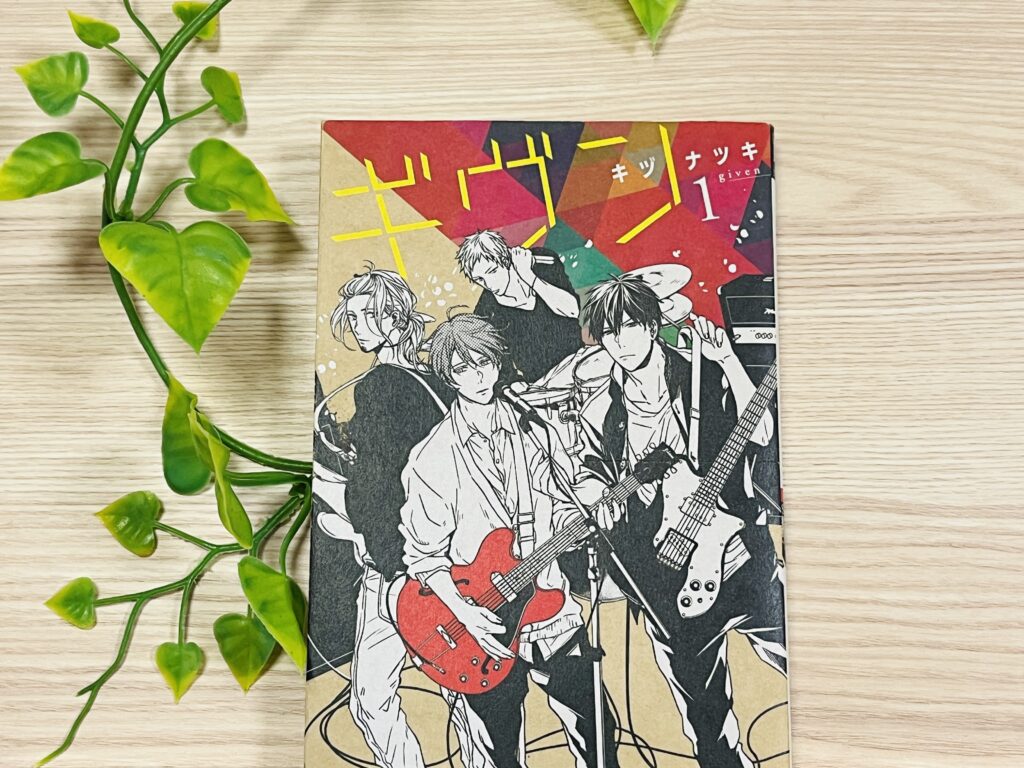
And Given understood it completely.
The Live Performance — “I’m Lonely”
Mafuyu Sato cannot speak what he feels.
This is not shyness. It is the result of a childhood in which speaking was dangerous, followed by a loss so unresolved that even his own emotions became inaccessible to him.
Throughout the series, his internal voice tends toward denial.
I’m not lonely. Things are fine. I’m okay.
He had been saying these things to himself for so long that they had become automatic — a way of keeping the feeling contained, manageable, at a distance from the surface.
And then he sang.
In the middle of that first live performance — in front of people, with the feeling finally moving through him and outward — something different surfaced.
I’m lonely.
Not the denial. The thing itself.
For the first time, in the act of singing, Mafuyu let himself feel what was actually there. Music gave him access to something that language — his own internal language, the words he used to keep himself in check — had been blocking.
The performance didn’t just move the audience.
It moved Mafuyu.
That is what music does in Given that speech cannot. It bypasses the guard. It reaches the feeling directly, before the mind can intervene and redirect it into something safer.
For a deeper look at what Mafuyu was holding inside that silence — and why singing was the only way out: ✅ Mafuyu Sato from Given: What His Silence Is Actually Made Of
Yuki’s Song — The Feeling That Outlasted Him
There is a second way Given uses music as emotional language — and it is, if anything, even more affecting.
Yuki never told Mafuyu how he felt.
He had a feeling. He tried to put it somewhere. He worked on a song — incomplete, unpolished, never delivered — and then he was gone.
But the song remained.
The feeling he couldn’t speak found its way into melody and lyric. It survived him. It waited.
And eventually — through Ritsuka’s hands, through Shu’s voice — it arrived. Years after Yuki could no longer deliver it himself, the feeling finally found the person it had always been meant for.
This is the most complete expression of what music means in Given.
Not just a substitute for words. A vessel for feelings that words could never have carried anyway. A form that can hold love across time, across absence, across death — and still deliver it intact.
For the full story of what it cost Ritsuka to complete that delivery: ✅ When Your Partner Finishes Their Ex’s Love Song — What Given: To the Sea Understands About Love
For a deeper look at what Yuki left behind — and how it kept reaching people: ✅ Yuki from Given: The Character Who Isn’t There — and Never Really Leaves
Why Music Reaches Where Words Can’t
There is a useful distinction here.
Words describe emotion. Music transmits it.
When someone tells you they are sad, you receive that information. You understand it intellectually. You may feel sympathy.
But when you hear music that carries sadness — really carries it, in the way that the best music does — you don’t just understand the sadness. You feel something yourself. The emotion travels across the gap between one person and another without needing to be translated into language first.
This is why Mafuyu’s song moved the people in that room.
Not because they were told what he was feeling. Because they felt something — something adjacent to what he was feeling — without being able to fully explain why.
And this is why the same scene moves the people watching at home.
The screen is not a barrier. The music crosses it.
The Meaning of the Name “Given”
There is something worth sitting with in the title of this series.
Given.
Something received. Something that arrives without being earned or asked for — that simply comes.
Music, in Given, works this way.
Mafuyu gave his feeling through song, and Ritsuka received it — without fully understanding what he was receiving, only knowing that it mattered.
Yuki gave his feeling through an unfinished melody, and Mafuyu received it — years later, through another person’s hands and voice — and finally understood what had been trying to reach him all along.
The act of giving and receiving — not through words, not through explanation, but through sound — is the heartbeat of this entire series.
And perhaps that is what music has always been, in the stories that use it most honestly.
Not a performance. Not an aesthetic choice.
A gift. Passed from one person to another. Carrying what language couldn’t hold.
A Final Note
Japanese fiction returns to music again and again as the place where feeling finally becomes expressible.
Not because Japanese storytelling distrusts words. But because it understands something that is easy to forget:
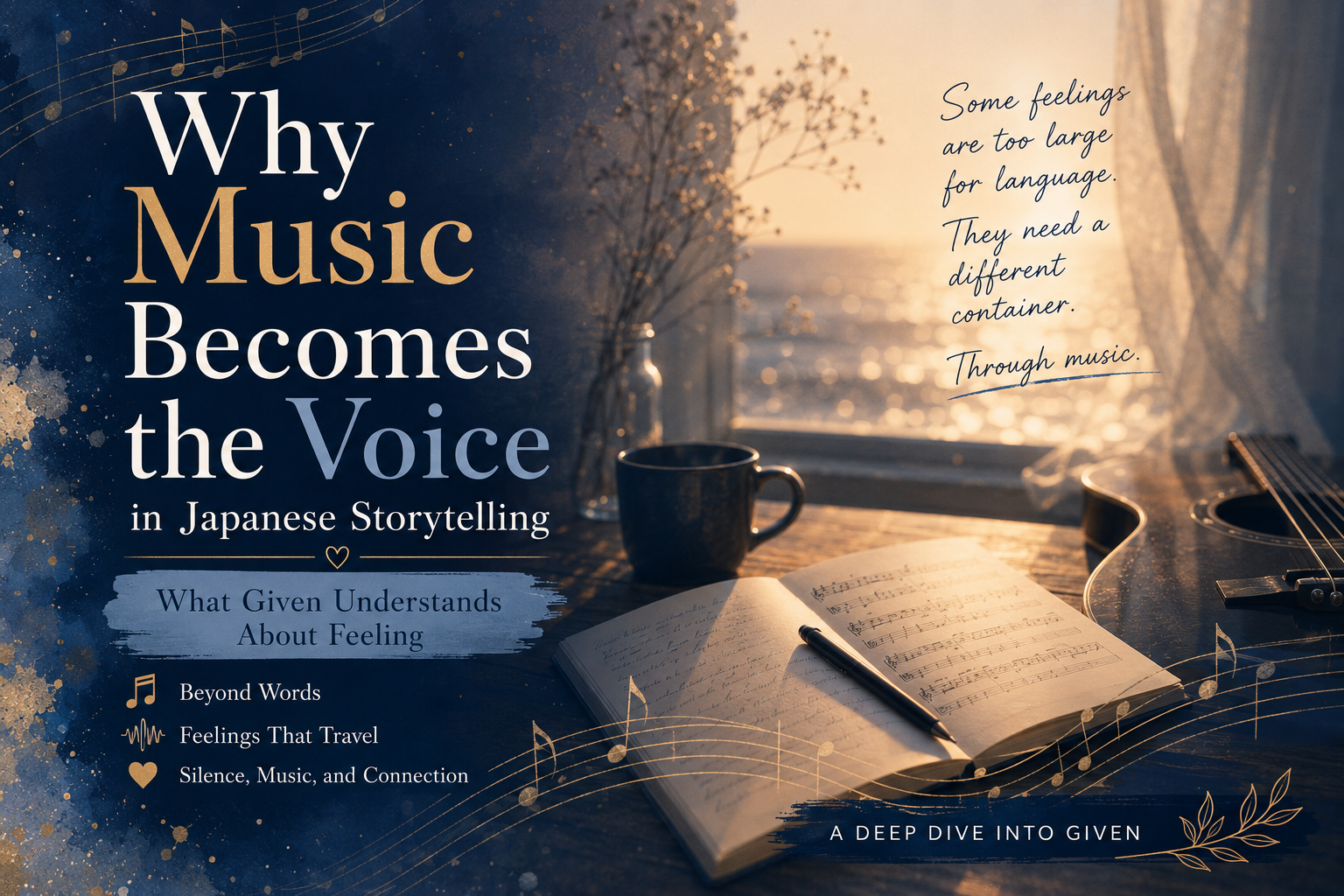
Some feelings are too large for language.
They need a different container.
Given found that container. And in doing so, it gave its characters — and its audience — access to something that a conversation, however honest, could never quite reach.
The feeling that has no name. The longing that can’t be explained. The love that was never said out loud.
All of it, finally, finding its way out.
Through music.
If this resonated with you, these go deeper:
✅ Mafuyu Sato from Given: What His Silence Is Actually Made Of
✅ When Your Partner Finishes Their Ex’s Love Song — What Given: To the Sea Understands About Love
✅ Yuki from Given: The Character Who Isn’t There — and Never Really Leaves
✅ Why Japanese Characters Never Say “I Love You” — And Why That Makes It Hit Harder
✅ What Is Given? — Where to start if you’re new to the series
✅ The Beauty of Silence in Japanese Fiction
✅ Guilt Without Closure: Why Given’s Unresolved Endings Feel So Japanese
✅ How Japanese Stories Handle Grief Differently: What Given Taught Me
I also share the small manga moments that stay with me long after reading—the pauses, glances, and choices that never fully leave.
You can follow those weekly reflections on Substack.
✅ My Substack Here!
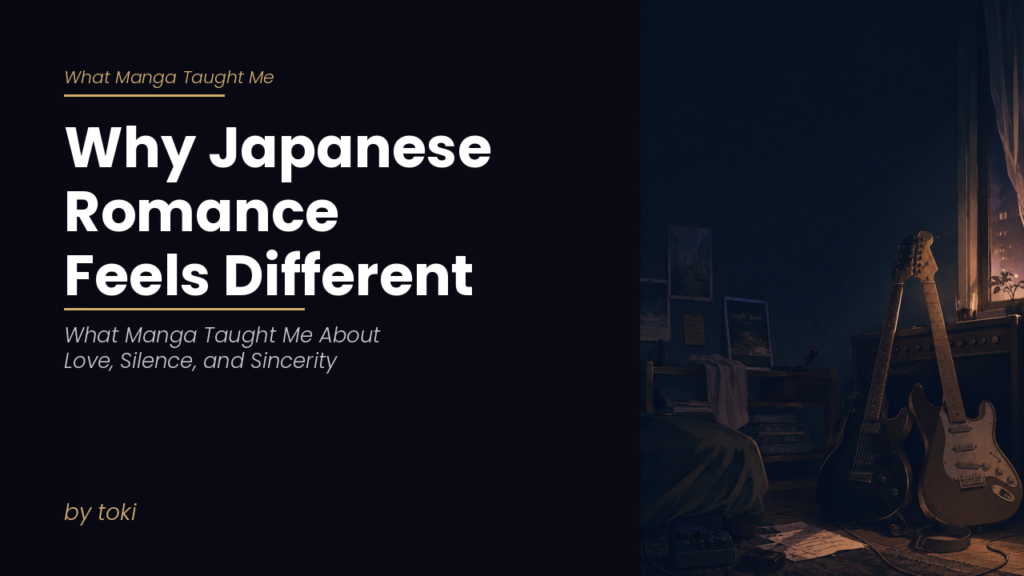
If this resonated with you — I wrote a short book about exactly this feeling.
Why Japanese Romance Feels Different explores what makes Japanese love stories hit differently, through the lens of Given: silence as love, sincerity over perfection, and carrying the past forward.