

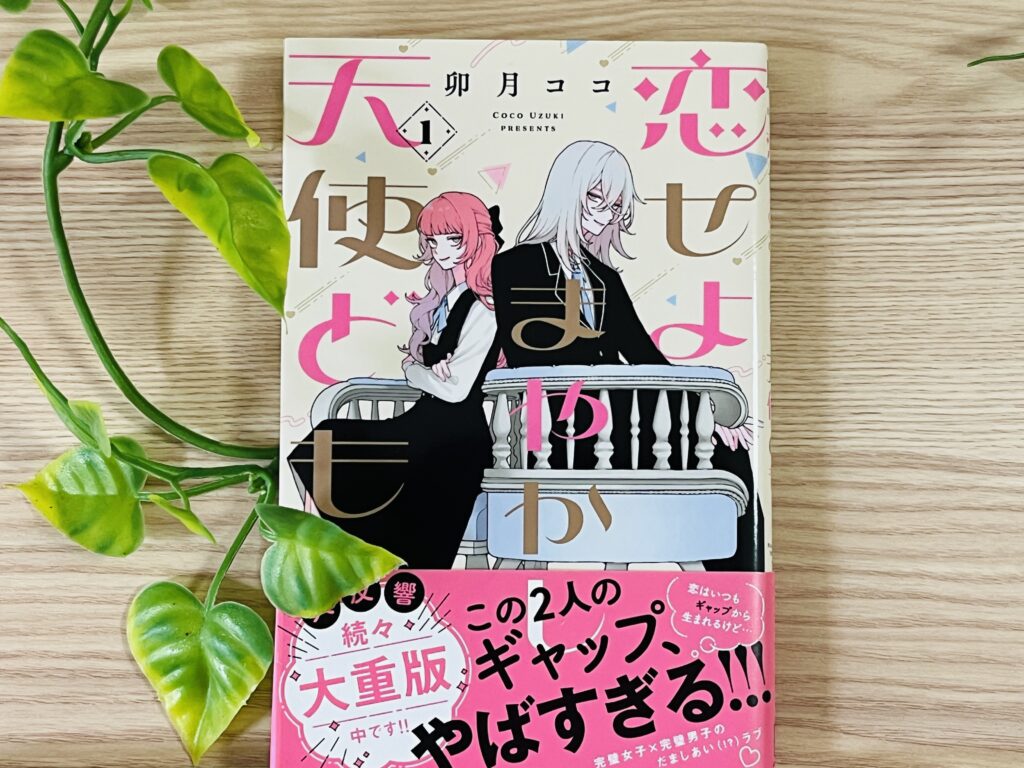
Read enough Japanese school romance manga and a pattern starts to emerge: one lead, or both, gets cast as “the school’s perfect girl” or “the school’s perfect boy” — and that perfection turns out to be hiding a completely different person underneath. Otogi Katsura and Toki Ninomae, the leads of Fall in Love, You False Angels, might be the most direct, unapologetic version of that formula currently running. So why does the school-romance genre keep reaching for “perfect,” only to tear it back down? Here’s a look at the culture behind the trope.
New to the series? Start here:
→ Fall in Love, You False Angels: Story, Cast & 2027 Anime
The Anatomy of the “Perfect” Trope
The “perfect girl” or “perfect boy” archetype in school manga isn’t really about projecting an ideal. If anything, it works because readers clock it as surface-level from the very first page. A character who’s genuinely flawless doesn’t give you much to attach to emotionally, so the story quietly sets up a second layer underneath — someone who’s actually awkward, actually lonely, actually a mess in some very specific way. “Perfect” functions less like a compliment and more like a mask that’s built to be pulled off eventually.
Why School Settings Amplify the Pressure to Perform
Why does this trope show up in school stories so often, specifically? A school is a closed, small-cast environment with nowhere to hide. Once a label like “the perfect one” sticks, breaking from that image risks unraveling every relationship built around it. Otogi and Toki both cling to their perfect personas for reasons that go beyond personality — it’s the pressure of the environment itself, the total absence of an exit. Their particular brand of suffocation is really just the sharpest version of something the school-romance genre keeps circling back to: there’s nowhere to go when you don’t fit the role you’ve been handed.
What “Gap Moe” Actually Means
There’s a term that runs deep through Japanese pop culture for this exact sensation: gap moe — literally, being charmed by the gap. An idol’s unexpectedly ordinary side, a stoic character caught being childish for a second — moments like that don’t read as a letdown. They read as a reward, like you’ve been let in on something real. Otogi’s rare, unguarded flashes of honesty and Toki’s “Black Ikkoku” persona both run on this same mechanism. The polished, perfect surface isn’t incidental to the appeal — it’s what makes the crack in it hit as hard as it does.
See it in action:
→ Fall in Love, You False Angels: The Real Otogi Katsura
→ Fall in Love, You False Angels: The Real Toki Ninomae
What Otogi and Toki Do Differently
What’s interesting is that this manga doesn’t play the gap as a one-way street. In a lot of school romance, there’s an asymmetry: one person reveals themselves, the other person simply gets to witness it. Here, both leads wear the mask, and both take it off — for each other, specifically. Each of them ends up as the other’s sole audience for who they really are. That mutual exposure is what pushes Fall in Love, You False Angels a step past the standard gap-moe formula.
Why This Theme Never Gets Old
“Even the person who looks perfect has a real face underneath” is a theme that keeps getting told and retold because it tracks with something readers already know from experience. At school, on social media, wherever — most people are performing some version of what’s expected of them, at least some of the time. School romance keeps building the “perfect” template up just to knock it down, again and again, maybe because that template is a pretty accurate miniature of the roles we’re all already playing.
Curious about the 2027 anime?
→ Fall in Love, You False Angels Gets a 2027 TV Anime: MAPPA Confirmed as Studio
If this idea stayed with you, I share weekly manga moments, emotional reflections, and the quiet scenes I can’t stop thinking about on Substack.