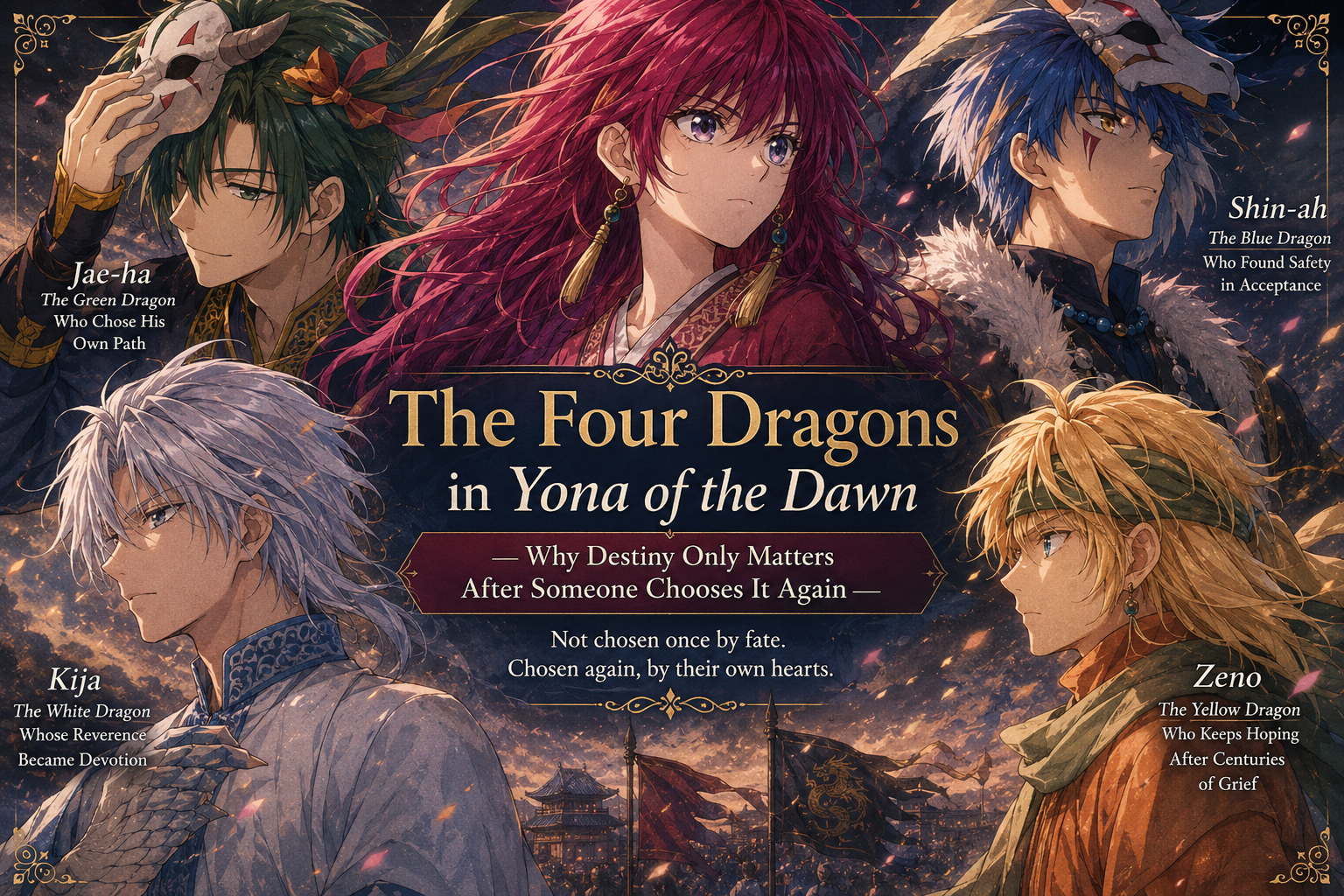
— Why Destiny Only Matters After Someone Chooses It Again —
If the Four Dragons in Yona of the Dawn were always destined to gather around Yona, why does their loyalty feel so emotional?
That question sits at the heart of what makes the series so unforgettable.
At first, the Four Dragons seem like figures pulled directly from myth:
legendary warriors tied to an ancient prophecy, fated to serve the reincarnation of the Crimson Dragon King.
The White Dragon.
The Blue Dragon.
The Green Dragon.
The Yellow Dragon.
Everything about their existence appears predetermined long before they ever meet Yona.
But the manga never allows destiny to become the final explanation.
Instead, the story slowly shifts the emotional focus somewhere much more human:
What happens after someone has already been chosen by fate?
Because the real emotional power of the Four Dragons does not come from prophecy itself.
It comes from the fact that each of them continues choosing Yona long after destiny alone stops being enough.
Yona of the Dawn Does Not Treat Prophecy as the Answer
Many fantasy stories use destiny as emotional shorthand.
A prophecy appears.
Characters fulfill their assigned roles.
Loyalty becomes automatic because fate already decided everything in advance.
But Yona of the Dawn approaches loyalty very differently.
The prophecy may gather the dragons together, but it does not automatically create trust.
That is why each dragon arrives carrying a completely different emotional relationship to destiny.
Kija accepts the prophecy almost immediately as sacred duty.
Shin-ah struggles to trust human connection itself after a lifetime of fear and isolation.
Jae-ha resents the idea that his future should already belong to someone else before he ever gets to choose it himself.
And Zeno understands the tragedy hidden behind the legend long before the others do.
This is what makes the Four Dragons feel emotionally real rather than symbolic.
They are not simply “followers.”
Each one has to decide for himself what Yona actually means beyond prophecy.
And that decision changes the emotional structure of the story completely.
Kija — When Reverence Becomes Personal Loyalty
Kija begins as the dragon most devoted to the legend itself.
To him, Yona initially represents the fulfillment of a sacred promise that has existed for generations.
But as the journey continues, his loyalty gradually changes shape.
Kija watches Yona step directly into danger instead of ruling from safety.
He sees her continue moving forward even when she is terrified.
Most importantly, he realizes she never treats the dragons as weapons or possessions.
That realization matters.
Because eventually, Kija is no longer protecting an idea.
He is protecting her.
And that emotional transition is what makes his devotion feel so moving.
His loyalty stops being inherited reverence and becomes something deeply personal.
Shin-ah — The First Place He Was Not Feared
Shin-ah’s relationship with Yona may be the most emotionally tender in the series.
For most of his life, human connection has been associated with fear.
People avoid his gaze.
Fear his existence.
Treat him as something dangerous rather than human.
Yona changes that almost immediately.
She looks at him without fear.
And for someone who has spent years isolated by terror and loneliness, that moment changes everything.
Because Yona does not simply give Shin-ah acceptance.
She gives him emotional safety.
That is why Shin-ah’s loyalty feels so different from obligation or duty.
He stays beside Yona because being near her becomes the first time existing no longer feels frightening.
The emotional power of his loyalty comes from belonging, not command.
Jae-ha — The Dragon Who Refused Destiny Until He Chose It Himself
Jae-ha’s emotional arc may be the clearest expression of the manga’s larger philosophy.
Unlike Kija, he openly rejects destiny.
He hates the idea that prophecy should determine his life before he ever has the chance to choose it himself.
That resistance is important.
Because if Jae-ha had simply obeyed the prophecy from the beginning, his loyalty would never carry emotional weight.
But Yona never forces devotion from him.
She never uses fate as emotional pressure.
She never demands obedience because of legend or destiny.
Instead, she walks beside people until they decide freely.
That difference transforms everything.
When Jae-ha eventually chooses to remain beside Yona, the choice feels earned rather than inevitable.
His loyalty matters precisely because it was resisted first.
It becomes one of the clearest examples in the story of destiny transforming into personal choice.
Zeno — The Loneliness of Witnessing Everything
Zeno carries a completely different emotional burden from the other dragons.
Unlike them, he already knows the history behind the legend.
He understands how much suffering exists inside the cycle of fate.
And he knows how often hope has failed before.
That knowledge changes the emotional meaning of his loyalty.
Zeno does not stay because destiny excites him.
He stays because he continues hoping that this journey might finally lead somewhere different.
That is what makes him one of the most quietly devastating characters in the series.
His loyalty is built less on optimism and more on endurance.
Even after centuries of grief, he still chooses to remain and witness what happens next.
And that choice carries extraordinary emotional weight.
Why the Four Dragons Feel So Human
What makes the Four Dragons unforgettable is that Yona of the Dawn never allows prophecy to replace emotional choice.
The prophecy explains why the dragons arrive.
But relationships explain why they stay.
That distinction changes the entire emotional meaning of the story.
By the later arcs, the dragons no longer feel like mythical guardians bound to legend.
They feel like people who have each found their own deeply personal reason to remain beside Yona.
And because those reasons are emotional rather than symbolic, their loyalty feels profoundly human.
Continue Reading
If you’re interested in loyalty, emotional responsibility, and chosen devotion in Yona of the Dawn, you may also enjoy:
- Yona — The Girl Who Turned Fate Into Choice
- Yona of the Dawn — Manga Guide and Character Essays
- Soo-won — The King Who Chose Responsibility Over Love
- Speaking Without Aggression in Manga
— What Yona of the Dawn Reveals About Calm Confrontation —
Final Reflection
At the beginning of the story, the Four Dragons are chosen by destiny.
But that is not what makes them unforgettable.
What matters is that they continue choosing again.
To stay.
To trust.
To protect.
To believe.
To witness.
Again and again, they transform inherited fate into personal loyalty.
And that repeated act of choosing is what turns the Four Dragons from legendary guardians into one of the most emotionally powerful portrayals of devotion in manga.
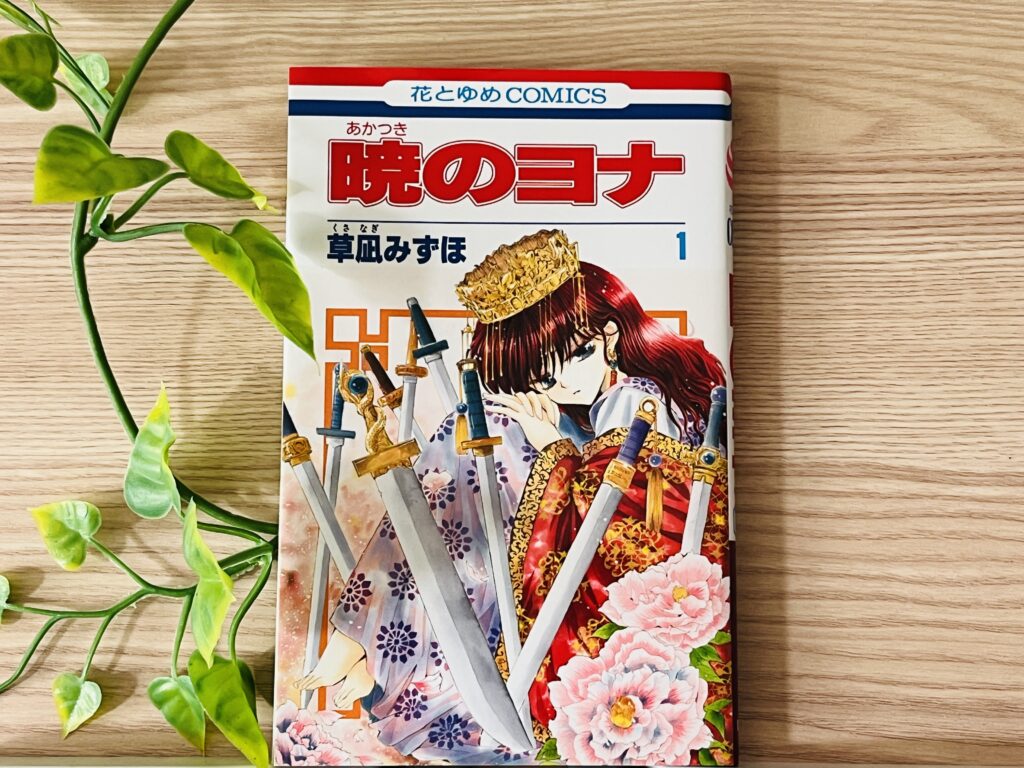
✅ Curious about this one? Check it out here! →Yona of the Dawn, Vol. 1
If this idea stayed with you, I share weekly manga moments, emotional reflections, and the quiet scenes I can’t stop thinking about on Substack.