
Being called a prince sounds like a compliment.
Beautiful. Admirable. Someone others look up to. The word carries a kind of shine to it — the suggestion that being seen this way is something to be grateful for.
In the Clear Moonlit Dusk spends a great deal of quiet time examining what that word actually costs the person it gets attached to.
How a Label Gets Attached
There was no single moment when Yoi became a prince.
It happened the way these things usually happen: gradually, through accumulation, until the perception was simply fixed — and arguing with it would have required more energy than accepting it.
Her height. Her voice. The sharpness of her features. The way she steps in when something is wrong without calculating the cost.
None of these things, on their own, would have been enough. Together, they became a verdict.
And once a verdict like that is in place, it tends to stay.
This is not unique to Yoi, or to manga, or to Japan.
Anyone who has been called the strong one — the responsible one, the one everyone relies on, the one who always seems to have it together — will recognize the shape of what happens next.
The label arrives from outside. Others follow. And then, slowly, the person inside begins to adapt.
The Cost of Adapting
Adapting to a label looks straightforward from the outside.
Meet the expectation. Be what the image requires. Show up as the version of yourself that others have already decided on.
But adaptation has a cost that is not always visible.
For Yoi, it meant learning not to show too much. Not to lose composure when composure was what the image required. Not to need things from people — or at least, not in any way that others could see. Not to believe, genuinely, that she could be someone’s heroine rather than someone’s prince.
These were not conscious decisions. They were habits, built over years, in response to a set of expectations that were never going to go away on their own.
And habits, once built, do not stay on the surface. They move inward. They begin to shape not just behavior, but self-understanding — the quiet, unexamined assumptions a person carries about what they are allowed to want, what they are allowed to feel, and who they are allowed to be.
For a closer look at what this cost Yoi specifically, see: ✅ [Why Yoi Takiguchi Is Not Your Typical Shojo Heroine]
Why Kohaku’s Label Is Different
Kohaku is also called a prince.
But the word sits differently on him — and that difference matters more than it might initially appear.
For Kohaku, the label is external. It describes his appearance, his background, the ease with which he moves through the world. It is a comment on the surface, and it stays there.
For Yoi, the label has gone deeper. It has become a standard she holds herself to — a set of internal rules about how she is supposed to behave, what she is supposed to feel, and what kind of person she is allowed to become.
The same word. Two entirely different weights.
This asymmetry is part of what makes their dynamic interesting. Kohaku carries his label lightly, almost carelessly, in a way that Yoi has never been able to. And without quite knowing he is doing it, that carelessness becomes part of what makes him disruptive to her.
For a closer look at how Kohaku carries his label differently, see: ✅ [Kohaku Ichimura Explained: The Prince Who Chose to See Her Differently]
Meeting Someone Outside the Label
What makes Kohaku’s arrival significant is not persistence, or charm, or the fact that he is good-looking.
It is that he looked at Yoi and did not see the prince.
He did not say she was cool. He did not say she was impressive. He did not admire her from the careful distance that admiration tends to maintain.
He said she was beautiful. He treated her as someone who deserved gentleness. He told her, without softening it, that the people around her were not paying attention.
This was not a strategy. It was simply a different way of looking — one that happened, almost accidentally, to bypass the image that everyone else had agreed to see.
For Yoi, that bypass was not comfortable. It was disorienting.
It introduced a possibility she had quietly stopped considering: that the version of herself she had accepted as fixed might not be the only version available.
For a full introduction to the story and both characters, see: ✅ [What Is In the Clear Moonlit Dusk? Plot, Characters & Why Fans Love It]
Why Removing a Label Is Frightening
But the possibility of stepping outside a label is not the same as being able to do it.
Yoi has been a prince for a long time. The habits built around that identity are not decorative — they are structural. They hold things in place.
To remove the label would mean showing a version of herself that has not been tested in front of another person. A version that might not be received the way the prince always has been. A version that could be misread, or dismissed, or simply too much.
This is where Yoi’s particular kind of courage comes in — and why it looks, from the outside, like hesitation.
Her slowness is not indifference. It is someone standing at the edge of something unfamiliar, trying to find the ground before they step.
“I want to be honest with the person I like — but I can’t.”
That line, which surfaces quietly in the story, is not about dishonesty. It is about the specific difficulty of dismantling a self that was built, piece by piece, for someone else’s comfort.
What This Story Is Really Asking
The prince label is the clearest way this manga frames a question it is asking throughout:
How much of the image others have of you becomes, over time, the image you have of yourself?
And then, underneath that:
Is it possible to exist outside an image that has been in place long enough to feel like identity?
Yoi’s story does not answer these questions quickly. It sits with them. It lets them remain uncomfortable for as long as they need to.
Because that discomfort — the specific uncertainty of not knowing who you are when the expected version of you is set aside — is exactly what the story is exploring.
Kohaku does not resolve it for her. He makes it possible to begin.
Closing
Labels arrive from outside.
But given enough time, they stop feeling like something applied to the surface and start feeling like something load-bearing — something the whole structure depends on.
Removing a label like that is not a single act. It is a gradual process of finding out what was actually yours and what was only ever borrowed from someone else’s expectation.
That process is slow. It is uncertain. And it requires, almost always, someone who can see you before you can see yourself clearly.
For Yoi, that person arrived.
What she does with that — how she moves, or doesn’t move, toward a version of herself that was always there but never named — is what makes this story worth staying with.
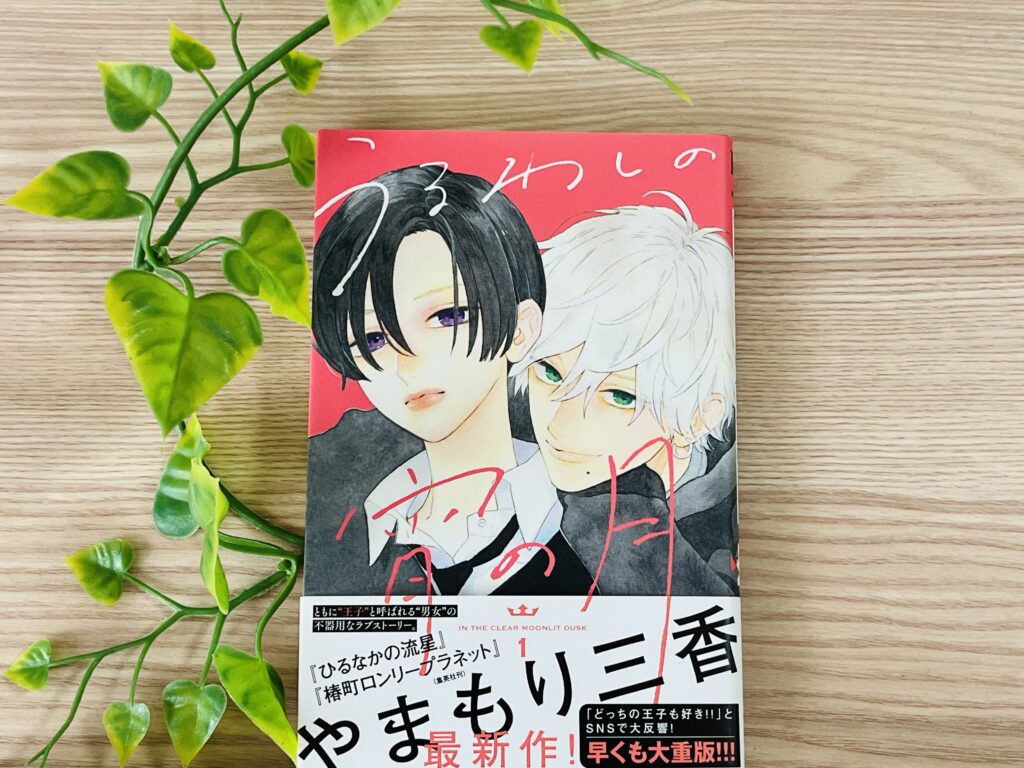
✅ Curious about this one? Check it out here! →In the Clear Moonlit Dusk 1
I also share the small manga moments that stay with me long after reading—the pauses, glances, and choices that never fully leave.
You can follow those weekly reflections on Substack.
✅ My Substack Here!