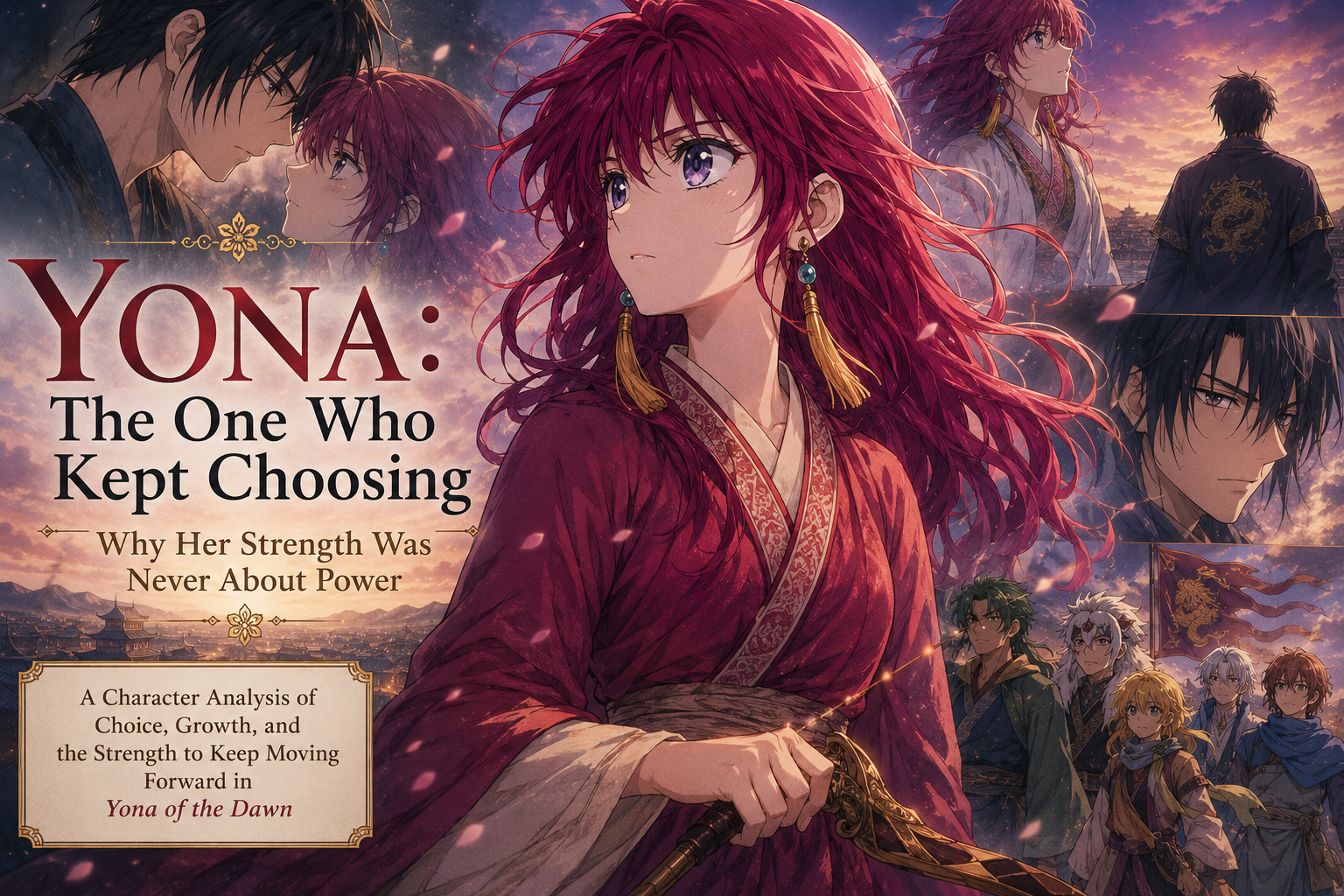
— Why Her Strength Was Never About Power —
At the beginning of Yona of the Dawn, Yona is not strong.
She is protected.
Sheltered.
Someone who has never truly needed to decide anything for herself.
The castle defines her world.
Other people define her safety.
And then, in a single night, everything collapses.
The king is killed.
Her home disappears.
The people she trusted become impossible to understand.
For the first time,
Yona enters a world where no one can protect her from reality.
And this is where her story truly begins.
Not as a princess.
But as someone who must repeatedly decide who she wants to become.
Who Yona Was Before Everything Changed
At first,
Yona lives inside emotional innocence.
She knows little about war,
politics,
poverty,
or suffering.
She relies heavily on Hak.
She believes the world around her is stable.
She assumes the people she loves will remain where they are forever.
And because of that,
she does not yet understand choice.
Not truly.
But after losing everything,
Yona changes in a way that feels deeply human.
Not because she is suddenly fearless.
Not because she is destined to become strong.
But because she slowly realizes
that refusing to see reality is also a choice.
And she no longer wants other people deciding what she is allowed to understand.
The First Turning Point — Choosing to See
Yona could have remained hidden.
She could have survived quietly.
Continued relying on others.
Allowed Hak to carry everything alone.
Instead,
she makes one of the most important decisions in the entire story:
“I want to know.”
That choice changes everything.
Because from that moment onward,
Yona stops existing only inside her own pain.
She begins looking outward.
At war.
At poverty.
At political failure.
At the lives of ordinary people.
And this is where her growth truly begins.
Not through power.
Through awareness.
Yona’s transformation starts the moment
she refuses to look away from reality anymore.
Taking Up the Bow — Choosing Responsibility
When Yona learns the bow,
the moment matters for a reason deeper than strength.
The bow represents responsibility.
Once she holds a weapon,
she can no longer remain emotionally passive.
To fight means:
she may hurt someone
her choices now carry consequences
she can no longer separate herself from the reality around her
This is why Yona’s growth feels so compelling.
She never becomes someone who enjoys violence.
She fights because she refuses to continue running from responsibility.
Again and again,
her strength comes not from aggression—
but from accepting the weight of choice.
Why Yona Does Not Choose Hatred
Yona has every reason to hate Soo-won.
He killed her father.
Destroyed her life.
Took away the future she believed she had.
Hatred would have simplified everything.
It would have allowed her to divide the world cleanly into enemy and ally.
But Yona refuses that simplicity.
Instead,
she asks a far more painful question:
“Why did you choose that path?”
This is what makes her extraordinary.
Because understanding Soo-won hurts far more than hating him.
Hatred creates emotional certainty.
Understanding forces her to confront contradiction.
That the person who destroyed her world
may also genuinely care about the country.
That love,
betrayal,
responsibility,
and sacrifice can exist together.
Yona does not move forward through revenge.
She moves forward by continuing to choose understanding,
even when understanding hurts.
Her Greatest Strength — The Ability to Connect
Yona’s greatest strength is not combat ability.
It is her ability to connect people.
Different tribes.
Different histories.
Different beliefs.
And yet,
people willingly choose to stand beside her.
Not because they are ordered to.
But because they trust her.
This matters.
Because Yona’s leadership is not built on authority.
It is built on emotional sincerity.
People follow her because they believe
she genuinely sees them.
And that ability comes directly from her willingness to keep learning,
keep listening,
and keep choosing.
Yona, Hak, and Soo-won — Three Ways of Choosing
To fully understand Yona,
you have to understand her alongside Hak and Soo-won.
Because this story is not about one form of strength.
It is about three different ways of carrying responsibility.
Hak — The One Who Chose to Stay
Hak chooses loyalty.
No matter how painful the situation becomes,
he remains beside Yona.
His strength lies in endurance.
In continuing to stay.
→ Read more: Hak — The Man Who Chose to Stay
Soo-won — The One Who Chose to Walk Away
Soo-won chooses responsibility over personal attachment.
He abandons closeness,
love,
and emotional belonging
for the sake of the country he wants to protect.
His strength lies in sacrifice.
→ Read more: Soo-won — The King Who Chose Responsibility Over Love
Yona — The One Who Keeps Choosing
Yona stands between them.
She neither clings blindly,
nor abandons everything personal.
Instead,
she keeps choosing.
To see.
To learn.
To understand.
To protect.
To move forward.
Again and again.
And that repetition matters.
Because Yona’s strength does not come from one defining decision.
It comes from her refusal to stop choosing,
even after choice becomes painful.
The Meaning of the “Unrealized Future”
Throughout the story,
one emotional possibility continues haunting the narrative:
What if the three of them had remained together?
Hak’s loyalty.
Soo-won’s intelligence.
Yona’s emotional will.
If those strengths had aligned,
what kind of future could they have created?
That unrealized possibility gives the story much of its emotional depth.
Because it reminds us of something deeply human:
sometimes,
even the right choices cannot coexist.
Final Reflection
Yona was not born strong.
She became strong because she continued choosing,
even after innocence disappeared.
She chose to see reality.
She chose responsibility.
She chose understanding over hatred.
And she chose to keep moving forward,
even when every choice became emotionally painful.
That is why her journey matters.
Not because she wins every battle.
But because she never stops asking herself:
“What kind of person do I want to become now?”
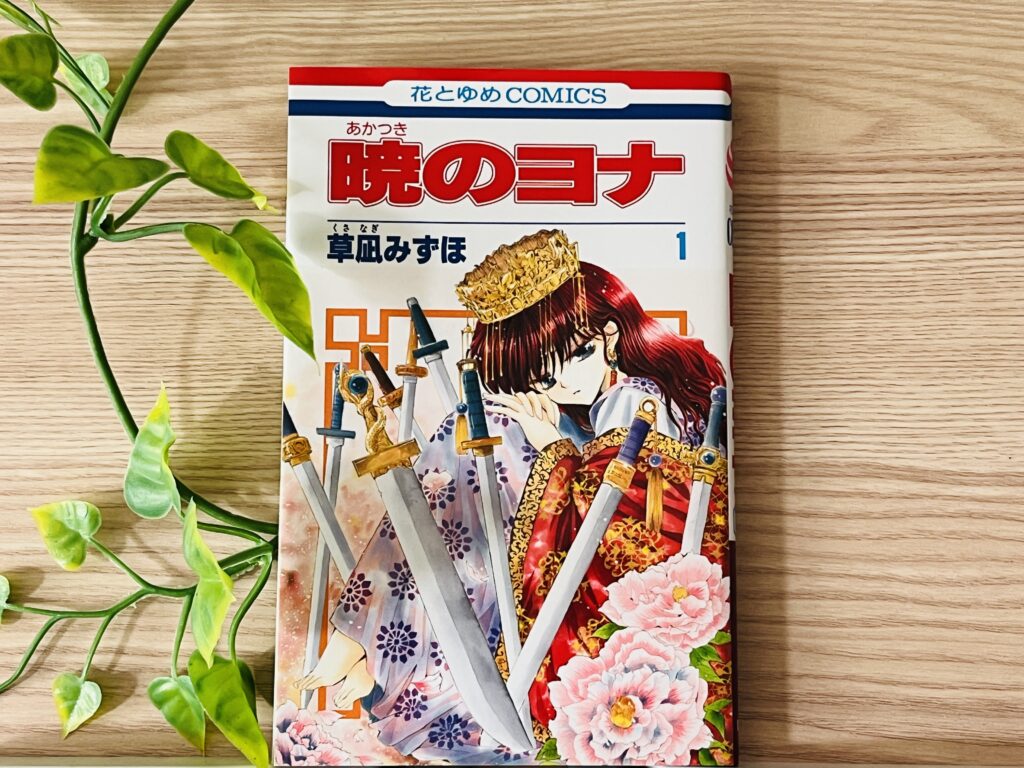
✅ Curious about this one? Check it out here! →Yona of the Dawn, Vol. 1
I also share the small manga moments that stay with me long after reading—the pauses, glances, and choices that never fully leave.
You can follow those weekly reflections on Substack.
✅ My Substack Here!
Related Reading
For the wider story, its political world, and the relationships surrounding Yona’s choices, read the complete Yona of the Dawn manga guide.
To explore how inherited prophecy becomes chosen loyalty, continue with the Four Dragons and their reasons for following Yona.