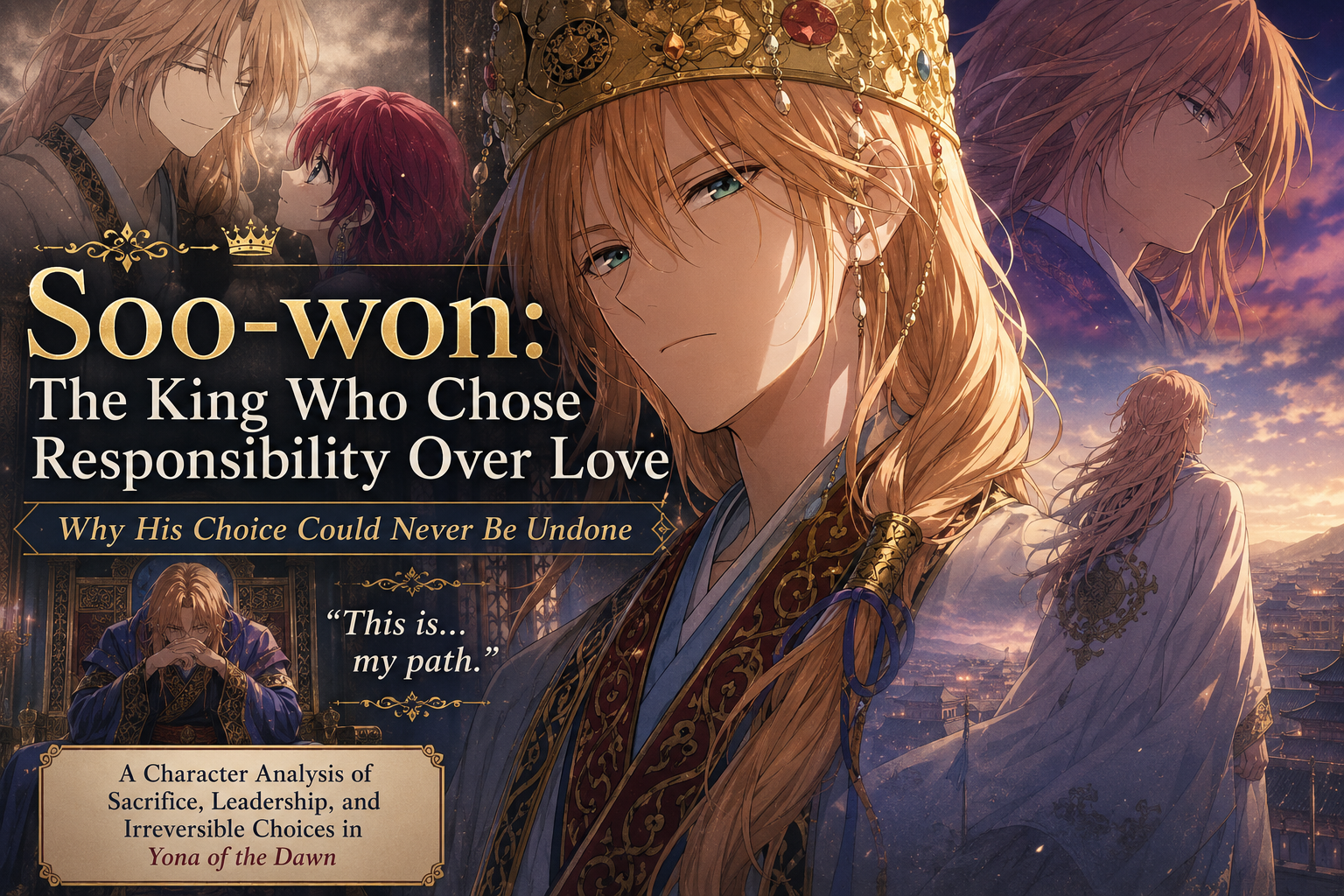
— Why His Choice Could Never Be Undone —
“This is… my path.”
Soo-won is not a character you can easily hate.
He is the one who betrayed.
The one who took the throne.
The one who shattered the lives of the people closest to him.
And yet—
he is also the one who rebuilt a collapsing nation.
That contradiction is what makes him unforgettable.
Because Soo-won is not driven by cruelty.
He is driven by responsibility.
And once he chooses that responsibility,
he accepts that some parts of his life can never be recovered again.
Who Soo-won Is
Soo-won is the king of Kouka Kingdom.
But before that,
he was something far more personal:
Yona’s childhood companion
Hak’s closest friend
Someone who once laughed easily beside the people he loved
At first glance,
he appears calm,
gentle,
and emotionally composed.
But beneath that surface exists someone carrying an enormous internal fracture.
Because Soo-won learned very young
that trust, justice, and love could all collapse at the same time.
And from that moment onward,
he began viewing the world differently.
Not emotionally.
Structurally.
The Core of His Character — A Boy Who Lost Everything
Soo-won’s story does not begin with ambition.
It begins with loss.
As a child,
he learns that his father died not at the hands of an enemy,
but because of political violence tied to the throne itself.
In that moment,
the world stops feeling emotionally safe.
Trust becomes conditional.
Mercy becomes dangerous.
And leadership becomes something tied directly to survival.
This experience shapes everything that follows.
Soo-won does not rise to power because he desires authority.
He rises because he believes
that if nobody acts,
Kouka Kingdom will continue collapsing.
And in his mind,
kindness without action is simply another form of failure.
From Gentle Boy to Irreversible King
Before the betrayal,
Soo-won was genuinely kind.
He cared deeply about Yona and Hak.
He valued closeness.
He treasured the life they shared together.
But becoming king required something else.
Not the removal of emotion—
but the refusal to allow emotion
to change his decisions.
This distinction matters.
Because Soo-won did not become someone without feelings.
He became someone who believed
his feelings could no longer be permitted to interfere with responsibility.
And once he chose that path,
everything changed permanently.
Because hesitation, in his mind,
would cost lives.
A collapsing nation could not be protected through emotional attachment alone.
So he chooses something far heavier:
the country over intimacy
responsibility over personal happiness
action over emotional safety
And he accepts the cost completely.
His Feelings Toward Yona — Defined by Loss
Soo-won’s feelings toward Yona are never fully explained.
That ambiguity matters.
Because regardless of whether his feelings were romantic,
familial,
or something even more complicated,
one truth remains unavoidable:
he chose a future where she could no longer stand beside him.
And he understood that from the beginning.
This is what makes his relationship with Yona so painful.
Not because he accidentally lost her.
But because he knowingly walked toward a future that required losing her.
Hatred would have simplified the relationship.
But Yona of the Dawn refuses simplicity.
Every time Soo-won and Yona face each other,
there is still recognition.
Still history.
Still emotion that cannot disappear completely.
Which is why their relationship never feels emotionally finished.
It feels interrupted.
His Relationship With Hak — Loyalty That Could Not Survive
Hak was not simply a friend.
He was someone Soo-won trusted completely.
Which makes the betrayal devastating on a much deeper level.
Because Soo-won did not betray Hak out of hatred.
He betrayed him because he believed
that protecting the country
and protecting his personal relationships
could no longer coexist.
And once that decision is made,
there is no return.
This is one of the most important truths about Soo-won:
he understands irreversibility.
That is why he rarely explains himself.
Rarely asks forgiveness.
Rarely defends his actions emotionally.
Because he knows
some choices destroy the future they came from.
And he accepts that reality.
The Contradiction That Defines Him
Soo-won is built on contradiction.
He is gentle,
yet capable of cruelty.
He values people,
yet sacrifices relationships.
He understands emotional pain,
yet continues moving forward anyway.
But this is not hypocrisy.
It is the cost of leadership as he understands it.
Soo-won does not become cold.
He becomes someone willing to carry emotional exile
if that exile protects the country.
And that is what makes him tragic.
Not because he lacks humanity—
but because he chooses responsibility despite still having it.
Why Soo-won Feels So Distinctly Japanese
Soo-won reflects a deeply Japanese emotional structure:
the belief that responsibility sometimes requires personal sacrifice.
Not heroic sacrifice in a dramatic sense.
Quiet sacrifice.
The loss of emotional belonging.
The loss of intimacy.
The acceptance of isolation.
He does not seek admiration.
He does not seek emotional validation.
Instead,
he continues walking forward
after already understanding what the path will cost him.
That quiet acceptance is what makes him feel so emotionally heavy.
Related Reading
If you want to explore the man who chose loyalty instead of separation:
→ Hak — The Man Who Chose to Stay
If you want to explore the person who continued choosing understanding instead of hatred:
→ Yona — The One Who Kept Choosing
If you want to explore the world, relationships, and emotional structures surrounding these characters:
→ Yona of the Dawn — Complete Guide
Final Reflection
Soo-won is not a villain.
But he is not innocent either.
He represents something far more painful:
the reality that some choices protect the future
while destroying the lives attached to the past.
That is why he lingers.
Not because he is admirable.
Not because he is cruel.
But because he chose—
and kept walking forward,
even after understanding
that the people he loved could never walk beside him again.
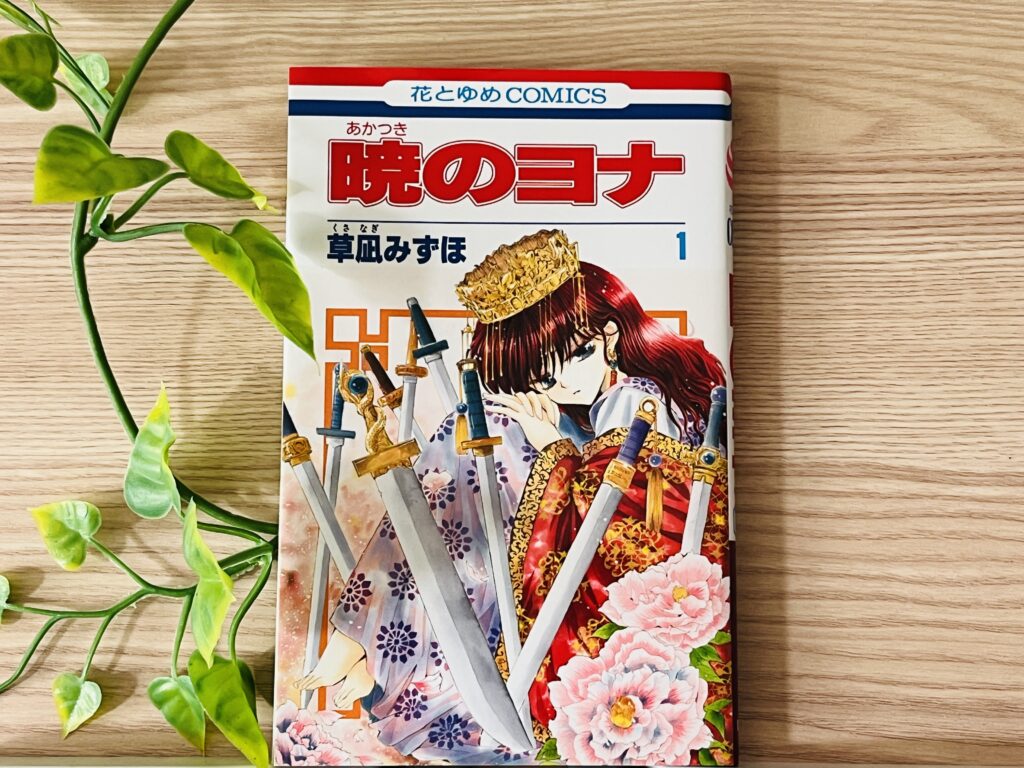
✅ Curious about this one? Check it out here! →Yona of the Dawn, Vol. 1
I also share the small manga moments that stay with me long after reading—the pauses, glances, and choices that never fully leave.
You can follow those weekly reflections on Substack.
✅ My Substack Here!