Being called a stone long enough can actually make you into one.
That isn’t a metaphor.
What bullying does to a person — the way it rewires emotional responses, changes how someone moves through the world, alters the fundamental experience of being around other people — reaches deeper than most stories are willing to show. Honey Lemon Soda is one of the rare exceptions. The way it traces the aftermath of what happened to Uka Ishimori in middle school is more psychologically honest than most manga in its genre ever attempt to be.
This isn’t just a story about a shy girl who falls in love and gains confidence. It’s a story about what sustained cruelty does to a person — and what it actually takes to come back from it.
Why They Called Her Stone
On the surface, the nickname had a simple origin.
Uka didn’t react when people teased her. She didn’t respond when they were cruel. She froze instead of fighting back, went blank instead of crying, stood still instead of running. From the outside, she looked unmoved. Untouchable. Like nothing could reach her.
So they called her Stone, and they said it like it was a fact about who she was rather than a wound they were actively inflicting.
But the cruelty of that nickname runs deeper than the people who gave it to her ever understood — because the stillness they were mocking wasn’t indifference. It was protection.
Uka had learned, the way people learn things that get repeated often enough, that showing a reaction gave her bullies something to work with. Crying made it worse. Fighting back made it worse. Even looking hurt made it worse. So her body found the only option that didn’t immediately invite more: go still. Show nothing. Give them nothing to grab onto.
Stone wasn’t who Uka was. It was the armor she built to survive.
And the people who laughed at it mistook the armor for the person underneath.
What Bullying Actually Builds Inside a Person
The visible part of bullying is the part that’s easiest to see — the words, the exclusion, the direct cruelty.
But what bullying leaves behind is more complicated, and it’s the part that Honey Lemon Soda takes seriously in a way that makes the story feel genuinely true.
When someone is subjected to sustained social cruelty, particularly during the years when they’re still figuring out how to exist around other people, certain adaptations happen that aren’t conscious choices. The nervous system starts scanning for threat as a default. Reading other people’s expressions becomes a survival skill rather than a social one — you get very good at detecting shifts in mood because you need to know what’s coming. Emotional responses get suppressed quickly and automatically, because reacting was dangerous and the body remembers that even after the danger has passed.
These aren’t personality traits. They’re adaptations. And the difficult thing about adaptations is that they don’t simply switch off when the environment changes.
This is why Uka kept freezing in high school even though she desperately wanted to stop. It wasn’t weakness or lack of effort. Her body was still operating on the rules it had learned in middle school — rules that said other people are unpredictable, that showing vulnerability invites attack, that the safest thing is always to go still and wait.
She had moved to a new school. Her nervous system hadn’t gotten the message yet.
The Gap Between Wanting to Change and Being Able To
What makes Uka’s character so compelling is that she never stopped trying.
She wrote goals in a notebook. She told herself things would be different. She chose Hachimitsu High School partly because of a single sentence a stranger had said to her — a boy with lemon-colored hair who had treated her like someone worth speaking to — and she held onto that memory for years as evidence that a different kind of experience was possible.
The intention was real. The desire was genuine.
But intention alone can’t reach the places where bullying actually lives. It lives below the level of conscious decision-making, in the automatic responses that fire before thought catches up. You can know intellectually that you’re safe and still freeze when someone looks at you the wrong way. You can want connection badly enough to ache from it and still find yourself unable to cross the distance when the moment comes.
This is the part of Uka’s story that resonates with anyone who has tried to change something about themselves that runs that deep — the frustrating, humbling experience of knowing exactly what you want to do differently and discovering that knowing isn’t enough.
Why Kai’s Presence Changed Something That Words Couldn’t
Understanding this makes Kai’s role in Uka’s recovery much more significant than it might first appear.
He didn’t fix her. He didn’t talk her out of her fear or convince her with logic that she was worth more than her bullies had told her she was. What he did was something quieter and, in terms of what Uka actually needed, far more effective.
He created consistency.
He showed up the same way, repeatedly, over time. He didn’t grow impatient when she froze. He didn’t pull away when she struggled to respond. He didn’t treat her differently after she stumbled. And slowly — not because of any single moment, but because of the accumulation of many small ones — Uka’s nervous system began to register something it hadn’t experienced in years.
Safety. Predictability. A person who wasn’t going to change the rules without warning.
That is what allowed her body to begin releasing what it had been holding. Not a confession. Not a dramatic intervention. Just the steady, patient presence of someone who kept showing up the same way and never made her feel like a burden for taking as long as she needed.
The Word That Rewrote Something
There is a moment in the story where Kai tells Uka that she isn’t a stone.
She’s a gemstone.
It would be easy to read this as a simple romantic gesture — a sweet line from a boy who likes a girl. But I think it does something more specific than that. The nickname Stone had done damage not just through the cruelty of the people who used it, but through repetition — through the way Uka had slowly started to believe it herself. When you are told something often enough, in enough contexts, by enough people, it stops feeling like their opinion and starts feeling like a fact.
Kai’s reframing didn’t erase that. But it introduced a different possibility — that the very qualities being used to mock her could be read completely differently. That stillness might be depth rather than coldness. That the hardness she had built might be strength rather than emptiness.
Words that name us shape how we see ourselves. The nickname Stone had been doing that work for years. Kai’s words began doing different work. And over time, with everything else that accumulated alongside them, Uka started to believe the second version more than the first.
What This Story Understands That Others Don’t
Most stories about bullying end when the bullying ends.
Honey Lemon Soda understands that this is where the harder part begins.
The aftermath — the flinching, the freezing, the difficulty trusting, the way certain moments can suddenly pull you back to a version of yourself you thought you’d left behind — is where Uka’s story actually lives. And by taking that seriously, by refusing to skip over the messiness of real recovery in favor of a cleaner narrative, the manga earns every moment of its emotional payoff.
Recovery isn’t linear. It circles back. It asks more of you than it seems fair to ask. And it happens not in a single transformative moment but in the slow accumulation of experiences that gradually teach your body something different from what it learned before.
Uka learned that. The hard way, the only way it can really be learned.
And watching her get there — however long it took, however many times she stumbled — is one of the most honest portrayals of that process that shoujo manga has ever offered.
Keep Reading
→ Uka Ishimori — The Girl Who Forgot How to Be Seen A deeper character study of Uka’s inner world and what her growth really looked like.
→ Honey Lemon Soda Ending — The Boy Who Never Stopped Believing in Her Where the recovery journey finally arrived — and what it meant.
→ Kai Miura — The Boy Who Waited for Her to Find Her Own Courage The character whose steady presence made recovery possible.
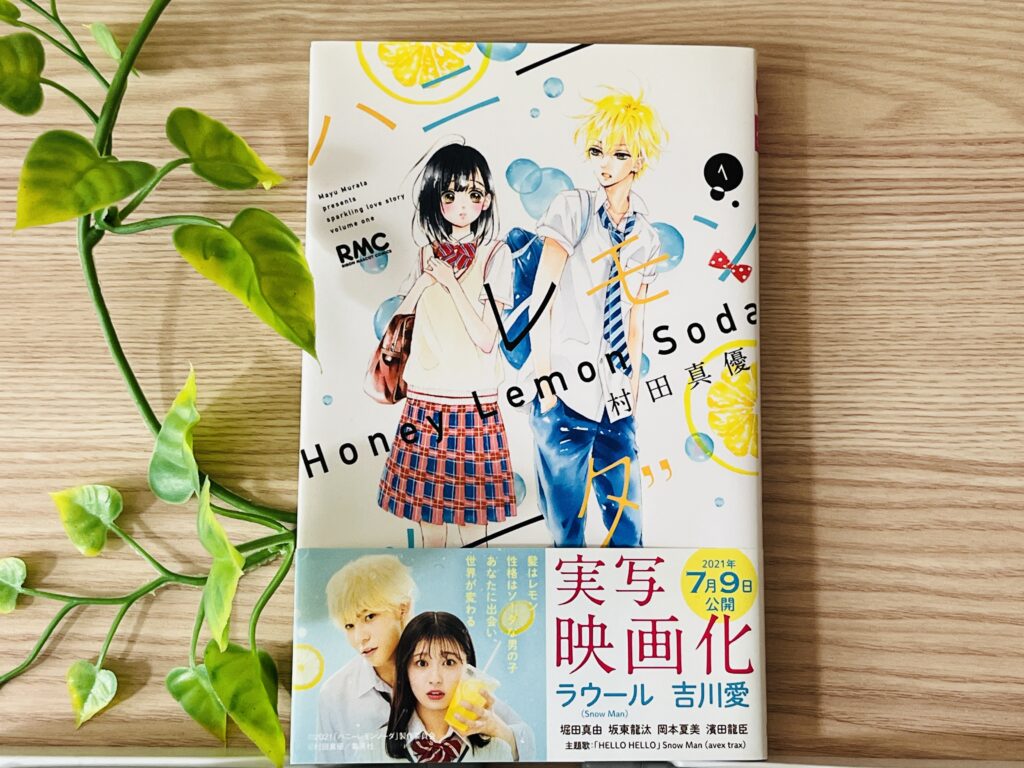
✅ Curious about this one? Check it out here! → Honey Lemon Soda, Vol. 1
I also share the small manga moments that stay with me long after reading—the pauses, glances, and choices that never fully leave.
You can follow those weekly reflections on Substack.
✅ My Substack Here!