“I love you” can be the most freeing thing one person says to another.
Or, depending on how it’s expressed, it can become the beginning of something that quietly takes freedom away.
Shoujo manga has a long history with a particular kind of hero — the one who pulls the heroine forward by force, whose jealousy is framed as passion, whose controlling behavior is presented as proof of how deeply he feels. Readers have grown up with that template. Many have internalized it without quite realizing it.
But in recent years, especially among international readers, that template has started to look different under closer examination. The language of “red flags” and “green flags” has entered the conversation around romance manga and anime in a serious way. People are asking — out loud, in reviews and comment sections and social media threads — whether the relationships they were taught to find romantic are actually healthy ones.
In that context, the relationship between Kai Miura and Uka Ishimori stands out.
Not because it’s dramatic. Because it’s right.
What a Toxic Hero Usually Looks Like
Before looking at what Kai does, it helps to name what he doesn’t do — because the contrast is where his character becomes most legible.
The toxic hero pattern in romance manga tends to follow a recognizable shape. He monitors who the heroine spends time with. He expresses jealousy in ways that limit her behavior — who she can talk to, what she can wear, where she can go. He uses the intensity of his own feelings as justification for overriding her choices. He is threatened by her independence and works, consciously or not, to keep her in a position where she needs him. And when she pushes back, his response tends to be framed as passion rather than as a problem.
These patterns are narratively effective precisely because they are dramatic. Jealousy creates tension. Possessiveness creates conflict. Control creates scenes. But what they describe, underneath the romantic framing, is a relationship in which one person’s emotional comfort is consistently purchased at the cost of the other person’s freedom.
What Kai Does Instead
Kai Miura is aware of his feelings for Uka from relatively early in the story.
He doesn’t act on them immediately. He doesn’t make them her problem. And critically — he never uses them as leverage.
When Uka is talking to someone else, Kai doesn’t interfere. When she is trying to make a decision on her own, he waits rather than stepping in. When she makes a mistake, he gives her space to recover from it rather than using the moment to make himself necessary. And as she grows — as she becomes more confident, more socially capable, more independent — Kai’s response is not anxiety about what her growth means for his place in her life. It’s something that looks much more like pride.
He doesn’t treat Uka as someone who needs to be kept. He treats her as someone who is capable of becoming.
That distinction is everything.
The Line Between Helping and Controlling
The boundary between healthy support and control is often found inside the act of helping — which is part of what makes toxic dynamics so difficult to identify from the inside.
Helping, at its best, is one of the most genuinely loving things a person can do. But helping becomes controlling when it slides into deciding for someone rather than supporting them. When it creates situations where the other person’s dependency is maintained rather than reduced. When the helper’s sense of purpose becomes more important than the helped person’s growth.
Kai stays on the right side of that line with a consistency that is easy to miss because it is so quiet.
He helps Uka when she genuinely needs it. He steps back when she doesn’t. He tells her his opinion when it matters. He leaves the final decision to her. He never positions himself as the person who determines who she should become — only as someone who believes she can become whoever she chooses.
There’s a phrase that gets used in toxic relationships: “I’m doing this for your own good.” Kai never says it, because his actions actually are for her good — not for the version of her good that keeps her close to him, but for the version that sets her free to be fully herself.
Jealousy as Information, Not Weapon
Jealousy is one of the most commonly romanticized emotions in fiction, and one of the most commonly weaponized ones in real relationships.
The romanticized version says: jealousy proves the depth of feeling. If he wasn’t jealous, he wouldn’t care. The intensity of the emotion is evidence of the intensity of the love.
What this framing misses is the difference between feeling jealous and acting on jealousy in ways that limit another person. Kai experiences jealousy — he is human, and the story doesn’t pretend otherwise. But he doesn’t translate that feeling into restrictions on Uka’s behavior. He doesn’t make his emotional state her responsibility to manage. He holds his feelings as his own rather than exporting them onto her as expectations.
That kind of emotional self-containment is genuinely difficult. Feeling something strongly and choosing not to use it as leverage requires a maturity that most romantic heroes in fiction — and, honestly, many people in real life — don’t demonstrate. Kai demonstrates it quietly, without making a performance of it, which is part of why it reads as character rather than as virtue signaling.
A Relationship That Changes as She Does
One of the clearest markers of a healthy relationship is whether both people are allowed to grow — and whether the relationship changes shape as they do.
In toxic dynamics, growth is often threatening. The more independent one person becomes, the more destabilizing it feels to the other. There is a kind of relationship that only functions when one person stays smaller than they could be, and both people, consciously or not, work to maintain that imbalance.
Honey Lemon Soda tracks the opposite of that.
As Uka gains confidence, the nature of her relationship with Kai shifts. What begins as something closer to protection gradually becomes something more like partnership. By the time the story reaches its conclusion, Uka is not the girl who needed to be looked after. She is someone who can stand beside Kai as an equal — and that transition is treated as the point, not as a threat to the romance.
Kai wanted this outcome. He was working toward it from the beginning. The goal was never for Uka to need him forever. It was for her to reach the place where she didn’t.
Why This Kind of Romance Feels Rare
Healthy romance is harder to dramatize than toxic romance, and that’s part of why it appears less often.
Jealousy, control, and possessiveness generate conflict, and conflict generates story momentum. The quiet consistency of someone who respects another person’s autonomy, who manages their own emotions without exporting them, who genuinely wants their partner to grow even when growth means change — that doesn’t produce dramatic scenes. It produces something slower and less immediately gripping.
But it produces something that lasts longer in the reader’s memory, because it resonates with something true.
The readers who find Kai Miura unforgettable are often responding to something they may not have seen clearly before — a depiction of what it actually feels like to be loved without being managed. To be supported without being controlled. To be with someone whose love makes you more yourself rather than less.
What This Story Is Really Saying
Honey Lemon Soda is, at its core, making an argument.
The argument is that loving someone and controlling someone are not the same thing — and that the most romantic thing a person can do is not to possess their partner more completely, but to support them in becoming more fully themselves.
Kai embodies that argument in every quiet choice he makes throughout the story. And by the time the manga reaches its ending, the evidence has accumulated into something that feels less like a fictional romance and more like a model — imperfect and human, but genuinely worthy of the name.
That kind of love is rarer in fiction than it should be.
Honey Lemon Soda offers it anyway.
Keep Reading
→ Kai Miura — The Boy Who Waited for Her to Find Her Own Courage A deeper character study of the man whose love this article is about.
→ Uka Ishimori — The Girl Who Forgot How to Be Seen Understanding what Uka needed — and why Kai’s approach was exactly right.
→ Quiet Men in Manga — Why Restraint Makes Japanese Romance Feel Different The broader pattern that Kai belongs to, and why it resonates so deeply.
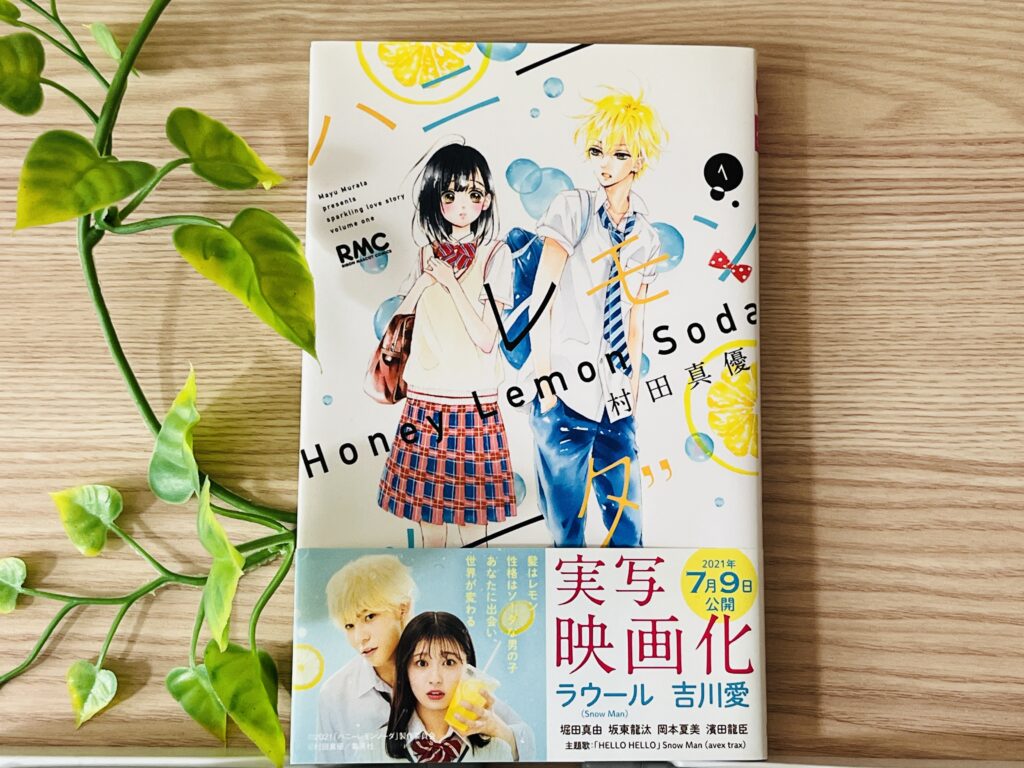
✅ Curious about this one? Check it out here! → Honey Lemon Soda, Vol. 1
I also share the small manga moments that stay with me long after reading—the pauses, glances, and choices that never fully leave.
You can follow those weekly reflections on Substack.
✅ My Substack Here!