
Most introductions to Yuki Itose begin the same way: a university student who is deaf. That’s true. But if the description stops there, it misses the thing this story actually cares about most.
Yuki was born without hearing. Even with a hearing aid, she can’t always tell where a sound is coming from, or what it is. Her daily life runs on sign language, text, and expression.
What makes A Sign of Affection different is that it never treats this as the reason for tragedy. Yuki is not a heroine waiting to be protected. She is someone who chooses to reach outward.
The feeling that moves her forward
The story begins on a train. A foreign tourist asks Yuki for directions, and she freezes — until a senior from her university, Itsuomi Nagi, steps in to help. What draws Yuki to him isn’t rescue. It’s the way he treats her as a person first, without turning her difference into something fragile or exceptional.
What matters here is that Yuki doesn’t stay in the position of “the one who was helped.” She moves toward him — exchanging contact information, visiting the bar where he works, letting the distance between them shrink one small, unremarkable action at a time. None of it is dramatic. But each step is unmistakably hers.
In many romance stories, a character with a disability is placed in the role of someone to be protected. Yuki doesn’t fit that shape. She doesn’t talk herself out of her own feelings. When she first realizes she’s falling for Itsuomi, she doesn’t deny it to herself — even the moment her friend Rin teases her about “having the face of someone in love,” and Yuki flusters into denial, is proof of how honestly she’s already facing her own heart.
The distance from the people who want to protect her
Yuki is surrounded by people who care about her. Chief among them is Oushi Ashioki, her childhood friend, who has stood beside her since they were young and has quietly made it his role to look out for her.
Oushi’s presence gives Yuki’s character more depth — not because he completes her story, but because of how she responds to him. Yuki is used to being protected. But she doesn’t settle into that role. Even as Oushi grows anxious and wary of Itsuomi, Yuki doesn’t lie to herself about what she wants. She understands his worry. She doesn’t dismiss it. But she also doesn’t let it stop her from expanding her world.
That’s a quiet kind of strength. The themes of distance and responsibility that run through A Sign of Affection — usually discussed through Itsuomi or Shin — are just as present in Yuki’s own choices.
A world without sound, but not a closed one
What makes Yuki compelling is that her deafness never becomes the whole of her. She refuses to choose between protecting her own world and opening herself to a new one — she holds onto both.
As her relationship with Itsuomi deepens, Yuki begins to turn her silent world into something she can share. She hands him a notebook of sign language. She reaches him through expression. Slowly, but without hesitation, she works toward saying “I like you” in her own language.
This isn’t a story about overcoming a disability. It’s something smaller and more universal than that — a story about deciding how much of your world you’re willing to open to someone else.
In the end, Yuki was never the one waiting
If there’s one way to describe Yuki Itose, it’s this: she doesn’t wait — she moves toward.
She’s used to being protected, but she doesn’t stay there. She treats difference not as a wall, but as something worth understanding. She faces her own feelings without flinching away from them.
A Sign of Affection stays with readers not only because of how carefully Itsuomi closes the distance between them, but because Yuki is walking toward that same distance the entire time — quietly, but without hesitation.
Related Reading
✅ A Sign of Affection:A Manga About Quiet Distance, Care, and Responsibility
✅ Itsuomi Nagi Explained — A Man Who Adjusts
✅ Oushi Ashioki Explained — Letting Go
✅ Shin Iryu Explained — Restraint as Care
✅ Emma Nakazono Explained — Loving Anyway
✅ Kyouya and Rin Explained — No Rush
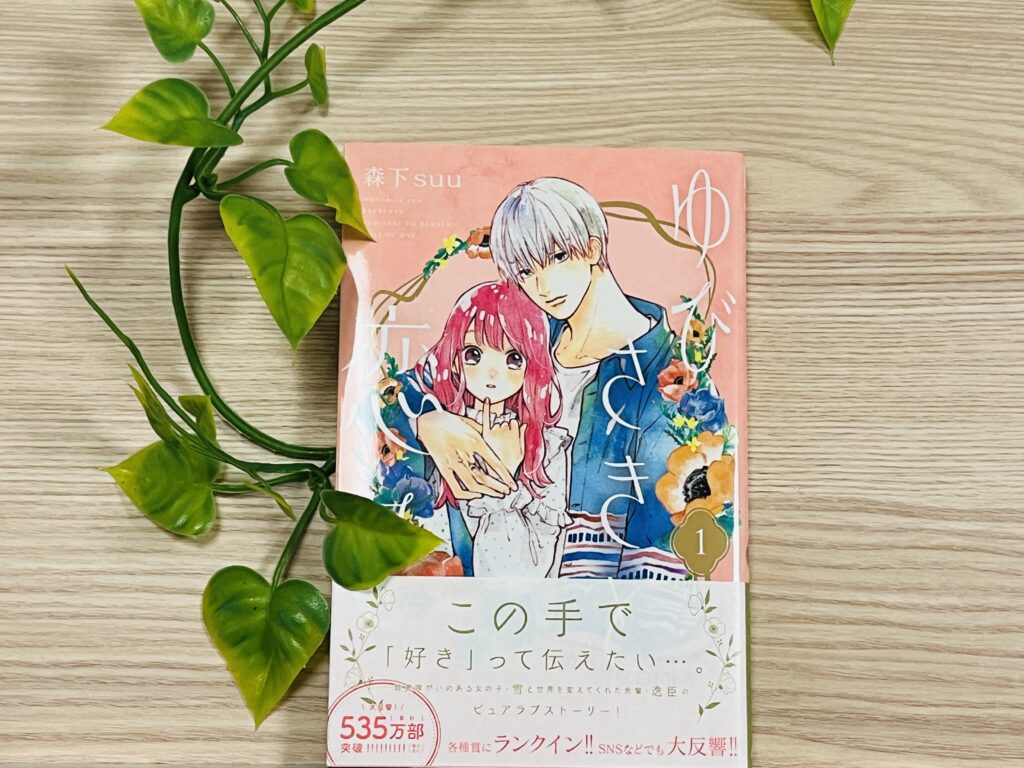
✅ Curious about this one? Check it out here! →A Sign of Affection 1
If this idea stayed with you, I share weekly manga moments, emotional reflections, and the quiet scenes I can’t stop thinking about on Substack.