
— The Person Who Never Meant to Change Everything —
Mizuho never wanted to hurt anyone.
And yet she became deeply entangled in the lives of all four of them.
She received Kizuki’s confession. She sensed something in Shin’s feelings, but couldn’t be sure. She mistook Shugo’s quiet presence for simple kindness.
Only Airu told her the truth himself.
Is Mizuho simply an oblivious heroine?
Or was she someone who spent years caught between her dreams and her emotions — doing her best with what she could see?
This essay looks at Mizuho not as the person who gets to choose, but as a human being who found choosing genuinely hard.
The anime follows Mizuho’s story across two complete seasons — now streaming on Crunchyroll.
✅ Anyway, I’m Falling in Love with You — Anime Guide
The Situation She Was In
Mizuho was a high school student with dreams of becoming a manga artist.
During that period of her life, her future and her ambitions may have taken up more space inside her than romance ever did.
Around her were four childhood friends who had been part of her life since before she could remember.
A relationship that felt like family.
In the beginning, no one had imagined that romantic feelings would ever find their way inside it.
Then the pandemic arrived, and the ordinary life they had always known began to fall apart.
School events disappeared. Uncertainty about the future grew. And Kizuki was the first one to move.
For Mizuho, that confession may have arrived like something completely unexpected.
The Choices She Made — Including the Ones She Didn’t
Mizuho accepted Kizuki’s confession.
That decision may have come less from intense romantic feeling and more from a genuine desire to respond honestly to the feeling placed in front of her.
With Shin, it was different.
There had been moments — small things, quiet signals — that made Mizuho wonder. She may have sensed something, without ever being certain.
That uncertainty changed during a camping trip the group took together.
When Shin suddenly kissed her, everything shifted.
What had been a quiet “maybe” became something she could no longer dismiss.
That day was a turning point for Kizuki too. It was the moment he understood, clearly and without doubt, exactly how Shin felt.
With Shugo, no one noticed anything — including Mizuho.
No one knows when Shugo began to love her. Maybe not even Shugo himself.
With Airu, Mizuho knew something the others didn’t.
Airu had told her directly: that his feelings were for Kizuki.
That made Mizuho the only one among them who knew that Airu’s love was directed toward another man.
It was a secret that only the two of them shared.
Why Her Obliviousness Matters
What makes Mizuho interesting as a character is that she never really holds the upper hand in her own love story.
In many shōjo manga, the heroine is surrounded by people who love her — and gradually, consciously, she works toward choosing one of them.
Mizuho doesn’t quite fit that shape.
Even when she senses something, she can’t be sure. Even when she becomes sure, she doesn’t know what to do with it.
This isn’t weakness. It may reflect something the story is doing deliberately:
This manga is less about Mizuho’s romance and more about the emotional structure that surrounds her.
The moment Mizuho fully understands everything, the relationships with all four of them would change forever.
In that sense, her not-quite-knowing becomes, almost ironically, one of the things that kept their family-like bond intact for as long as it lasted.
Her Role in the Story
Mizuho is not simply “the heroine.”
She is the point toward which all the emotion in this story flows.
Kizuki’s action. Shin’s patience. Shugo’s silence. Airu’s self-sacrifice.
Every feeling in the story swirls around this one person.
And yet Mizuho herself — at the very center of that current — is somehow the character who remains furthest from understanding it.
That creates a strange and quietly painful position:
a heroine who is also, in some ways, the story’s most unknowing observer.
What Mizuho Reveals About Japanese Romance
In many romance stories, the heroine’s choice is what brings the narrative to its conclusion.
But Mizuho’s arc feels less like choosing and more like the process of finding out who she actually is.
Pursuing her dream. Facing the way her relationships keep changing. Becoming an adult.
All of these carry the same emotional weight as romance itself.
This may reflect a value that appears often in Japanese shōjo manga:
Love is one part of life — not the whole of it.
For Mizuho, her relationships with all four of them were perhaps never really about deciding who was “the right answer.” They were mirrors — reflecting back the kind of adult she was slowly becoming.
Final Reflection
Mizuho couldn’t fully see what was right beside her.
But that may not have been simple obliviousness.
She was carrying her dreams, the collapse of her ordinary life, and the emotions placed in front of her — and perhaps she was simply doing her best with all of it, one thing at a time.
What she couldn’t see will return to her, ten years later, in a different shape.
And when it does — what will she finally understand? What will she choose?
That may be the question this story was always really asking.
Related Reading
✅ Shin Kashiwagi Explained — The Man Who Loved Too Carefully
✅ Shugo Hoshikawa Explained — The Love He Kept Hidden
✅ Kizuki Hazawa Explained — The Man Who Moved First, and What It Cost Him
✅ Airu Izumi Explained — The One Who Protected the Group Instead of His Own Heart
✅ Ending Explained — Who Does Mizuho End Up With?
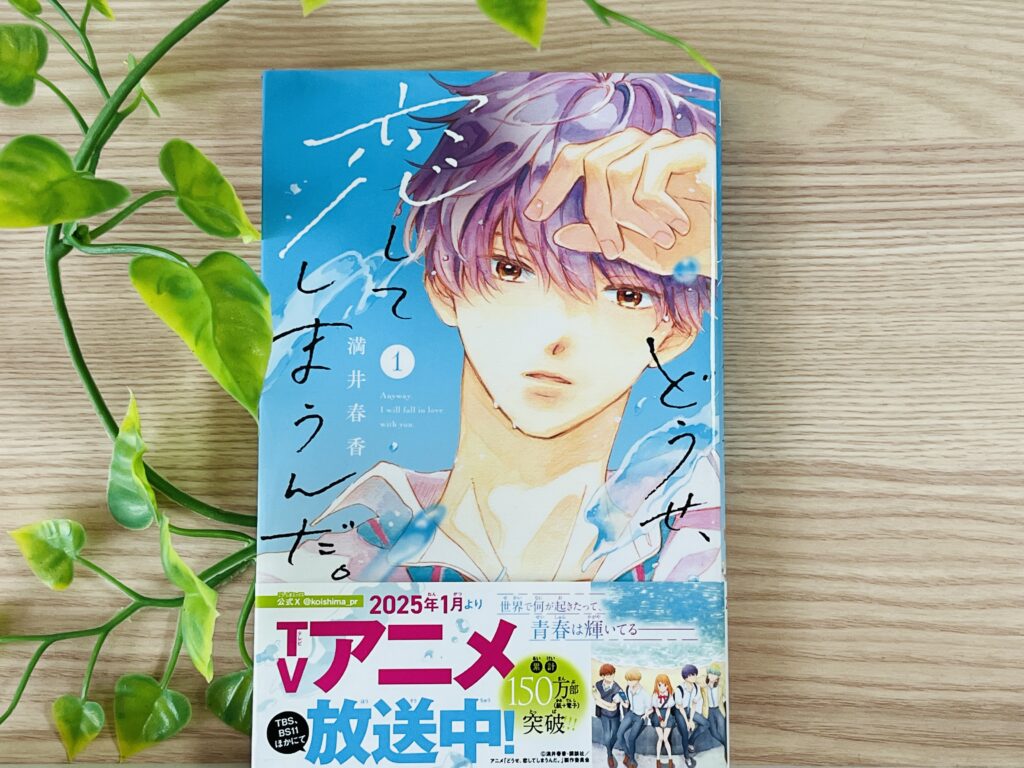
✅ Curious about this one? Check it out here! →Anyway, I’m Falling In Love With You. 1
I also share the small manga moments that stay with me long after reading—the pauses, glances, and choices that never fully leave.
You can follow those weekly reflections on Substack.
✅ My Substack Here!