This essay contains spoilers for the first season of Akane-banashi.
What stayed with me most after watching Akane-banashi was not only the tension of the performances. It was the relationship between master and apprentice.
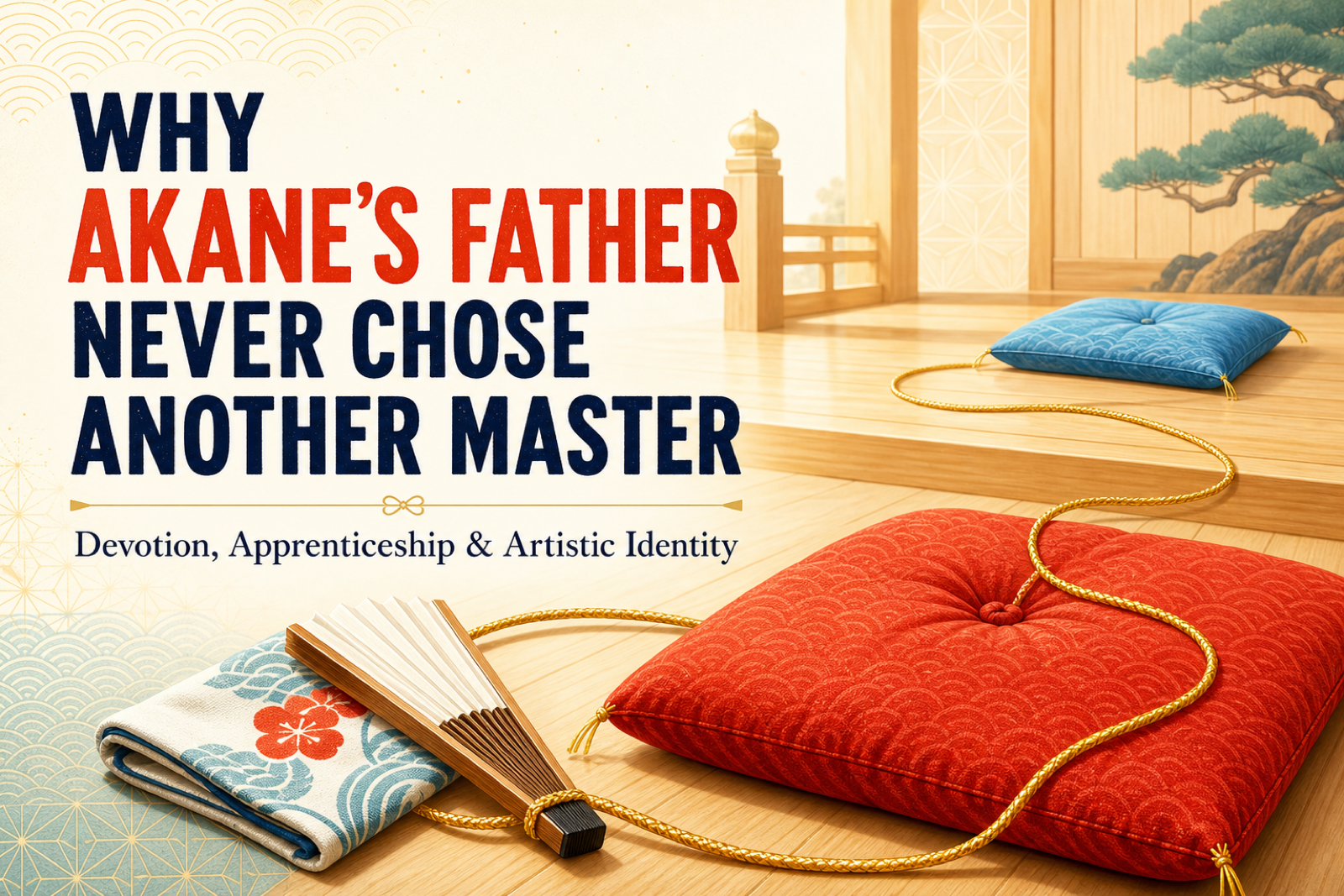
Akane’s father, Shinta Arakawa—whose real name is Toru Osaki—devotes years to reaching shin’uchi, the highest professional rank in Tokyo rakugo. Then, during his promotion examination, Issho Arakawa fails every candidate and expels them from the school.
Shinta does not stop loving rakugo. He does not lose the ability to make people laugh, either. Yet he does not seek out another master and begin again. He leaves the profession and becomes an office worker.
At first, I found his decision difficult to understand. If rakugo mattered so much to him, why not continue somewhere else? Why not choose another teacher?
But as the series opened the door to the rakugo world, I began to realise that changing masters is not like changing schools, employers, or private tutors. For Shinta, rakugo and being Shiguma’s disciple could not be separated so easily.
A Master Is More Than a Teacher
In Tokyo rakugo, becoming a professional traditionally begins by asking a shin’uchi performer to accept you as an apprentice. The Rakugo Arts Association explains the seriousness of that choice very plainly: once accepted, the performer and apprentice enter a lifelong master–disciple relationship.
The master does not merely teach stories, gestures, and changes of voice. The apprentice learns how to behave backstage, how to address senior performers, how to serve the theatre, and how to carry themselves as a member of the profession. They receive a stage name and become part of a lineage.
Those who study under the same master are called sibling disciples. That expression reveals something important: the school is not simply a class. It can resemble an artistic family, formed around the person who accepted responsibility for bringing each disciple into the world of rakugo.
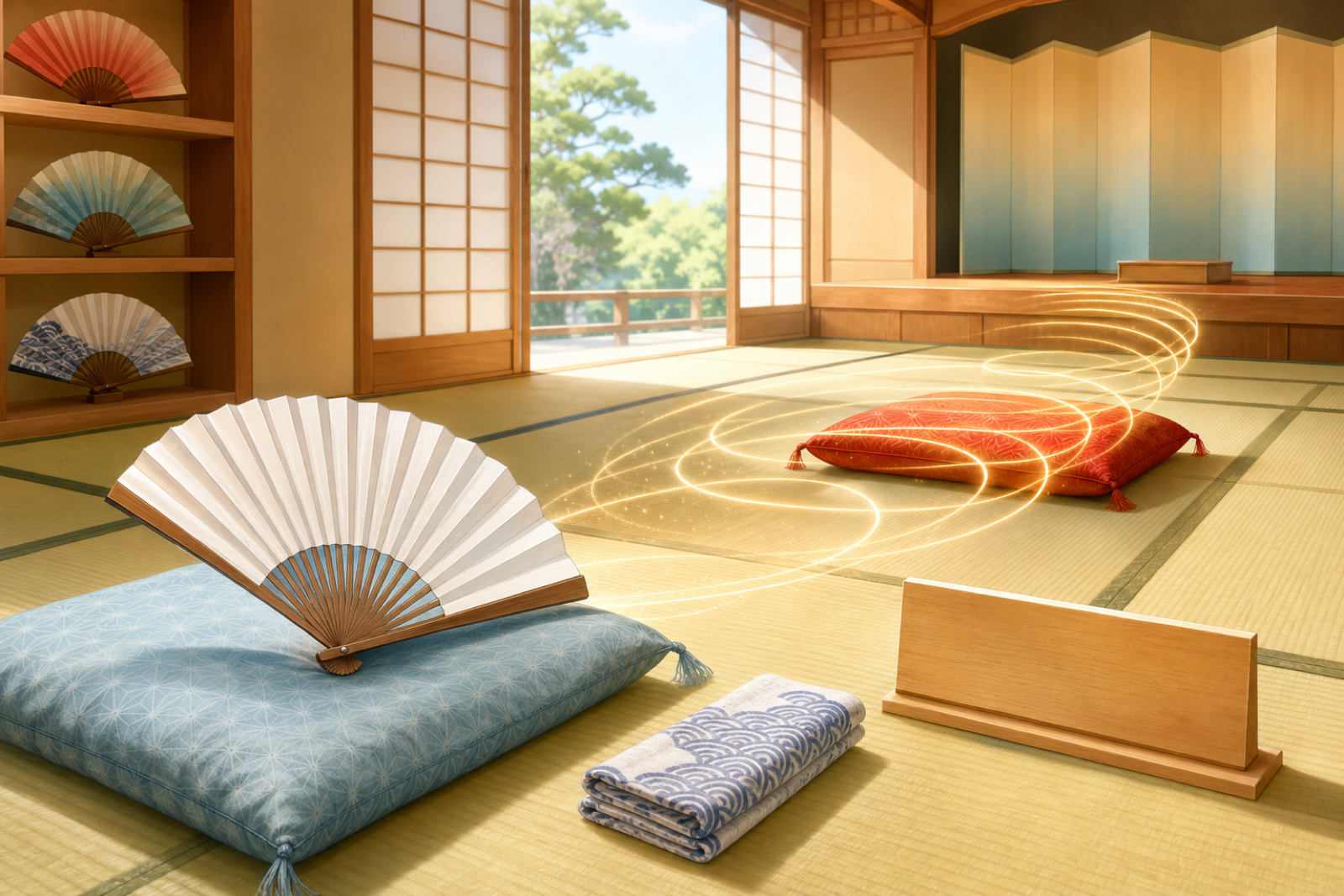
The official Akane-banashi character descriptions identify Shinta as Shiguma’s disciple and Akane as a girl whose path begins with her father’s expulsion. That wording may sound simple, but the series gradually shows how much identity is contained inside the word “disciple.” Shiguma is not merely a former instructor. He is the only master who made Shinta a rakugo performer.
Rakugo Without Shiguma Was No Longer His Rakugo
Shinta chooses being Shiguma’s disciple over finding a way to remain onstage.
Or perhaps it would be more accurate to say that he cannot imagine continuing as someone who is no longer Shiguma’s disciple.
From a modern, individualistic point of view, that can seem painfully inflexible. He has a family, a dream he pursued for years, and an obvious love for the art. Why should one expulsion be allowed to take everything from him? Part of me wanted to tell him that he was free to begin again.
Yet his rakugo was never something he created alone. It contained the stories Shiguma taught him, the performances he watched, the discipline he acquired, and the years in which his fellow disciples became part of his life. He could not simply remove the technique from those relationships and carry it elsewhere as though nothing had happened.
What Shinta protects is therefore more than a hierarchy or a rule. He protects the foundation of his identity as an artist: “Shiguma is my one master.”
Devotion—or a Form of Confinement?
I do not want to turn his decision into a simple celebration of beautiful Japanese loyalty.
A bond strong enough to last a lifetime can support a person, but it can also restrict them. Gratitude and loyalty may make it difficult to leave even when a system behaves unfairly. If we describe every sacrifice as admirable, we risk ignoring the pain such structures can create.
Shinta loses the career he loves. His family must live with the consequences. From the outside, his refusal to find another path may look less like strength than surrender.
Still, I cannot call his choice weakness. He refuses to replace the person who gave shape to his artistic life simply because circumstances have changed. Even when that loyalty costs him his dream, he will not rewrite where he came from.
This is one of the qualities I admire in Akane-banashi. It does not present apprenticeship as nothing more than a lovely old tradition. It allows warmth and severity, belonging and pressure, devotion and loss to exist together.
Akane Picks Up the Rakugo Her Father Put Down
Akane’s story begins where Shinta’s career ends.
She initially pursues rakugo to prove that her father’s performance did not deserve rejection. But resentment is not the only thing she inherits from him. She remembers the joy of his storytelling, the way he filled an empty stage with people and places, and the sight of someone placing his whole life inside a single performance.
Because her father had to let rakugo go, Akane understands its weight. She cannot grow through talent and determination alone. She needs Shiguma, her senior disciples, her rivals, her audiences, and even Issho—the man she once saw only as her father’s enemy.
Each of them gives her something different. What emerges is not a copy of Shinta’s rakugo, nor a perfect reproduction of Shiguma’s. It slowly becomes Akane’s own voice.
To Have a Master Is to Accept Where You Began
Akane-banashi made me understand a little more of what it means to have a master.
It cannot mean obedience alone. Nor can it mean reproducing another person’s art without change.
Perhaps it means remembering who gave you your beginning—and accepting the responsibility of turning what you received into something only you can create.
Shinta stops being a professional performer, but he never truly discards the fact that he is Shiguma’s disciple. Akane, who grows up watching him carry that choice, does not merely repeat her father’s path. She walks toward the place he could not reach.
The bond with his one master appears to end Shinta’s life in rakugo. Yet the feeling contained inside that bond passes to Akane and becomes the beginning of a new art.
In Akane-banashi, inheritance does not mean preserving something unchanged. It means receiving what another person protected—and allowing it to live again in a different voice.
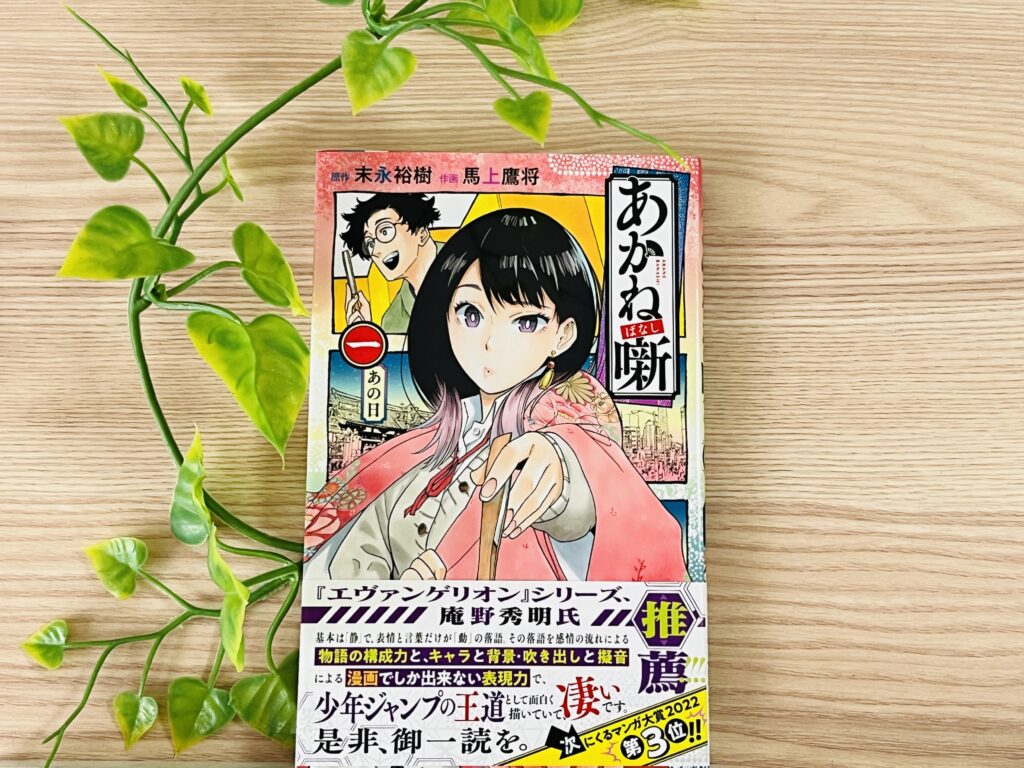
✅ Curious about this one? Check it out here! →Akane-banashi, Vol. 1
Read next: Akane-banashi: Story, Characters & 2027 Anime Guide