This essay contains spoilers for the first season of Akane-banashi.
One detail in Akane-banashi genuinely surprised me: taking an apprentice does not necessarily bring a rakugo master any obvious reward.
A master is not paid a salary for accepting a disciple. An apprentice may help with errands and daily tasks, but the master must spend time teaching, correcting, worrying, and sometimes supporting a person who is not yet capable of standing alone.
While continuing to polish their own performance, the master accepts responsibility for turning an unknown beginner into a professional storyteller.
So why do it?
Akane-banashi suggests that “preserving tradition” is only the beginning of the answer. To raise an apprentice is to give away time, trust, and part of one’s artistic identity—without knowing exactly what will return.
An Apprentice Does Not Simply Make Life Easier
When we imagine an apprentice, we may picture someone carrying a master’s bag, cleaning, or helping with everyday errands.
Those duties are real. The Rakugo Arts Association explains that a trainee may accompany the master to work, help at the master’s home, learn how to handle kimono, practise musical instruments, and prepare for backstage life before formally becoming a zenza.
But the help an apprentice provides hardly seems equal to the responsibility a master accepts.
The master teaches stories and gestures, but also conduct: how to behave backstage, how to address senior performers, how to serve the theatre, and how to face an audience. When the apprentice makes a mistake, people do not see only the individual. They also ask whose disciple that person is.
A disciple inherits more than material. They carry a stage name, a school, a way of approaching the art, and some part of the master’s reputation.
The master is therefore not merely teaching a skill. The master is placing their own name in another person’s hands.
Teaching Also Tests the Master
Shiguma does not give Akane every answer in words.
He sends her into unfamiliar situations, places her in front of real audiences, and allows discomfort and failure to reveal what an explanation cannot. He observes how much she understands, offers the experience she needs next, and then waits for her to find the lesson herself.
Giving precise instructions might be faster. It might even produce a convincing imitation of the master. But an apprentice who can only follow instructions will never learn to read a room, interpret a story, or build a form of rakugo that belongs to them.
Teaching therefore requires more than knowledge. It requires the ability to wait.
The master cannot discover the disciple’s answer on their behalf. Even when the apprentice struggles, the master must resist the temptation to finish the lesson for them.
Rakugo performer Karoku Yanagiya has described how becoming a master began a new stage of his own training. That idea changed the way I saw Shiguma. Raising a disciple is not a completed artist pouring wisdom into an empty person. The disciple forces the master to examine what they believe, what they can explain, and what kind of artist they hope to send into the world.
An Oral Art Cannot Survive as an Archive Alone
Rakugo cannot be preserved by keeping scripts alone.
The same story changes through voice, gaze, posture, rhythm, silence, and the distinction between characters. So much of the art lives outside the written words.
An apprentice listens at close range, absorbs the master’s breathing and timing, tries the story, receives corrections, and then discovers through an audience what they still do not understand.
That is how an art moves from one body to another.
Yet inheritance does not mean making a perfect copy. Akane-banashi repeatedly shows that two performers can tell the same traditional story and create entirely different worlds. One makes emotion vivid; another builds the setting through knowledge and detail; another changes the rhythm in response to the room.
What a master gives a disciple is not a finished product. It is more like a seed. The disciple must grow it in a different era, before a different audience, through a personality the master could never possess.
A Master Must Allow the Art to Change
There is another difficult part of raising an apprentice: accepting that what you teach will eventually become something different.
A disciple begins by following. But growth brings interpretation, disagreement, and an individual voice. One day the apprentice may reach a new audience, make choices the master would never make, or even become the more celebrated performer.
If the purpose were simply to preserve the master unchanged, the disciple would never be allowed to leave the master’s shadow. The result might be imitation, but not living inheritance.
Shiguma does not need Akane to become another Shinta. Nor does he ask her to reproduce his own rakugo perfectly. He wants her to honour what she received without being imprisoned by it—to find the performance that only Akane can give.
That may be one of the most generous things a teacher can do: prepare someone not to remain beneath them, but to step beyond them.
Taking an Apprentice Means Choosing the Future
Does taking an apprentice truly offer a master nothing?
In immediate financial or practical terms, the burden may outweigh the benefit. But through a disciple, a master participates in the future of the art that shaped their life.
Whom will I teach? What must remain? What may change? What kind of performer deserves to carry this name?
The way a master raises disciples reveals their own answer to a larger question: what should rakugo become?
The masters in Akane-banashi do not share one method. Some push harshly. Some watch for years. Some focus on weakness; others recognise a possibility that is not yet visible. Their teaching styles express different visions of the art’s future.

Why Shiguma Chooses to Raise Akane
To Shiguma, Akane is not simply a gifted young performer. She is the daughter of Shinta, the disciple who was forced to put rakugo down.
Shiguma’s decision to guide her must contain his feelings for Shinta. Yet he never treats Akane as a replacement for her father. He does not make avenging Shinta the final purpose of her art.
He allows her to begin with her father’s rakugo, then gradually asks her to move beyond it. His responsibility is not to create the performer he wants, but to help Akane discover the performer she can become.
That is why raising a disciple is not solely for the master. It is for the apprentice, the school, the art itself, and audiences who do not yet exist.
Every Master Was Once Someone’s Disciple
No matter how accomplished the master, they did not begin as one.
They were once corrected, supported, given time, and allowed onto a stage by someone else. Their names, stories, gestures, and understanding of the profession arrived through earlier generations.
Perhaps the debt created by that care cannot be repaid directly to the person who gave it. Instead, it travels forward.
The master returns what they received by giving it to someone new.
Teaching Is Giving Your Time to a Future You May Never See
An apprentice consumes time. The master teaches, watches failures, carries worries, and accepts that success is never guaranteed. The disciple may misunderstand the art, leave the profession, or choose a path the master did not expect.
Still, masters continue to raise people.
They do so because rakugo does not belong to one performer alone. If no one accepts an apprentice, the living chain ends.
After watching Akane-banashi, the word “training” felt much heavier to me. It means giving someone room to fail. Waiting while they search for an answer. Accepting that they may transform what you taught them. And preparing them for a world that will continue after you are gone.
Perhaps a master does not take an apprentice to gain something now. A master does it to return what was once received—to the future.
The beauty of the master–disciple relationship in Akane-banashi does not lie only in the apprentice’s devotion. It also lies in the master’s willingness to spend irreplaceable time on someone who must eventually leave their shadow.
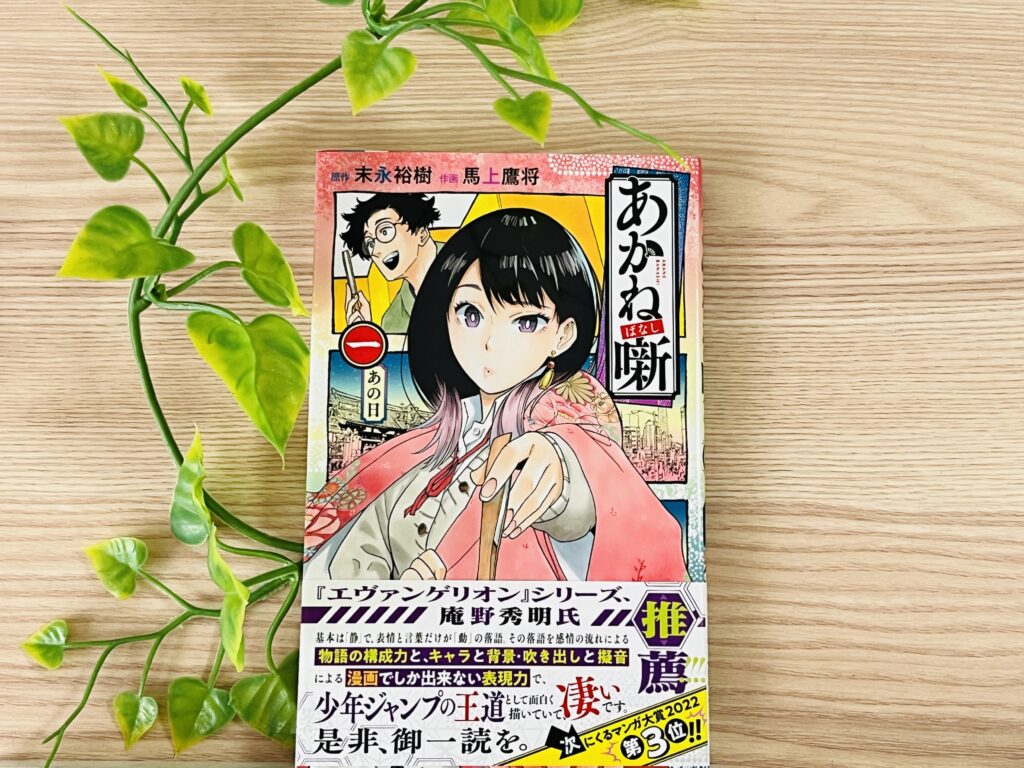
✅ Curious about this one? Check it out here! →Akane-banashi, Vol. 1
Continue reading: Why Akane’s Father Never Chose Another Master
Start with the series guide: Akane-banashi: Story, Characters & 2027 Anime Guide