Some stories enter quietly.
No dramatic incident. No sudden catastrophe. Just a morning when someone meets someone else — and finds, without quite knowing when it happened, that returning to before is no longer possible.
In the Clear Moonlit Dusk is that kind of story.
Basic Information
| Japanese Title | うるわしの宵の月 |
| English Title | In the Clear Moonlit Dusk |
| Author | Mika Yamamori |
| Publisher | Kodansha (Desert magazine) |
| Genre | Romance / Coming-of-Age |
| Volumes | 10 (ongoing as of early 2026) |
| Anime | Yes — began airing January 2026 |
| Live-action Film | Announced for autumn 2026 |
| Total Copies | Over 4.4 million |
What This Story Is Actually About
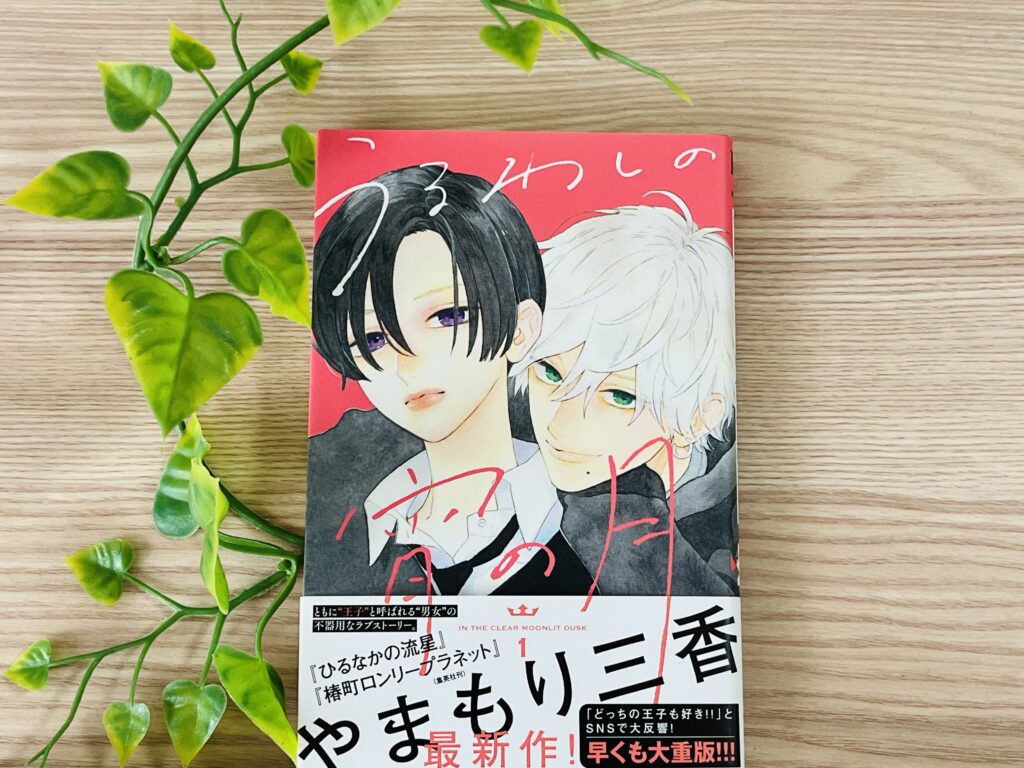
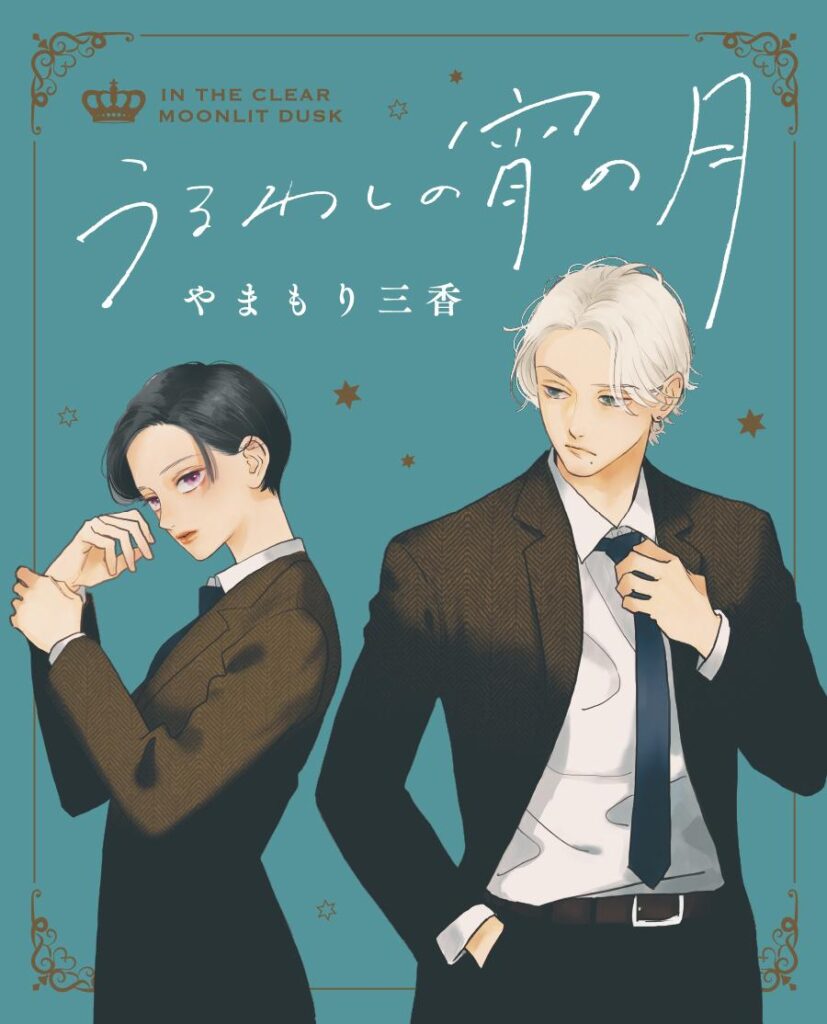
Yoi Takiguchi is a first-year high school student.
She is tall. Her voice is low. Her features are sharp in a way that people have always found striking — composed, almost architectural. She moves through the world with a steadiness that others interpret as confidence, and helps people without hesitation or calculation.
Somewhere along the way, her classmates started calling her a prince.
She did not choose this. But she adapted to it — the way people adapt to most things that are decided for them before they are old enough to argue.
Then she meets Kohaku Ichimura.
He is a second-year student at the same school, and he carries the same label — though for entirely different reasons. He is wealthy, easy in every room he enters, and comfortable with attention in a way that Yoi has never been, despite receiving plenty of it.
Their first meeting is not graceful. But something happens anyway.
Kohaku looks at Yoi and says, without softening it:
“You are incredibly beautiful.”
Not cool. Not impressive. Not prince-like. Beautiful.
For someone who has spent years being admired from a careful distance — seen as an image rather than a person — that word arrives differently.
This is a story about what happens after that word lands. About two people who have both been perceived a certain way for a long time, and who begin, slowly and with difficulty, to wonder whether they could be seen differently.
By someone else. And eventually by themselves.
The Two Leads
Yoi Takiguchi
The first line Yoi thinks in chapter one is this:
“I know better than anyone that the heroine role doesn’t suit me.”
That sentence contains the whole of her situation.
She has not been pursued. She has been admired — which is a different thing, and lonelier in its own way. No one has looked at her and seen someone who might need reassurance, or softness, or the particular kindness of being treated as ordinary.
She has no romantic experience. She approaches her own feelings the way she approaches most things: carefully, from a slight distance, trying to understand them before she allows herself to trust them.
This is not coldness. It is someone who has never been given a safe place to be uncertain.
Kohaku Ichimura
Kohaku is more difficult to read at first.
He says things directly that most people would soften. He closes distance without apology. His ease can look like confidence, or like carelessness — depending on how closely you are watching.
What becomes clear over time is that he has also been performing something.
He has moved through relationships without staying long enough to feel anything that required real cost. Yoi is the first person who makes him want to stay — not because she pursues him, but because she is genuinely difficult to reach, and he finds, without expecting it, that he does not want to stop trying.
His jealousy, when it appears, surprises even him. His honesty, when it finally surfaces, surprises her.
Together, they are two people who are both more uncertain than they appear — and who become, slowly, the only person the other trusts with that uncertainty.
What Makes This Manga Different
The premise is genuinely new.
A female “prince” paired with a male “prince” is not a standard shojo setup. The symmetry is intentional. Both characters carry a label that shapes how others see them — and both are quietly trying to exist outside of it. That shared condition creates a kind of recognition between them that does not require explanation.
The emotional difficulty is specific.
This is not a story about miscommunication that one honest conversation would resolve. Both characters understand their feelings more clearly than they can express them. The obstacle is not confusion — it is the distance between knowing something and being able to say it. That particular gap is harder to close than simple misunderstanding, and the manga treats it with corresponding seriousness.
The beauty points inward.
Mika Yamamori’s art is precise and elegant, and both leads are drawn with the kind of visual clarity that makes certain panels difficult to forget. But the story consistently redirects attention — from how characters look to what they are carrying. The most affecting moments are interior ones: a word that lands wrong, a silence that says more than intended, a choice made when no one is watching.
The Anime Adaptation
The anime began airing in January 2026.
Yoi is voiced by Rei Ichinomiya. Kohaku is voiced by Ryota Suzuki.
Both the opening and ending themes are performed by UNISON SQUARE GARDEN, with lyrics and composition by Tomoya Tabuchi — who has spoken about his appreciation for Yamamori’s work and her particular attention to how people move around each other.
The adaptation covers the earlier volumes of the manga and preserves the story’s pacing. It does not rush. For readers encountering the story for the first time, it is a reasonable entry point. For those who have already read the manga, it offers the quieter satisfaction of an adaptation that understood what it was adapting.
A live-action film has also been announced for autumn 2026, starring Shunsuke Michieda as Kohaku and Seira Anzai as Yoi.
Who This Story Is For
This manga will likely stay with you if:
- You are drawn to stories where the emotional weight lives in what is not said
- You have ever felt a gap between how others see you and who you actually are
- You prefer character development that moves slowly enough to feel earned
- You find restraint more interesting than urgency as a narrative mode
It may frustrate you if you are looking for fast romantic payoff, dramatic confrontations, or a story that rewards the loudest feeling in the room.
This is a quiet story. It asks for patience — and returns something specific to those who offer it.
Also on This Blog
There is already an essay here that approaches this manga from a different angle.
Rather than summarizing the plot, it examines what the story says about emotional responsibility — what it means to carry feeling without using it as a claim on another person.
If you are looking for something more reflective than informational, that piece is a good place to go next.
✅ In the Clear Moonlit Dusk — A Manga About Restraint, Distance, and Choosing Not to Act
Where to Begin
The manga is available digitally through Amazon Kindle and BookWalker, among other platforms serving English-language readers.
The anime is currently streaming and works well as a first entry point if you prefer to begin visually.
Either way — begin at the beginning. This story earns its later moments, but it starts, as it continues, with careful attention to small things.
That is worth experiencing from the first page.
✅ Curious about this one? Check it out here! →In the Clear Moonlit Dusk 1
I also write about the moments in manga that stay long after reading — the pauses, the glances, the choices no one names. Those go out weekly on Substack. ✅ My Substack Here!