Why does an anime about archery feel so emotionally quiet—yet so deeply moving?
Most sports anime are built around intensity.
Winning.
Competition.
Pushing harder than everyone else.
Tsurune is different.
It is not really a story about victory.
It is a story about what happens when someone becomes afraid of something they once loved.
What makes Tsurune so powerful is not dramatic conflict or loud emotional moments. Instead, it quietly explores something much more familiar:
What do you do when you want to try again—but you are afraid of failing?
How do you return to something that once hurt you?
And what does support look like when people stop trying to “fix” you and simply stay beside you?
Set against the quiet beauty of Japanese archery, Tsurune becomes more than a sports anime.
It becomes a story about self-doubt, healing, friendship, and learning to trust yourself again.
What Is Tsurune About?
Tsurune is an anime adaptation of a novel series written by Kotoko Ayano and produced by Kyoto Animation.
At first glance, it may seem like a typical sports anime about competitive archery.
But that description does not really capture what makes this story special.
Rather than focusing only on competition, Tsurune explores the emotional experience of returning to something you once loved after being hurt by it.
The story centers on Minato Narumiya, a high school student who once loved kyūdō (Japanese archery) but became unable to enjoy it after developing a psychological shooting disorder called hayake.
Instead of simply asking whether Minato can become “good again,” the story asks something much harder:
Can someone learn to trust themselves again after failure?
That emotional question sits quietly at the center of the series.
And it is what makes Tsurune feel so different from many other sports anime.
Story Overview (Without Spoilers)
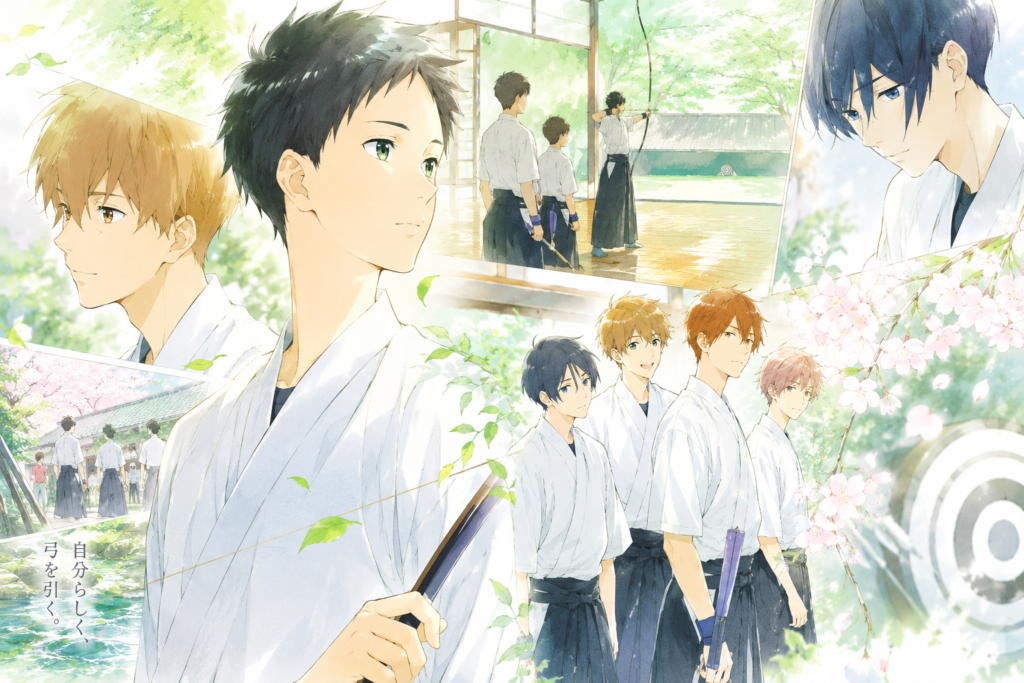
During middle school, Minato Narumiya suddenly developed hayake during an important archery competition.
In kyūdō, hayake refers to releasing the arrow too early, often because of anxiety or emotional pressure.
For Minato, it became something much deeper than a technical problem.
The sport he once loved became frightening.
Because of that experience, he enters high school believing he will never practice archery again.
But everything begins to change after he meets Masaki Takigawa, a mysterious priest at Yata Shrine whose calm philosophy toward archery quietly challenges Minato’s fear.
Slowly, Minato finds himself reconnecting with kyūdō alongside his childhood friend Seiya Takehaya, new teammates, and old rivals.
But Tsurune is not simply a story about becoming stronger.
It is about learning how to face your own fear.
And sometimes, learning how to love something again after losing confidence in yourself.
The Core Emotional Structure of Tsurune
When Something You Loved Becomes Frightening
What makes Tsurune emotionally powerful is that Minato’s struggle is not really about skill.
He is not simply trying to improve.
He is trying to recover something emotional.
Because what hurts him most is not failure itself.
It is losing trust in something he once cared about deeply.
That feeling is surprisingly universal.
You may not practice archery.
But many people know what it feels like to step away from something they once loved—
because it stopped feeling safe.
Because failure became painful.
Because fear quietly replaced joy.
Tsurune understands that emotional experience better than most anime.
And instead of rushing through it, the story allows Minato to move slowly.
Sometimes forward.
Sometimes backward.
Sometimes standing still.
That emotional patience is one of the series’ greatest strengths.
The Pain of Wanting To Try—But Not Knowing How
One of the reasons Tsurune resonates so deeply is that it does not treat struggle as weakness.
The characters are not lazy.
They are not unmotivated.
They are simply human.
They hesitate.
They lose confidence.
They misunderstand one another.
And sometimes, they want to improve but do not know how to move forward.
Because of this, the growth in Tsurune feels quiet and believable.
Nobody changes overnight.
People fail.
Pause.
Try again.
And that slow emotional movement makes every small step feel meaningful.
Quiet Support Instead of Forced Answers
Another thing that makes Tsurune feel different is the way support is portrayed.
Very few characters try to force change.
Instead, the series is filled with people who wait.
People who observe.
People who quietly remain nearby.
Rather than pushing others toward answers, they create space for people to arrive at those answers themselves.
That emotional atmosphere gives Tsurune an unusual kind of warmth.
It is not a story about someone saving another person.
It is a story about how people slowly become able to move forward because someone stayed beside them long enough.
Key Character Dynamics
Minato Narumiya — The Person Learning To Trust Himself Again
Minato is the emotional center of Tsurune.
He is kind, sincere, and deeply sensitive—but after experiencing failure, he begins to fear the very thing he once loved.
What makes Minato compelling is that his struggle is not about talent.
It is about trust.
How do you move forward after losing confidence in yourself?
How do you return to something that once caused pain?
Rather than overcoming fear dramatically, Minato changes slowly.
And that gradual emotional recovery makes him feel incredibly human.
Seiya Takehaya — The Person Carrying the Burden of Caring Too Much
Seiya is Minato’s childhood friend and one of the most emotionally restrained characters in the series.
Reliable, intelligent, and composed, he often appears calm on the surface.
But beneath that calmness is someone who cares deeply—sometimes too deeply.
Seiya understands Minato better than most people around him.
Yet closeness creates its own difficulties.
Sometimes, caring deeply for someone also means carrying frustration, helplessness, and expectations that become difficult to express.
What makes Seiya fascinating is that he represents a quieter kind of emotional struggle:
What happens when supporting someone begins to hurt?
Related Reading (Future Character Essay):
→ Seiya Takehaya — The Person Who Carried the Burden of Caring Too Much
Shu Fujiwara — A Rival Who Understands More Than He Competes
Shu is Minato’s rival—but Tsurune treats rivalry differently from many sports anime.
Rather than becoming an enemy figure, Shu represents something quieter:
mutual understanding.
He understands Minato’s struggle.
He sees his talent.
And because of that, their rivalry often feels less like conflict and more like recognition.
In Tsurune, competition is rarely about defeating someone.
It becomes a way of understanding both yourself and others more clearly.
Masaki Takigawa — The Person Who Waited Instead of Controlling
Masaki Takigawa may be one of the most memorable adults in Tsurune.
He does not push people toward answers.
He does not force emotional breakthroughs.
Instead, he waits.
He watches.
And when necessary, he quietly offers words that stay with people long after they are spoken.
What makes Masaki feel so emotionally powerful is his restraint.
He guides without controlling.
Supports without overwhelming.
And creates enough space for people to grow on their own.
In many stories, adults solve problems.
In Tsurune, the adults do something much harder:
they trust young people enough to figure things out themselves.
Related Reading (Future Character Essay):
→ Masaki Takigawa — The Person Who Waited Instead of Controlling
Why Tsurune Feels So Different
Growth Happens Through Stillness
Most sports anime build emotional momentum through intensity.
Competition becomes louder.
Rivalries become sharper.
Victories become bigger.
Tsurune moves in the opposite direction.
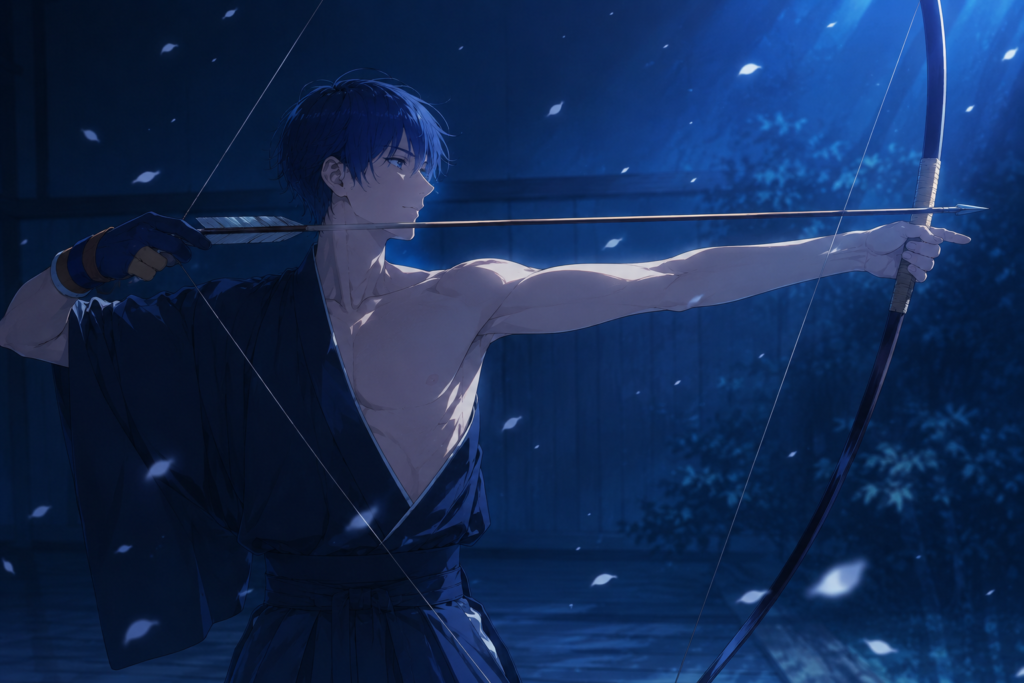
Its emotional power comes through stillness.
Silence.
Breathing.
Posture.
The tension of holding still.
Because kyūdō itself is such a quiet discipline, emotional changes become visible in small movements.
A hand trembling slightly.
A pause before release.
A look someone cannot quite explain.
Rather than telling viewers how characters feel, Tsurune lets emotions exist through physical presence.
That subtle storytelling is one of the anime’s greatest strengths.
It Understands the Fear of Starting Again
At its core, Tsurune understands something many people experience but rarely talk about:
Sometimes failure changes your relationship with the things you love.
You still care.
You still want to try.
But something inside you hesitates.
That emotional fear is what makes Tsurune feel deeply relatable—even for viewers who know nothing about archery.
Because this story is never really about kyūdō alone.
It is about rebuilding trust in yourself.
The Presence of Adults Who Quietly Stay Nearby
One of the most emotionally moving parts of Tsurune is the role adults play.
Rather than controlling outcomes, characters like Masaki Takigawa and Coach Morioka simply remain present.
They notice.
They wait.
They trust.
And sometimes, that kind of support feels more meaningful than direct advice.
In a culture where many coming-of-age stories focus on independence, Tsurune quietly reminds us of something else:
Growth becomes easier when someone believes in you before you fully believe in yourself.
Why Tsurune May Appeal to Shojo Manga Fans
At first glance, Tsurune may not seem like something shojo manga readers would enjoy.
It is about archery, after all.
But emotionally, the series shares many qualities with relationship-driven romance stories.
If you enjoy:
- quiet emotional tension
- characters who struggle to express themselves
- slow emotional growth
- relationships built through trust and understanding
- stories about emotional distance and support
there is a good chance Tsurune will resonate with you.
Fans of stories like:
may find something surprisingly familiar here.
Not because the stories are the same—
but because they all understand how powerful quiet emotional growth can feel.
Related Reading
If Tsurune resonated with you, you may also enjoy:
→ Why Quiet Discipline Feels More Emotional Than Victory (Future Essay)
→ Why Adults Who Wait Feel More Powerful Than Adults Who Control (Future Essay)
→ Masaki Takigawa — The Person Who Waited Instead of Controlling
→ Tomio Morioka — The Person Who Offered Understanding Instead of Answers —
→ Seiya Takehaya — The Person Who Carried the Burden of Caring Too Much (Future Character Essay)
Who Should Watch Tsurune?
Tsurune may be especially meaningful for people who:
- have ever struggled to start again after failure
- miss something they once loved
- enjoy emotionally quiet character stories
- prefer growth over dramatic conflict
- appreciate mentorship, patience, and emotional restraint
If you are looking for loud competition and nonstop intensity, this series may feel slower than expected.
But if you enjoy stories that quietly stay with you long after they end, Tsurune becomes something very special.
Final Reflection
Sometimes, support is not about pulling someone forward.
Sometimes, it is simply about staying nearby long enough for them to move when they are ready.
That quiet understanding sits at the heart of Tsurune.
This is not only a story about archery.
Or competition.
Or becoming stronger.
It is a story about learning how to face yourself again after disappointment.
And perhaps more importantly—
learning that healing becomes easier when someone quietly believes in you, even before you are able to believe in yourself.
I also share the small manga moments that stay with me long after reading—the pauses, glances, and choices that never fully leave.
You can follow those weekly reflections on Substack.
✅ My Substack Here!
This essay is part of a wider comparison: Why Manga Characters Choose Silence Over Confession
It also connects to another recurring pattern: Why Manga Characters Choose to Wait Instead of Rush Love