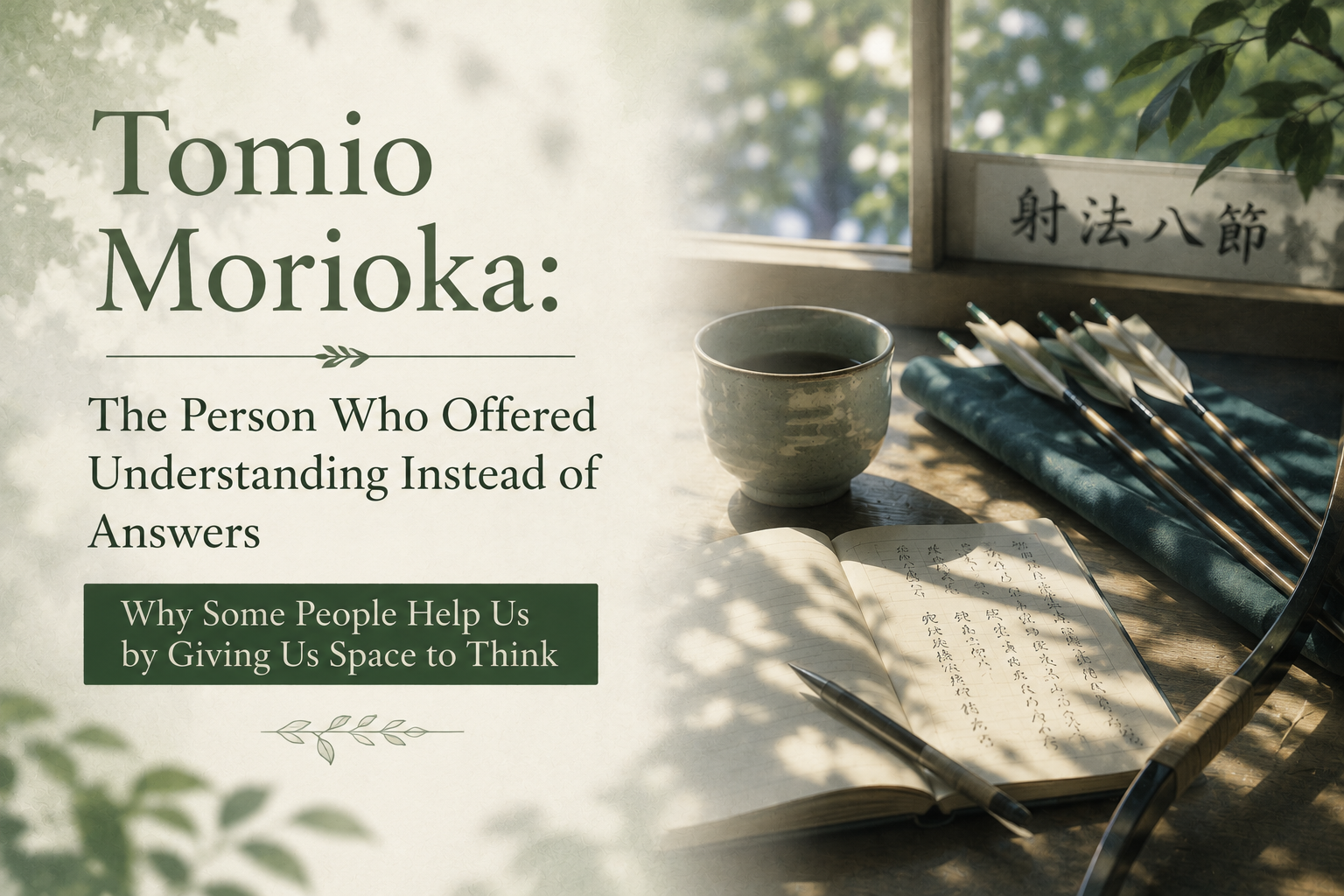
Not every mentor leads with advice. Tomio Morioka, a supporting figure in Tsurune, chooses a quieter approach instead. He offers space to think rather than answers to follow — and that restraint turns out to be its own kind of guidance.
Why Some People Help Us by Giving Us Space to Think
Some adults try to help by offering answers.
Others help by offering something much quieter:
Space.
Space to think.
Space to struggle.
Space to understand yourself in your own time.
In Tsurune, Morioka Tomio belongs to the latter.
He is not a dramatic mentor.
He rarely takes center stage.
He does not give long speeches or force people toward solutions.
And yet, somehow, his presence lingers.
Because Morioka is not the kind of person who solves emotions for others.
He is the kind of person who helps people stay with difficult feelings long enough to understand them.
That may be one of the quietest forms of kindness in Tsurune.
The Kind of Adult Morioka Chooses to Be
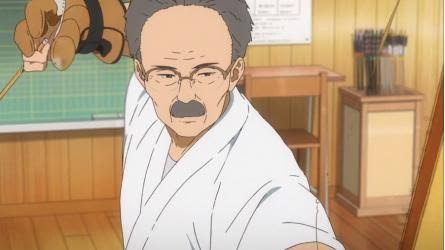
Morioka Tomio is the advisor of Kazemai High School’s kyudo club.
At first glance, he may seem like a gentle, easygoing teacher.
But his role in Tsurune goes much deeper than simply supervising students.
What makes Morioka interesting is that he often supports the people who are already supporting others.
Especially Masaki Takigawa.
Masaki stands in a difficult position.
He mentors the students.
He guides them.
He watches over them carefully.
But Masaki himself is not emotionally untouched.
He carries unresolved feelings about his grandfather, the master who taught him kyudo.
There is admiration.
But also pain.
Respect.
But also emotional weight.
And perhaps even resentment mixed with attachment.
These are not simple feelings.
They are the kind of emotions that become difficult to untangle as we grow older.
Morioka recognizes this.
But instead of trying to fix Masaki’s emotions, he chooses something else.
He offers perspective.
The Quiet Power of a Single Sentence
One of Morioka’s most memorable moments comes in a simple line:
“Attachment and admiration… respect and longing are often very similar things.”
What makes this moment so powerful is not just the wisdom of the statement.
It is what Morioka chooses not to do.
He does not say:
“You simply respect your grandfather.”
Nor does he say:
“You need to let go.”
He refuses to reduce complicated feelings into a simple answer.
Instead, he quietly offers another way of seeing.
A possibility.
A perspective.
Not a conclusion.
This matters.
Because difficult emotions are rarely solved through certainty.
Sometimes, people do not need someone to explain their feelings to them.
They need language that helps them continue thinking.
Morioka understands that.
He knows some emotions should not be rushed.
Why Morioka Does Not Force Answers
As we grow older, emotions often become more complicated.
You care about someone—but feel hurt by them.
You admire someone—but feel trapped by their influence.
You want to move forward—but cannot fully let go.
Human emotions rarely fit into clear categories.
And Morioka seems to understand this deeply.
That is why he avoids forcing certainty.
If he had simply told Masaki what to think, the moment would have ended there.
The emotional work would be over.
But Morioka does something more difficult.
He leaves room.
Room for reflection.
Room for discomfort.
Room for someone to arrive at their own understanding.
This kind of patience feels deeply compassionate.
Because it respects another person’s emotional process.
It says:
You do not have to understand everything right now.
And sometimes, that is exactly what people need to hear.
Morioka Is the Person Who Supports the People Who Support Others
Watching Tsurune, I began to notice something.
Morioka is not only supporting students.
He is supporting the adults who support students.
Masaki carries responsibility.
He watches over others.
He protects.
He guides.
But people in supportive roles also struggle.
They doubt themselves.
They carry emotional burdens quietly.
And often, they have no place to set those feelings down.
Morioka seems to recognize this.
He never overwhelms Masaki with advice.
He never positions himself as someone superior.
Instead, he offers companionship through understanding.
He watches.
He listens.
And when the moment feels right, he leaves behind just enough words to help someone think.
No more.
No less.
That balance feels incredibly human.
What Morioka Reveals About Quiet Wisdom
When we are younger, we often admire people who seem to have answers.
People who know exactly what to say.
People who can solve problems quickly.
But growing older teaches something different.
Sometimes, the people who help us most are the ones who do not rush to fix us.
The ones who sit beside uncertainty.
The ones who allow us to struggle without abandoning us.
Morioka’s kindness is quiet.
But perhaps that is why it feels so powerful.
He reminds us that supporting someone is not always about leading them toward a solution.
Sometimes, it is about helping them stay with difficult emotions long enough to understand themselves.
Why Characters Like Morioka Feel So Comforting
Watching Tsurune made me realize something.
Sometimes, what comforts us most is not someone who tells us what to do.
It is someone who trusts us enough to figure things out ourselves.
Someone who does not take away our confusion.
But also does not leave us alone inside it.
Maybe part of why Morioka feels so comforting is because many people long for someone like that.
Someone who does not judge complicated feelings.
Someone who understands that emotional clarity takes time.
Someone who knows exactly when silence is kinder than certainty.
Morioka Tomio reminds us that wisdom is not always loud.
Sometimes, wisdom sounds like a quiet sentence that stays with you long after it is spoken.
Related Reading on This Blog
If you enjoyed this character essay, you may also like:
→ Tsurune: More Than Archery — A Story About Facing Yourself Through Kyudo
→ Masaki Takigawa — The Person Who Guided Without Controlling —
→ Why Adults Who Wait Feel More Powerful Than Adults Who Control
→ Relationship Distance in Shoujo Manga — Why Distance Sometimes Protects Love
I also share the small manga moments that stay with me long after reading—the pauses, glances, and choices that never fully leave.
You can follow those weekly reflections on Substack.
✅ My Substack Here!