

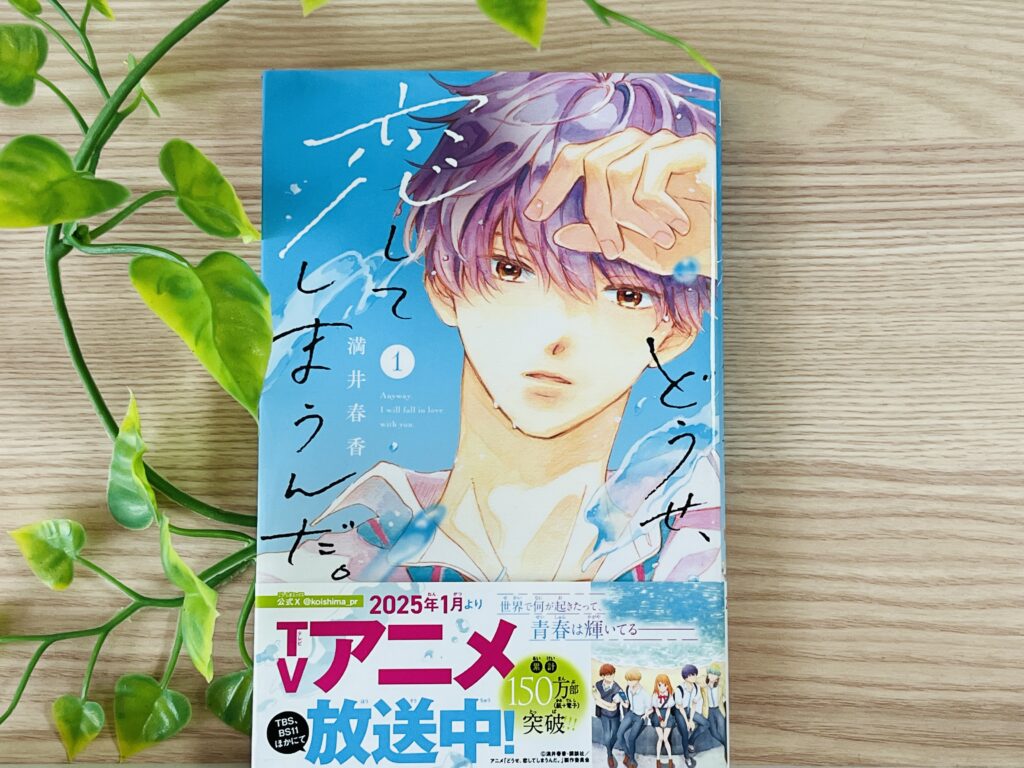
A Quiet Kind of Love
Shin Kashiwagi is not the loudest presence in Anyway, I’m Falling in Love with You.
He is not the first person who changes the atmosphere by force.
He is not the one who turns every feeling into action.
For a long time, Shin exists in a quieter position.
He watches.
He understands.
He stays composed.
At first, this can make him look distant. But Shin’s distance is not emptiness. It is a form of self-control.
What makes Shin interesting is not simply that he loves Mizuho. It is how carefully he handles that feeling.
He does not treat love as something that gives him permission to disrupt everything around him. He understands that his feelings exist inside a fragile relationship structure: childhood friendship, shared history, timing, and the future each of them is trying to reach.
That is why Shin is not just a cool childhood friend.
He is a character who shows what it means to choose responsibility before desire.
Before diving into Shin’s character, you might want to know how the anime brings him to life.
✅ Anyway, I’m Falling in Love with You — Anime Guide
The Situation He Was In
Shin’s position is complicated from the beginning.
Mizuho is surrounded by childhood friends who are almost like family. Their bond is familiar, safe, and deeply rooted in everyday life. But that closeness also makes romance difficult.
When someone inside that group begins to move romantically, the relationship can no longer stay the same.
This is the emotional structure Shin is placed in.
He is not falling in love from a distance.
He is not entering Mizuho’s life from outside.
He is already there.
That makes his feelings heavier.
If he acts, he risks changing a relationship that has existed for years. If he stays silent, he risks losing the chance to be understood. Either choice has consequences.
This is why Shin’s restraint matters.
His silence is not simply hesitation. It comes from awareness. He understands that love, once spoken, does not affect only two people. In a childhood-friend romance, one confession can change the entire group.
For Shin, love is never just a private emotion.
It is something that can alter the balance of everyone involved.
The Choice He Made
Shin eventually chooses to move.
But the important point is that he does not move carelessly.
His confession is not the action of someone who suddenly wants to win. It feels more like the result of a feeling he has carried, examined, and held back for a long time.
That difference matters.
There are characters who confess because they can no longer endure silence. Shin’s choice feels different. He acts because the situation has changed, and continuing to stay quiet would no longer be honest.
His restraint reaches a point where silence itself becomes a form of avoidance.
So he chooses to speak.
But even when he does, Shin’s love does not become possessive. He does not erase Mizuho’s dream. He does not demand that she turn toward him immediately. He does not treat his feelings as something that should override her future.
This is what makes Shin’s choice powerful.
He steps forward, but he does not invade.
He expresses his feelings, but he still respects the life Mizuho is trying to build.
Why That Choice Matters
Shin’s character is important because he shows that restraint and action are not opposites.
Sometimes, restraint means holding back.
Sometimes, restraint means choosing the right moment to act.
And sometimes, restraint means speaking only when silence would become unfair.
Shin’s love is not defined by emotional intensity alone. It is defined by timing.
He understands that love is not only about what one person feels. It is also about whether the other person has the emotional space to receive that feeling.
That is why his approach feels responsible.
He does not treat confession as a shortcut. He treats it as something with weight.
This is especially important in a story like Anyway, I’m Falling in Love with You, where youth, friendship, and the future are deeply connected. The characters are not only choosing who they love. They are also choosing what kind of adults they are becoming.
Shin’s choice shows that growing up does not mean abandoning emotion.
It means learning how to carry emotion without letting it control everything.
What This Reveals About Japanese Romance
Shin’s character reflects one of the most important ideas in Japanese romance stories:
Love is not always proven by immediate expression.
In many romance narratives, direct confession is treated as the clearest form of honesty. If someone loves another person, they should say it. If they wait, they may seem passive or unclear.
But Japanese romance often places more weight on timing, restraint, and emotional consequence.
The question is not only:
“Why didn’t he say it sooner?”
The deeper question is:
“What was he trying not to damage by staying silent?”
Shin belongs to this kind of romance.
His silence is not a lack of feeling.
His composure is not coldness.
His delay is not weakness.
It is the result of understanding that love can change a relationship in irreversible ways.
This is why Shin fits so well within the emotional language of Japanese romance. His love is not loud, but it is careful. It does not rush to possess. It tries to respect the space around the person he loves.
In that sense, Shin represents a kind of love that values emotional timing over emotional release.
Final Reflection
Shin Kashiwagi’s appeal is not simply that he is cool, intelligent, or quietly devoted.
His real strength lies in how he handles love.
He does not confuse feeling with entitlement.
He does not confuse confession with victory.
He does not confuse closeness with permission.
For a long time, Shin holds his feelings carefully because he understands their weight. And when he finally chooses to act, that action matters because it comes after restraint.
That is what makes him memorable.
Shin’s love is not about rushing toward desire.
It is about knowing that love becomes meaningful only when it is carried with responsibility.
Related Reading
✅ Shugo Hoshikawa Explained — The Love He Kept Hidden
✅ Kizuki Hazawa Explained — The Man Who Moved First, and What It Cost Him
✅ Airu Izumi Explained — The One Who Protected the Group Instead of His Own Heart
✅ Mizuho Nishino Explained — The Heroine Who Couldn’t See What Was Right Beside Her
✅ Ending Explained — Who Does Mizuho End Up With?
✅ Curious about this one? Check it out here! →Anyway, I’m Falling In Love With You. 1
I also share the small manga moments that stay with me long after reading—the pauses, glances, and choices that never fully leave.
You can follow those weekly reflections on Substack.
✅ My Substack Here!