

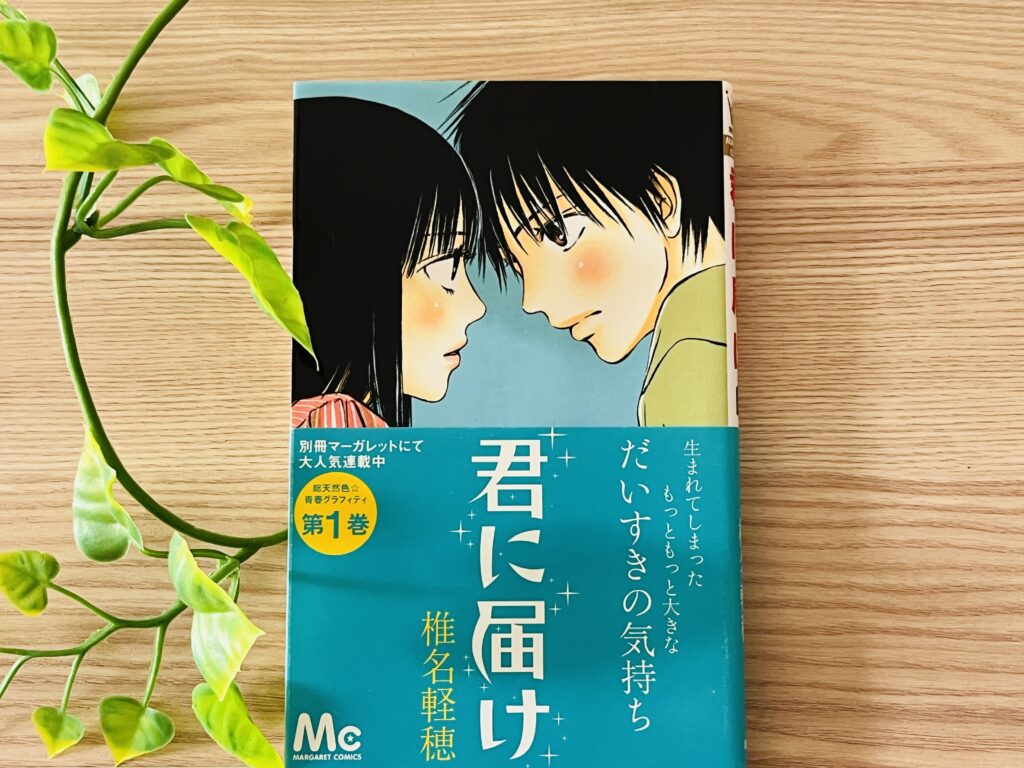
— Why Her Choice Redefines Love —
Why didn’t she say anything—
even when she already knew how she felt?
In many romance stories,
love begins the moment someone recognizes their feelings.
But in Kimi ni Todoke,
that realization does not lead to immediate confession.
It leads to caution.
Sawako Kuronuma does not hesitate because she is unaware of her emotions.
She hesitates because she is constantly asking herself another question:
“What if I am misunderstanding everything?”
That question shapes nearly every choice she makes.
Her story is not simply about falling in love.
It is about deciding whether her feelings give her the right to step closer at all.
The Situation
Sawako spends much of her life being misunderstood.
Because of her appearance and quietness,
people decide who she is before speaking to her.
Even after she forms real friendships with Kazehaya, Yano, and Yoshida,
that fear never fully disappears.
Part of her still believes
that relationships can disappear if she misunderstands her place inside them.
And when she develops feelings for Kazehaya,
that fear becomes even stronger.
Because now it is no longer only friendship at risk.
There are rumors.
Other girls’ feelings.
Unspoken expectations.
The possibility of hurting someone without intending to.
Nothing about the situation feels emotionally safe to her.
Especially because Kazehaya himself is careful.
He does not pressure her.
He does not force clarity.
He waits.
Which creates one of the central tensions of the story:
both of them care deeply about the other,
yet both are afraid of damaging the relationship by moving too quickly.
The Choice
Sawako realizes her feelings long before she can express them.
But she chooses not to assume.
She refuses to believe
that kindness automatically means love.
She refuses to interpret closeness as permission.
And she refuses to move forward
based only on what she hopes is true.
This restraint comes partly from kindness.
She does not want to hurt others.
She does not want to force her emotions into an already fragile situation.
She does not want her feelings to become a burden.
But her restraint is also connected to fear.
Fear of misunderstanding.
Fear of imposing herself.
Fear of believing in something that may not exist.
So instead of stepping closer,
Sawako repeatedly steps back.
Not because she does not care—
but because she cares so much about the emotional impact of her actions.
For Sawako,
love is not permission.
Feeling something deeply
does not automatically give her the right
to change the relationship.
Why That Choice Matters
Sawako’s choices reveal something important about kindness:
kindness can preserve relationships—
but it can also prevent them from growing.
By refusing to assume,
she protects the people around her.
She avoids forcing emotional clarity too early.
She avoids placing her desires above everyone else’s feelings.
She avoids acting on uncertainty.
But this protection creates another problem.
Distance grows.
Misunderstandings remain unresolved.
Silence becomes harder to cross.
And eventually,
her care itself becomes part of the barrier.
This is what makes Sawako emotionally compelling.
Her restraint is not simple shyness.
It is emotional humility taken so far
that she begins removing herself from the relationship she actually wants.
What This Reveals About Japanese Romance
Many Western romance stories treat love as something that should be expressed clearly and immediately.
Say what you feel.
Define the relationship.
Move things forward.
But Japanese romance often approaches relationships differently.
Meaning appears in restraint.
In timing.
In the decision not to assume too quickly.
Sawako reflects this emotional structure perfectly.
She constantly considers how her feelings might affect others before acting on them herself.
And that creates a very different kind of romantic tension.
Because the question is no longer:
“Does she love him?”
The question becomes:
“Does she believe she has the right to be loved back?”
That emotional hesitation is not weakness.
It is a form of responsibility.
But it is also a form of self-erasure.
And Kimi ni Todoke quietly asks whether protecting others can sometimes mean abandoning yourself too much.
Why Sawako and Kazehaya Feel So Different
What makes Sawako and Kazehaya special is that neither of them wants to force the relationship forward.
Sawako refuses to assume.
Kazehaya refuses to pressure.
So the story is not driven by dramatic conflict,
but by two careful people trying not to hurt each other.
That is why even small moments feel emotionally significant.
A conversation.
A misunderstanding.
A moment of reassurance.
Because in this relationship,
trust is built slowly through emotional safety.
Not through emotional force.
Related Reading
If you want to explore how kindness can sometimes create emotional distance:
→ When Kindness Becomes Avoidance
If you want to explore how emotional awareness changes romance:
→ The End of Innocence in Romance
If you want to explore how misunderstanding and restraint shape the story itself:
→ Kimi ni Todoke — A Story About Misunderstanding / Trust / Emotional Timing
Final Reflection
Sawako never assumes she is loved.
She waits.
Questions herself.
Holds herself back.
But at what point does restraint stop protecting a relationship—
and start preventing it from becoming real?
And if love requires courage,
is choosing not to assume
a form of kindness—
or a fear of taking up space in someone else’s heart?
✅ Curious about this one? Check it out here! → Kimi ni Todoke: From Me to You, Vol. 1
I also share the small manga moments that stay with me long after reading—the pauses, glances, and choices that never fully leave.
You can follow those weekly reflections on Substack.
✅ My Substack Here!