
How I Met My Soulmate– tag –
-

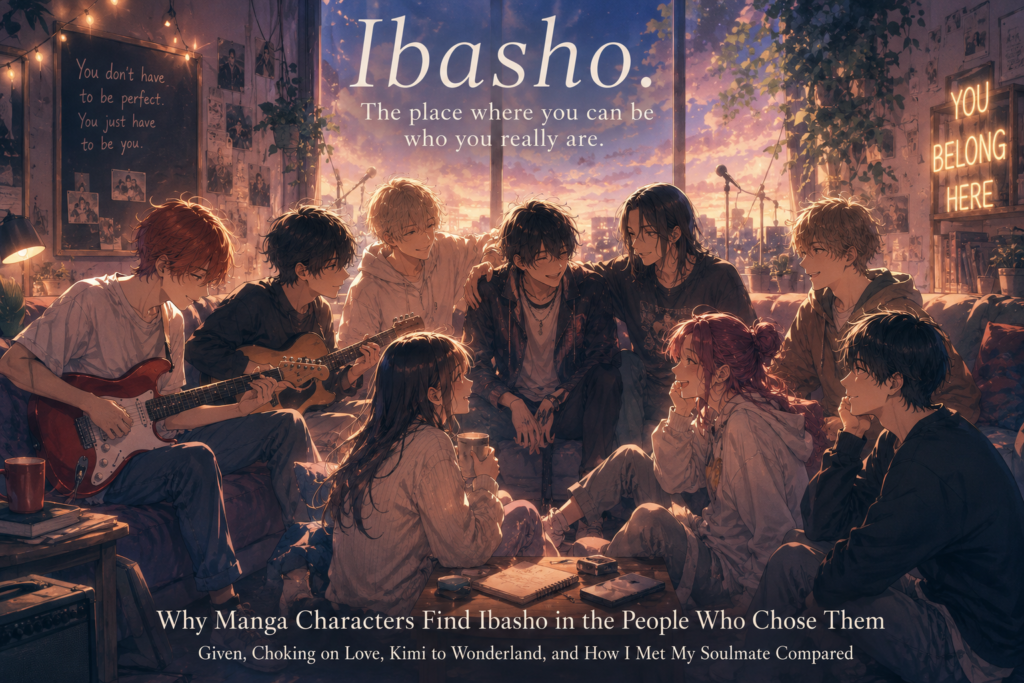
Why Manga Characters Find Ibasho in the People Who Chose Them: Given, Choking on Love, and Kimi to Wonderland Compared
There is a Japanese word, ibasho (居場所), that does not translate cleanly into English. Literally, it means "the place where one is." Practically, it means something closer to: the place where you are allowed to exist as you actually are, without performing, without earning it, without being told to leave. Across very different shoujo and BL manga, a strikingly similar structure keeps appearing. A group of people — a band, a pair of strangers, a whole circle of friends — ... -
Jin Seno: Gathering Allies in Romance
— What How I Met My Soulmate Reveals About Love Beyond Two People — At the beginning, love feels simple. There's you. And there's the person you like. It feels self-contained, as if the relationship exists separately from everything else around it. If your feelings are genuine, and if the other person feels the same, that should be enough. But romance rarely stays that simple for long. As relationships deepen, other people begin to matter. Friends become involved. Differen... -
How I Met My Soulmate:A Story of Quiet, Fated Love
I recently read this manga and loved it! Perfect for anyone who loves a good romance story. How I Met My Soulmate is not a story that rushes toward destiny.It treats “fate” not as a dramatic event, but as something shaped slowly—through hesitation, restraint, and repeated choices. Rather than asking who ends up together, this manga asks a quieter question:How do people decide not to act, and what does that choice protect? This perspective places the story firmly ... -
Jin Seno:Why Some People Do Not Collapse After Being Rejected
I recently read this manga and loved it! Perfect for anyone who loves a good romance story. A Character Analysis of Emotional Stability, Responsibility, and Maintaining Dignity After Rejection Romantic narratives are often evaluated through outcomes. Who was chosen.Who ended up together.Who “won.” From that perspective, people who are not selected are often reduced to a single role: the one who lost. But this way of reading human behavior overlooks something important. The...



1