Warning: This character analysis contains major spoilers for all 16 volumes of Dengeki Daisy, including DAISY’s identity and Kurosaki’s past with Soichiro. If you are new to the series, begin with our spoiler-free Dengeki Daisy story, characters, and anime guide.
Tasuku Kurosaki will put himself in danger without hesitation if it means protecting Teru.
In a shojo romance, that kind of devotion can easily look like proof of strength and love. But Dengeki Daisy presents a more complicated idea: self-sacrifice is not always the purest form of love.
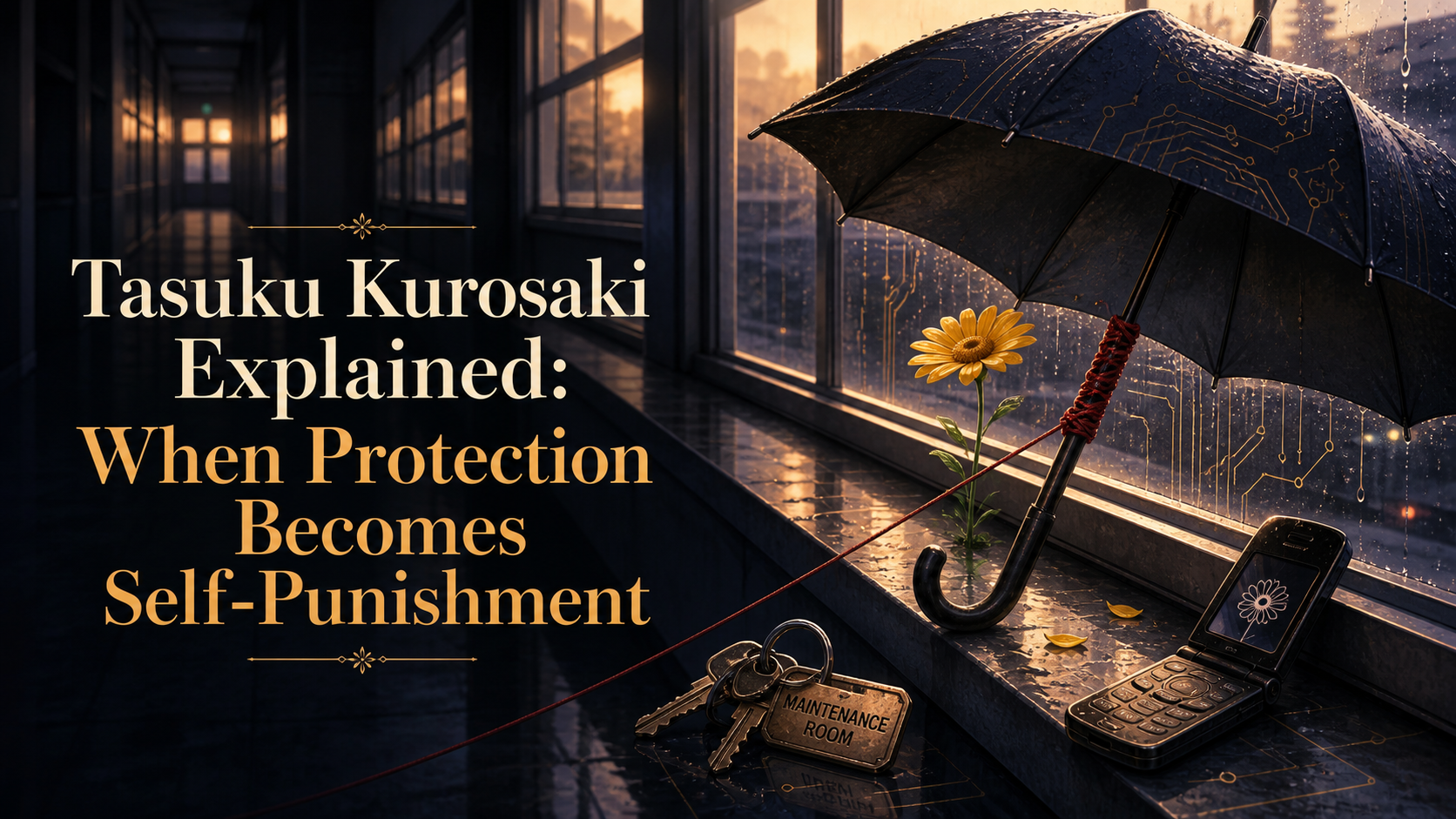
Kurosaki wants to protect Teru. At the same time, he uses that protection to punish himself.
Because he believes that he caused Soichiro’s death, being DAISY becomes several things at once: a promise, an expression of love, and an act of atonement.
That means two very different desires exist inside his devotion. He wants Teru to live and be happy. But he also believes that he does not deserve happiness of his own.
Why Does Kurosaki Protect Teru?
Teru’s older brother, Soichiro Kurebayashi, was more than Kurosaki’s former colleague. He was a mentor, a friend, and one of the people who truly understood Kurosaki’s abilities.
The encryption virus Jack Frost, created by Kurosaki, eventually became part of the chain of events surrounding Soichiro’s death. The reality is more complicated than one person causing one outcome, but Kurosaki reduces that complexity to a single sentence: he believes that he killed Soichiro.
That belief becomes the foundation of the way he sees himself.
When Soichiro entrusts Teru to him, Kurosaki begins supporting her as DAISY. He sends messages to keep her from being overwhelmed by loneliness after losing her family. He listens, reassures her, and remains present even though she cannot see him.
There is genuine affection in everything he does. But protecting Teru also gives Kurosaki a reason to continue living.
He could not save Soichiro, so he decides that he must at least protect the sister Soichiro left behind. If he fails at that task, he sees no reason to forgive his own existence.
His life quietly becomes conditional. He believes he is allowed to remain only as long as he is useful to Teru. That is why his devotion can feel painful even when it is tender.
DAISY Is Both Love and a Safe Distance
As DAISY, Kurosaki can receive Teru’s feelings and answer her with the words she needs.
As Tasuku Kurosaki, standing directly in front of her, he cannot behave with the same honesty.
The school custodian she knows is rude, sharp-tongued, and deliberately difficult. He calls Teru his servant and hides his concern behind insults and exaggerated demands.
This is more than embarrassment or romantic awkwardness.
DAISY can comfort Teru without asking for anything in return. Kurosaki, however, cannot stand beside her as himself without risking the exposure of his past, his guilt, and his personal feelings.
The anonymous messages give Teru a place of emotional safety. They also give Kurosaki a safe distance from which he can care for her without facing the possibility of rejection.

As long as he remains unseen, he can define himself as the person fulfilling Soichiro’s final request. He does not have to admit that he wants something for himself—that he wants to stay beside Teru and be loved by her.
Kurosaki permits himself to be her protector. He does not permit himself to become the person she loves.
Protection can be framed as atonement. Being loved would bring him happiness.
That is why he can act decisively when Teru is in physical danger but tries to withdraw when she offers him her heart.
What frightens Kurosaki is not Teru herself. It is the possibility that her love might save him from the punishment he believes he deserves.
Is Keeping His Distance Really the Responsible Choice?
Kurosaki has understandable reasons to be cautious about his relationship with Teru.
He is an adult, while she is a high school student. He is also someone Soichiro trusted to watch over her. The difference in age, experience, and position cannot simply be ignored.
His reluctance to place his own feelings first is therefore meaningful. Restraint can be a sign that he recognizes the responsibility created by their circumstances.
However, Dengeki Daisy does not portray distance as automatically moral.
When Kurosaki decides everything “for Teru’s sake,” protection can begin to resemble control.
He decides what she should be allowed to know. He decides how much danger she can face. He tries to decide whether she should be permitted to choose him.
Protecting Teru from danger is not the same as protecting her from her own decisions.
If Kurosaki alone determines what her happiness must look like, then her voice disappears from a relationship supposedly built around caring for her.
His greatest lesson is not how to protect Teru more effectively. He already knows how to watch, plan, fight, and place himself between her and a threat.
What he must learn is how to accept an answer that belongs to her.
Teru Is Not an Object of Atonement
Kurosaki tends to see himself as the guilty person and Teru as the person to whom a debt must be repaid.
But Teru does not exist to complete his story of guilt.
She has the right to know his past and reach her own conclusion. She can be angry. She can refuse to forgive him. She can also understand what happened and still choose to remain beside him.
Every one of those responses belongs to Teru.
When Kurosaki hides the truth and attempts to disappear from her life, his actions can appear selfless. Yet leaving before Teru can answer also takes the choice away from her.
This is one of the hidden dangers of self-sacrifice: it can be carried out without listening to the person supposedly being protected.
Kurosaki can tell himself that only he needs to suffer. He can decide that Teru will be happier after he leaves. He can call that decision responsibility.
If he does so, he never has to face her judgment. He avoids not only the fear of rejection but also the fear of being forgiven.
In that sense, self-sacrifice can be an act of courage and a form of escape at the same time.
The hardest thing Kurosaki must do is not risk his life for Teru. It is remain in front of her after she learns the truth.
Atonement Is Not the Same as Self-Denial
Japanese stories often express responsibility through sustained action rather than a single verbal apology. A character may spend years supporting someone, fulfilling a promise, or placing personal desires behind a duty they believe must be completed.
Kurosaki follows that pattern.
He does not simply ask to be forgiven. He supports Teru as DAISY, protects her from danger, and continues to honor his promise to Soichiro. There is real sincerity in that behavior.
Yet Dengeki Daisy does not treat lifelong self-denial as the final form of atonement.
Refusing happiness is not the same as accepting responsibility. Continuing to suffer is not the same as continuing to love the person who was lost.
If Kurosaki genuinely wants to honor Soichiro, he must do more than keep Teru alive. He must respect the future she chooses for herself.
And if that future includes him, refusing to run away from it may also be part of his responsibility.
When Kurosaki’s Protection Becomes Love
Kurosaki cares for Teru from the beginning. But caring for someone is not automatically the same as trusting them as an equal human being.
His protection becomes love in its fullest sense when he stops seeing Teru only as a girl who must be kept safe and recognizes her as someone with a will separate from his own.
He must hold two ideas at the same time.
He can protect the person he loves without taking away her ability to walk for herself.
He can accept the possibility of being hurt without using endless suffering as proof of his devotion.
Learning to hold both truths is Kurosaki’s emotional growth.
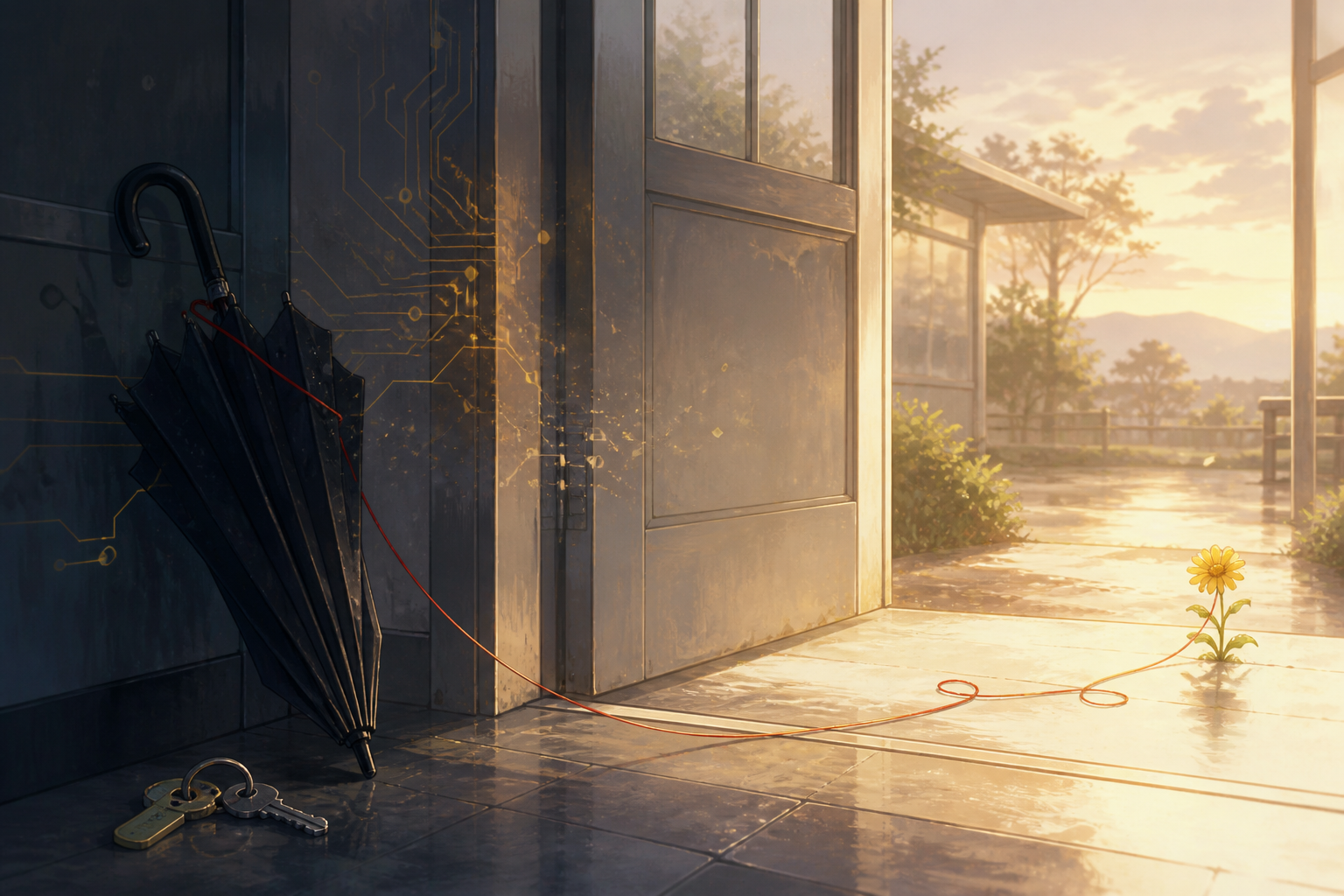
The responsibility he needs to abandon is not responsibility itself. It is self-punishment disguised as responsibility.
Why Kurosaki Works as a Shojo Hero
Kurosaki is compelling for more than his strength, intelligence, or ability to arrive when Teru is in danger.
He is a protector who also needs to be saved.
But Teru cannot simply rescue him through the force of her love. Her feelings only matter if Kurosaki chooses to receive them.
Punishing himself is something he can do alone. Being loved requires another person.
It requires him to trust Teru’s judgment, reveal his weakness, and remain in a future where forgiveness might be possible.
That is a quieter kind of courage than confronting an enemy or rescuing someone from immediate danger.
Kurosaki does not become a hero simply because he protects Teru. He grows beyond the role of protector when he trusts her choices and stops running from the possibility of building a life beside her.
Final Thoughts
Kurosaki does not need to forget Soichiro or deny the consequences of his own actions.
He does need to understand that responsibility does not require offering his entire life as a permanent punishment.
Teru does not want only the distant DAISY who carries his guilt and watches over her from the shadows. She also wants Tasuku Kurosaki—the imperfect person who is afraid, makes mistakes, and still chooses to remain beside her.
Dengeki Daisy is not a story in which love easily erases guilt.
It is a story about separating guilt from love and learning to take responsibility for the sake of a shared future, rather than using responsibility as a reason to keep suffering.
Kurosaki’s most difficult act of atonement is not punishing himself forever.
It is trusting Teru’s decision—and refusing to run from a future in which he might be allowed to be happy too.
Related Reading
To explore the relationship from the heroine’s side, read our Teru Kurebayashi character analysis, which examines how she turns received support into the strength to protect others.