For years, many Japanese shoujo manga have remained just out of reach for international readers.
Some never received an official English release. Others were published briefly, only to fall out of print. In many cases, readers outside Japan never had the chance to discover these stories at all.
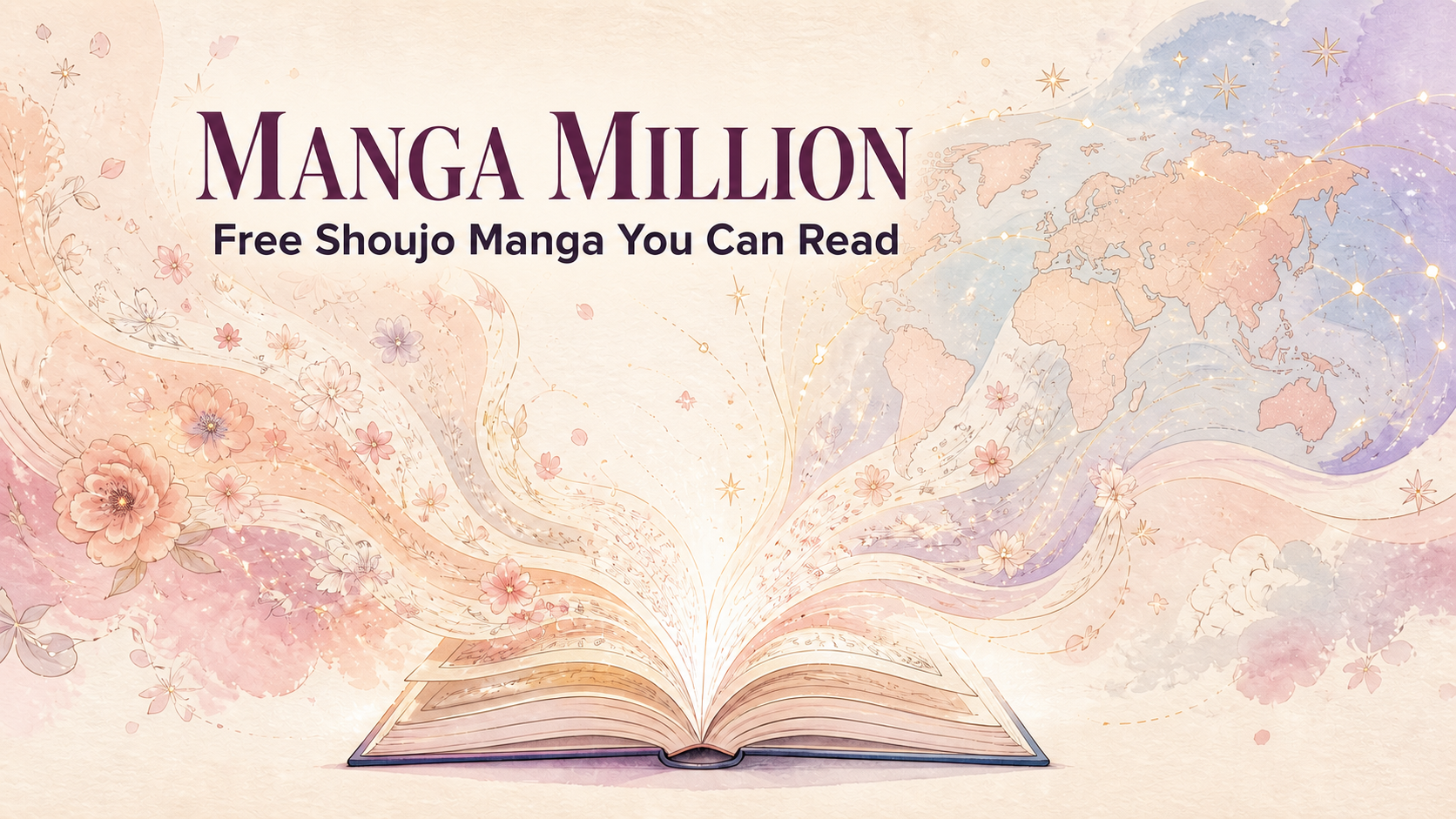
In August 2026, Shueisha launched MANGA MILLION, a new global manga project created to celebrate the publisher’s 100th anniversary.
The platform does not focus only on famous shonen and seinen series. More than 150 shoujo manga are also scheduled to appear—including titles that have never been officially translated for international readers before.
Here is how MANGA MILLION works, which shoujo manga you can find, and where to begin if this is your first encounter with some of Japan’s older classics.
What Is MANGA MILLION?
MANGA MILLION is a limited-time global manga project celebrating Shueisha’s 100th anniversary.
Shueisha considers 1926 its founding year and marks its 100th anniversary on August 8, 2026.
Through MANGA MILLION, the publisher plans to make a total of one million manga pages available from approximately 400 titles.
The lineup includes internationally famous series such as:
- ONE PIECE
- NARUTO
- BLEACH
- Demon Slayer: Kimetsu no Yaiba
- Jujutsu Kaisen
- Kingdom
- Oshi no Ko
- SPY×FAMILY
- Chainsaw Man
- NANA
- Kimi ni Todoke
The available pages are free to read, and no account registration is required.
However, this does not mean that every series is available in full. The number of chapters or pages—and the languages available—varies by title.
The full one million pages were not released all at once, either. The official website has a live counter showing how many pages are currently available, with more content being added over time.
Is MANGA MILLION Really Available in Over 100 Languages?
MANGA MILLION supports a wide range of languages, including English, Chinese, Korean, French, Spanish, Hindi, Arabic, Turkish, Tagalog, and Polish.
However, this does not mean that all 400 titles are available in more than 100 languages.
The flagship title receiving translations in over 100 languages is ONE PIECE. Other series have their own language selections, so you will need to check each title individually to see whether it is available in your language.
According to Shueisha, around 300 of the project’s 400 titles are being translated for international readers for the first time.
That makes MANGA MILLION more than another way to promote already-famous manga. It gives international readers an official opportunity to discover stories that have remained on the other side of the language barrier for decades.
Which Shoujo Manga Can You Read on MANGA MILLION?
More than 150 shoujo manga are expected to appear on MANGA MILLION.
Shueisha’s official announcement specifically names NANA and Kimi ni Todoke among its featured shoujo titles.
Since the platform launched, international shoujo manga readers have also reported finding titles such as:
- Hime-chan no Ribbon
- Akazukin Chacha
- Kodocha
- Good Morning Call
- Honey Bitter
- HIGH SCORE
- Hot Road
- Papa told me
- Aozora Yell
- Parfait Tic!
- Usotsuki Lily
- Hoshi to Kuzu: Don’t Worry, Be Happy!
- The Days of Aranjuez
This is not a complete list of the shoujo manga on MANGA MILLION.
Availability may also vary depending on your region, language, and the portion of each series currently included. If you are looking for a particular manga, try searching by its Japanese title, English title, and author’s name.
Why Access to Older Shoujo Manga Matters
The Japanese manga best known overseas tend to be anime adaptations, major shonen hits, or popular series that are still running.
But the history of shoujo manga is far richer than that.
From the 1970s through the 2000s, shoujo manga explored much more than romance. These stories examined friendship, family, school life, belonging, loneliness, and the roles girls and women were expected to play in Japanese society.
They also preserved something less obvious: how girls of those generations navigated relationships.
Shoujo manga characters do not always express their feelings immediately.
They may stay quiet because they do not want to burden someone.
They may step back because they do not want to disturb the balance of a group.
They may choose an indirect gesture because saying everything aloud could damage a relationship they want to protect.
To an international reader, these choices can sometimes look passive or indecisive. In Japanese stories, however, silence and restraint may represent consideration, responsibility, or even a quiet form of resistance.
Reading shoujo manga is not only a way to enjoy a romance.
It can also reveal how people in Japan think about emotional distance, social roles, unspoken expectations, and the difficult process of discovering what you want while still caring about the people around you.

Shoujo Manga to Look for First
With so many titles available, deciding where to begin may feel overwhelming.
Here are several shoujo manga worth searching for on MANGA MILLION.
Kimi ni Todoke
Sawako Kuronuma is a high school student who is misunderstood by her classmates because of her appearance. Her world slowly begins to change when she meets Shota Kazehaya, a friendly and open classmate who treats everyone naturally.
Kimi ni Todoke is widely known as a romance manga, but Sawako’s journey toward finding her own voice and forming genuine friendships is just as important.
The characters do not always find the right words immediately. Sometimes they cannot speak precisely because the other person matters so much to them.
The series captures the distance that changes slowly between people, the time it can take for feelings to reach someone, and the painful truth that even sincere kindness can be misunderstood.
It is one of the defining works of modern Japanese shoujo manga.
If you are new to Japanese romance manga, you may also enjoy:
→ Best Romance Manga for Beginners—Where to Start and Why Japanese Romance Feels Different
Hime-chan no Ribbon
Himeko is a lively middle school student who receives a magical ribbon that allows her to transform into other people.
It is easy to enjoy Hime-chan no Ribbon as a charming magical-girl story. At its emotional center, however, is the desire to become someone else—and the equally powerful desire to be loved as yourself.
The manga also offers a glimpse into Japanese school life in the 1990s, along with the particular rhythm of friendship and first love found in shoujo manga from that era.
Akazukin Chacha
Akazukin Chacha is a lively fantasy comedy about an apprentice magician named Chacha and the friends who join her adventures.
Its adorable artwork and fast-paced humor make it an approachable choice for readers unfamiliar with older shoujo manga.
Some international fans may recognize the anime adaptation even though they have never had an official way to read the original manga.
Kodocha
Kodocha follows Sana, a cheerful and energetic child actress, and Akito Hayama, a troubled boy causing chaos in their classroom.
The series begins like a bright comedy but gradually confronts difficult subjects, including family problems, isolation, classroom dynamics, and the responsibilities adults have toward children.
Its ability to hold humor and emotional pain inside the same story is one of the great strengths of 1990s shoujo manga.
Good Morning Call
Good Morning Call begins when middle school student Nao discovers that she must secretly share an apartment with her classmate Uehara.
It is a romantic comedy, but it also offers international readers an everyday look at Japanese school life, housing, friendships, and the small considerations that shape relationships.
This is a good choice if you prefer ordinary misunderstandings and quiet acts of care to dramatic fantasy or high-stakes conflict.
Papa told me
Papa told me centers on Chise and her life with her father, a writer.
Rather than focusing on a dramatic romance, the manga explores different kinds of family, childhood loneliness, adult relationships, and the small moments of beauty hidden inside daily life.
It is also an important reminder that shoujo manga has never been limited to stories about girls falling in love.
Want to Understand the Emotions Behind Shoujo Manga?
MANGA MILLION can introduce readers to Japanese shoujo manga that were previously difficult—or impossible—to access overseas.
But being able to read a story in another language is not always the same as fully understanding every emotion and choice within it.
In Japanese shoujo manga, characters do not necessarily express their feelings as soon as they recognize them.
They wait because they care.
They step back because moving forward could hurt someone.
They remain silent because saying what they want might permanently change the relationships around them.
What looks like passivity from the outside may be a conscious decision to respect another person.
Here at amigurumiche, I explore these quiet, easily overlooked parts of Japanese manga.
Is a Silent Heroine Really Passive?
When a shoujo heroine does not openly express her feelings, does that mean she is doing nothing?
This essay looks beyond the assumption that silence and restraint are signs of weakness—and considers the intention that may exist underneath them.
→ Quiet Heroines in Manga: Why Restraint Isn’t Passivity
Why Ibasho Means More Than “Belonging”
Many shoujo manga are not simply about finding love. They are about finding a place where you can exist without needing permission.
This essay explores the Japanese word ibasho and how that feeling appears in the Shueisha shoujo manga Kimi to Wonderland.
At the time of writing, I have not been able to confirm whether Kimi to Wonderland is included in MANGA MILLION.
→ Ibasho: The Untranslatable Japanese Word for Belonging—And the Manga That Captures It
New to Japanese Romance Manga?
If you discovered Kimi ni Todoke through MANGA MILLION—or simply want to explore more Japanese romance manga—this beginner’s guide is a good place to continue.
It introduces several approachable series while examining the different ways Japanese manga portrays distance, timing, consideration, and emotional growth.
→ Best Romance Manga for Beginners—Where to Start and Why Japanese Romance Feels Different
When you find a manga that interests you on MANGA MILLION, pay attention not only to what its characters do, but also to what they choose not to do.
Why did they stay silent?
Why did they wait?
Why did they decide not to move forward?
Those small choices may reveal how Japanese shoujo manga has long portrayed emotional distance, consideration, and the desire to protect both yourself and the people around you.
Can You Access MANGA MILLION From Japan?
MANGA MILLION is intended primarily for international readers.
According to Shueisha, readers accessing the platform from Japan can view the multilingual edition of ONE PIECE and some English-language interview features. The Japanese editions of the manga are not part of the service.
This means that someone visiting MANGA MILLION from Japan may not see the same catalog or manga pages as an overseas reader.
I will continue updating this guide as more information becomes available about which shoujo manga can be accessed internationally, which languages they support, and how much of each series is available.
What Should Readers Know About the Translations?
Shueisha states that all translations used for MANGA MILLION were produced by professional translators.
Even so, translating every cultural and emotional nuance in a manga is difficult. The reading experience may vary between titles and languages.
You may encounter scenes that leave you wondering:
Why didn’t this character say anything?
Why didn’t she simply refuse?
Why did he step back instead of explaining himself?
That sense of uncertainty does not necessarily mean the story has failed to communicate. It may be an invitation to look more closely at the way Japanese relationships and emotions are portrayed.
At amigurumiche, I explore what may exist behind the translated dialogue—the feelings characters do not say aloud and the cultural context surrounding their decisions.
How Long Will MANGA MILLION Be Available?
MANGA MILLION is officially described as a limited-time project celebrating Shueisha’s 100th anniversary.
However, at the time of writing, a single closing date and the future availability of every title have not been clearly explained.
If you find something you want to read, it is best not to assume it will remain available indefinitely.
Free publication on MANGA MILLION also does not guarantee that a series will receive a complete English print release or remain available through another service afterward.
Still, international readership matters.
Which titles people read—and which older shoujo manga inspire discussion—may help publishers understand where demand exists for future licenses.
Reading these works, talking about them, and expressing interest in official editions could help give forgotten or overlooked shoujo manga a future beyond this anniversary project.
A New Door Into Shoujo Manga
The greatest value of MANGA MILLION is not simply the promise of one million pages.
It is the opportunity for readers to encounter decades of shoujo manga history—sometimes for the very first time.
Alongside famous titles such as NANA and Kimi ni Todoke are older works that have rarely been available outside Japan. Their artwork and settings may belong to another era, but their emotions do not.
The desire to be understood.
The search for a place where you belong.
The experience of caring for someone without knowing how to put that care into words.
These feelings do not disappear when time, language, or country changes.
If MANGA MILLION introduces you to a shoujo manga you have never read before, give it a chance to surprise you.
And if there is a particular title you want to read—or a story whose cultural background you would like to understand—please let me know.
I would love to explore the Japanese emotions, relationships, and quiet choices within these stories together.
Official Sources
Editor’s note: This article is based on official information and reader reports available in August 2026. The catalog, supported languages, page counts, and regional availability may change.