What makes this shojo manga more than a romance between a lonely girl and the man who protects her?
With a TV anime scheduled for 2027, Dengeki Daisy is ready to meet a new generation of international fans.
At first glance, the series may look like a familiar shojo romance: a high school girl, a sharp-tongued older man, and a mysterious protector watching over her from a distance. But Kyousuke Motomi’s manga is built on something more emotionally complicated. It is a story about grief, guilt, trust, and the difficult process of allowing someone else into your life.
This spoiler-free guide introduces the story, its central characters, what makes the romance distinctive, and what we currently know about the upcoming anime. It also addresses the age gap honestly and explains how readers can access the manga in English.
Dengeki Daisy at a Glance
| Creator | Kyousuke Motomi |
|---|---|
| Japanese serialization | 2007–2013 |
| Magazine | Betsucomi |
| Length | 16 volumes, complete |
| Genres | Shojo romance, suspense, drama, comedy |
| English publisher | VIZ Media / Shojo Beat |
| Anime adaptation | TV anime scheduled for 2027 |
| Animation studio | Studio DEEN |
According to the anime’s official English website, the manga has more than five million copies in circulation worldwide.
What Is Dengeki Daisy About?
Teru Kurebayashi is a high school student who has lost the family members she once depended on. Before her older brother died, he gave her a cell phone and told her that someone called “DAISY” would always be there for her.
Teru has never met DAISY. Their connection exists through messages.
Whenever loneliness or uncertainty becomes overwhelming, she writes to him. His replies do not erase her grief, but they give her something equally important: the reassurance that she does not have to face everything alone.
At school, Teru also finds herself dealing with Tasuku Kurosaki, the rude and intimidating school custodian. After an accident, he makes her work for him to repay the damage. Their exchanges are full of insults, arguments, and physical comedy, yet Kurosaki repeatedly appears when Teru is in genuine danger.
As strange incidents surrounding her brother’s past begin to surface, the comforting messages from DAISY and Kurosaki’s watchful presence become part of the same growing mystery.
The manga reveals some of its secrets earlier than readers might expect. Its real question is not simply “Who is DAISY?” but why these characters have chosen secrecy—and what the truth will cost them.
The Main Characters
Teru Kurebayashi
Teru is grieving, financially vulnerable, and often lonely, but the story never defines her only through suffering.
She is perceptive, stubborn, compassionate, and remarkably willing to protect the people she loves. Even when someone stronger tries to shield her from danger, she does not quietly accept being treated as helpless.
Her dependence on DAISY’s messages is emotionally significant, but it does not prevent her from thinking or acting for herself. One of the manga’s greatest strengths is the way Teru gradually transforms the comfort she receives into courage she can offer others.
Tasuku Kurosaki
Kurosaki initially appears to be an unpleasant adult who enjoys ordering Teru around. He is sarcastic, secretive, and far more capable than his job at the school would suggest.
His behavior can be difficult to read because protection is only one part of what motivates him. He also carries deep guilt connected to Teru and her late brother.
That guilt could easily have made him controlling. Instead, much of his conflict comes from knowing that Teru has the right to make choices he cannot make for her. He wants to keep her safe, but he also understands—sometimes reluctantly—that genuine protection must leave room for her independence.
Read next: Tasuku Kurosaki Explained: When Protection Becomes Self-Punishment—a deeper look at how guilt shapes his need to protect Teru.
DAISY
DAISY is not simply a romantic mystery or a convenient anonymous admirer.
For Teru, his messages are a small place of emotional safety. He listens without demanding that she recover quickly from her loss. His presence tells her that someone is still thinking about her, even when she feels most alone.
At the same time, anonymity creates distance. Teru can trust the person behind the messages without fully knowing him, while DAISY can support her without confronting everything he is hiding. That tension between comfort and concealment lies at the heart of the story.
Why Dengeki Daisy Still Feels Special
A Message That Says, “You Are Not Alone”
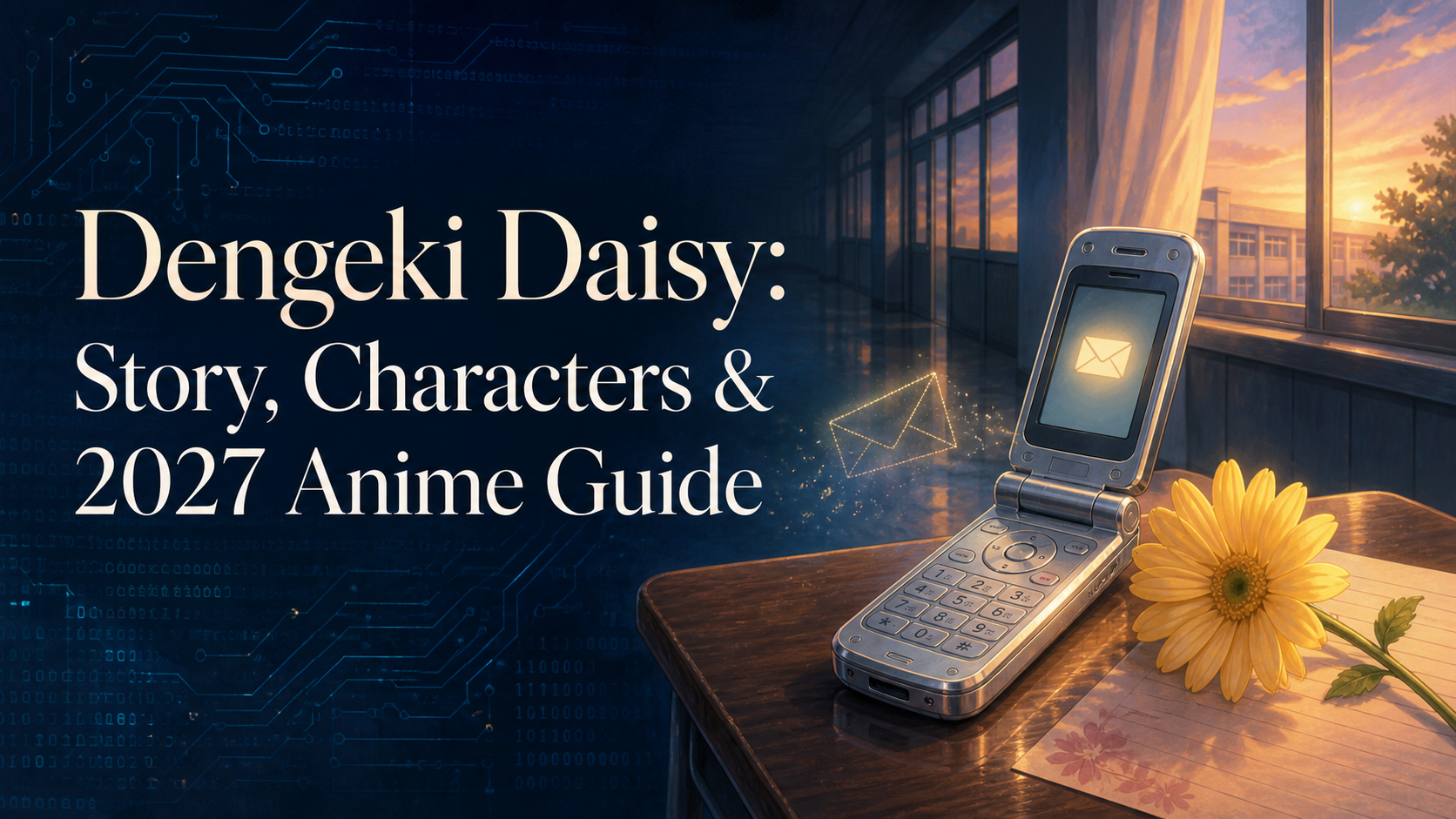
The old-fashioned cell phone is one of the manga’s most memorable symbols.
Today, instant communication is everywhere. Yet DAISY’s emails feel unusually intimate because each one matters. They arrive when Teru needs a steady voice, not an endless stream of attention.
DAISY cannot restore the family she lost. What he gives her is quieter: a reason to believe that her feelings have reached another person.

Kurosaki’s Protection Is Not the Same as Control
Dengeki Daisy includes familiar protective-hero moments, but Kurosaki is not presented simply as a powerful man who knows what is best for a younger girl.
He withholds information and occasionally tries to carry danger alone. The story, however, does not treat those decisions as unquestionably noble. His secrecy has consequences, and Teru is allowed to challenge it.
Kurosaki’s most meaningful acts of protection are not the moments when he physically rescues her. They are the moments when he recognizes that she has her own judgment, relationships, and future. Protecting Teru means accepting that he cannot own her choices.
Teru Wants to Protect Others Too
Teru is not a passive heroine waiting for someone stronger to solve the story.
She may not possess Kurosaki’s physical strength or technical abilities, but she pays attention to emotional truths he would rather avoid. She recognizes his loneliness, questions his self-punishment, and refuses to let guilt determine his entire life.
This creates a relationship in which protection moves in both directions. Kurosaki may keep immediate danger away from Teru, but Teru also tries to protect the part of him that believes he does not deserve happiness. Her kindness is not weakness. It is one of the forces that moves the story forward.
Romance and Suspense Are Part of the Same Story
The romance does not pause whenever the suspense plot begins. The two are inseparable.
Secrets affect whether the characters can trust each other. Guilt affects whether they believe they are allowed to love. Danger forces them to decide how much truth they can share and how much freedom they are willing to give one another.
Even the comedy contributes to this balance. Teru and Kurosaki’s arguments keep their relationship energetic, while the darker plot gradually reveals the fear beneath Kurosaki’s abrasive behavior.

How Does the Manga Handle the Age Gap?
The age gap is likely to be one of the first concerns raised by new readers.
Teru is a high school student, while Kurosaki is an adult employed at her school. That difference creates a real imbalance in age, experience, and authority, and readers do not need to ignore it in order to appreciate the manga.
Some of the comedy—particularly Kurosaki making Teru work for him and their exaggerated physical confrontations—also reflects conventions that were more common in shojo manga during the late 2000s. Not every modern reader will be comfortable with those scenes.
At the same time, the emotional relationship is not written as an unquestioned fantasy in which an older man takes control of a vulnerable girl’s life. Kurosaki is deeply conscious of the boundaries between them. His hesitation is not merely romantic shyness; it comes from guilt, responsibility, and an awareness that his feelings cannot override Teru’s right to grow at her own pace.
Teru is also given a voice within the relationship. She questions him, becomes angry with him, makes independent decisions, and refuses to remain inside the role of someone who must always be protected.
This does not erase the age difference. It explains how the manga chooses to engage with it. Different readers may ultimately reach different conclusions, and an honest introduction to Dengeki Daisy should leave room for that response.
What We Know About the 2027 Anime
The television anime adaptation of Dengeki Daisy was announced for 2027.
| Director | Souta Ueno |
|---|---|
| Series composition | Sawako Hirabayashi |
| Character design | Ayaka Murakami |
| Music | Masaru Yokoyama |
| Animation production | Studio DEEN |
The announced principal cast includes Yoshino Aoyama as Teru Kurebayashi and Taku Yashiro as Tasuku Kurosaki.
As of August 8, 2026, the exact premiere month, episode count, and international streaming platforms have not been announced.
Because the original manga is complete at 16 volumes, the anime has a finished story to draw from. The main question will be how much of that story the adaptation plans to cover—and whether it can preserve the manga’s careful balance of comedy, mystery, grief, and slow-building trust.
For the latest confirmed information, check the official English anime website.
How to Read Dengeki Daisy in English
VIZ Media released all 16 volumes in English under its Shojo Beat imprint.
The series is also listed through VIZ’s official Dengeki Daisy page. The opening chapters can be read free through VIZ Manga, while additional chapters are available to members in supported regions. Digital and print availability varies by country.
Readers who want to experience the full mystery without spoilers should begin with Volume 1 rather than searching for the identity of DAISY. The manga provides clues early, and discovering how those clues reshape the relationship is part of the experience.
Who Should Read Dengeki Daisy?
This series may be for you if you enjoy:
- Shojo romance with a substantial plot beyond the central couple
- Protective heroes whose actions are complicated by guilt
- Heroines who are kind without being passive
- Secret identities and technology-related suspense
- Stories about grief, trust, and chosen emotional support
- Romantic comedy that gradually reveals a darker emotional core
Readers looking only for a light school romance may be surprised by how serious the story becomes. Likewise, readers who dislike age-gap relationships may find the central premise difficult despite the care given to Teru’s agency.
Frequently Asked Questions
Is Dengeki Daisy complete?
Yes. The original manga is complete in 16 volumes.
Is the anime a sequel?
No. The 2027 television anime is an adaptation of the original manga.
Does the manga reveal who DAISY is?
Yes. The mystery is answered within the story, but learning the identity is only one part of the plot. The reasons for the secrecy are more important than the answer alone.
Is Dengeki Daisy mainly a romance?
Romance is central, but the manga also contains suspense, comedy, family loss, technological intrigue, and themes of guilt and trust.
Does this guide contain major spoilers?
No. It avoids DAISY’s identity, the central revelations surrounding Teru’s brother, and the ending.
Final Thoughts
At its heart, Dengeki Daisy is about what it means to remain beside someone without taking away their freedom.
DAISY’s messages give Teru comfort after an unbearable loss. Kurosaki’s protection helps keep her safe. But the story does not end with a lonely girl being rescued by a stronger man.
Teru grows into someone who can choose, confront, forgive, and protect. Kurosaki must learn that caring for her does not mean deciding everything on her behalf—and that guilt is not the same thing as responsibility.
That is why the series continues to resonate beyond its mysteries and romantic tension. It understands that trust is not created by hiding every painful truth. It begins when two people are finally willing to see each other clearly.
As the 2027 anime approaches, this is an ideal time to discover one of shojo manga’s memorable combinations of romance, suspense, humor, and emotional healing.
Continue with our Tasuku Kurosaki character analysis, which examines how guilt turns protection into self-punishment. Future articles will explore Teru Kurebayashi’s growth, the manga’s ending, and new anime announcements.
For the heroine’s perspective, read our Teru Kurebayashi character analysis, exploring how she grows beyond the role of someone who is only protected.
Related Reading
For a wider view of the year’s adaptations, see Upcoming Shoujo and Josei Anime in 2027.