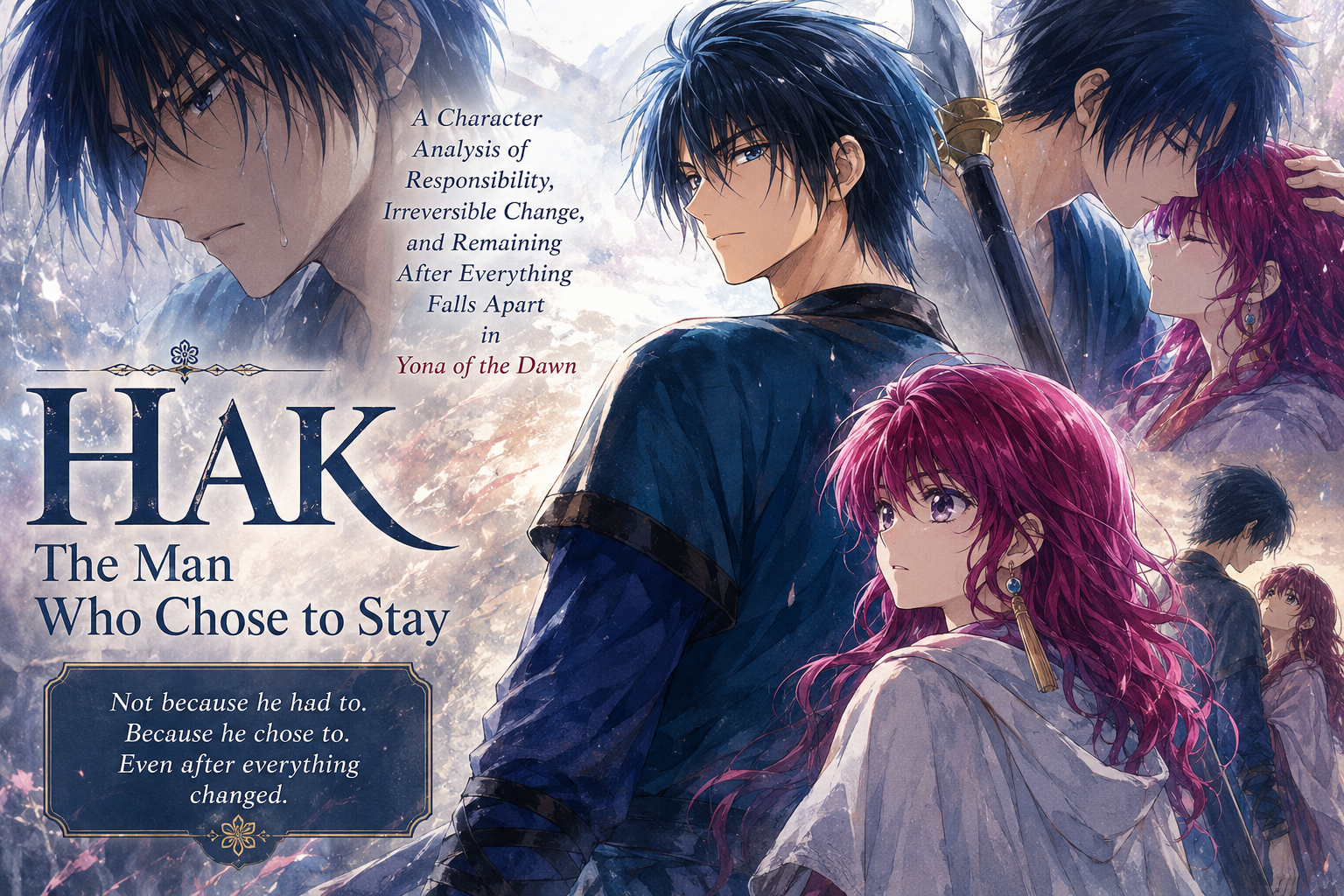
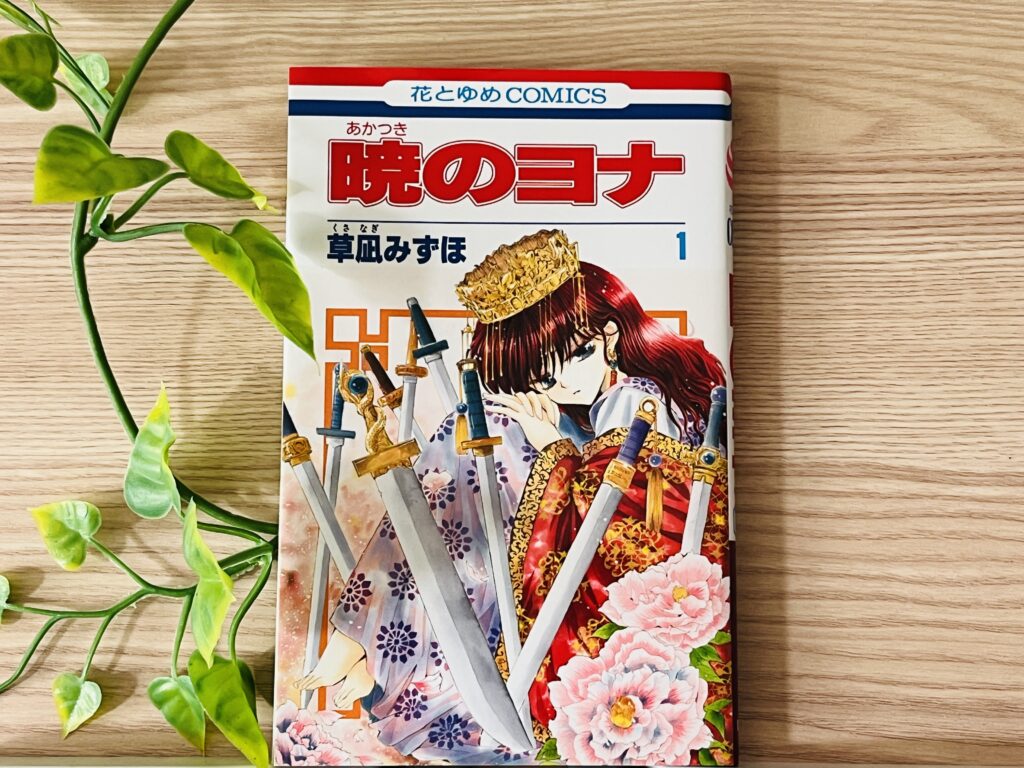
A Character Analysis of Responsibility, Irreversible Change, and Remaining After Everything Falls Apart in Yona of the Dawn
Some characters move forward.
Some chase power.
Some change the world.
Some leave the past behind.
Hak does something different.
He stays.
Even after losing everything—
his king, his home, and the person he trusted most—
he never chooses to walk away.
And that decision, repeated again and again, is what makes Hak one of the most compelling characters in Yona of the Dawn.
Because Hak’s story is not simply about loyalty.
It is about what happens when a person continues to remain—
even after the relationship itself can never return to what it once was.
Before diving into Hak’s story, here’s a complete guide to the world and emotional structure of Yona of the Dawn.
Who Is Hak?
Hak, known as the “Thunder Beast,” is the former general of the Wind Tribe and Princess Yona’s bodyguard.
At first glance, he seems simple:
- overwhelmingly strong
- sarcastic and relaxed
- fiercely loyal
But Hak is not defined by strength.
He is defined by what he refuses to abandon.
And more importantly—
by the emotional responsibilities he continues to carry long after everything becomes painful.
The Night That Destroyed His World
Hak’s life is divided by a single moment:
The night Soo-won killed King Il.
In that instant, Hak lost:
- his king
- his home
- his closest friend
- the future he believed in
Nothing after that night can return to normal.
And Hak understands this immediately.
This is what makes his story painful.
He does not live in denial.
He knows the world he loved is already gone.
But even then—
he stays inside it.
His Feelings Toward Soo-won
Hak does not feel one thing about Soo-won.
He feels all of it at once.
Once, Soo-won was the person he trusted most.
The three of them shared the same world.
The same future.
The same emotional foundation.
Then came betrayal.
Hak’s grief becomes rage.
His rage becomes hatred.
At one point, he nearly attacks Soo-won himself.
And yet—
even after everything, Hak cannot completely reduce him to “the enemy.”
Because Hak understands things he wishes he did not understand.
He sees that:
- Soo-won carries his own pain
- Soo-won believes he is protecting the country
- Soo-won is, in many ways, becoming a capable king
Hak recognizes all of this.
But recognition is not forgiveness.
And that contradiction never disappears.
This is what defines Hak emotionally:
He hates Soo-won.
He understands Soo-won.
He cannot forgive Soo-won.
And he cannot erase him either.
Soo-won is not simply the man who betrayed him.
He is the friend Hak lost—
without ever fully emotionally leaving behind.
The Man Who Stayed Inside an Irreversible Relationship
Most people eventually leave relationships that can no longer be repaired.
Hak does not.
That is what makes him unusual.
Even after the emotional structure collapses, he remains connected to it.
Not because he is weak.
Not because he cannot move on.
But because Hak treats emotional bonds as responsibilities, not temporary feelings.
This becomes especially clear in the way he protects Yona.
Protecting Yona Was Never Just Duty
After the betrayal, Hak’s purpose becomes simple:
Protect Yona.
At first, this almost looks self-destructive.
He throws himself into danger without hesitation.
He stops prioritizing himself entirely.
At times, he feels less like a person and more like a weapon created only to protect someone else.
But the important thing is this:
Hak never protects Yona because he is ordered to.
He protects her because he chooses to remain beside her.
That distinction matters.
Because for Hak, staying is never passive.
It is an active decision.
Again and again.
From Protector to Equal
As the story progresses, Yona changes.
She learns to fight.
She learns to lead.
She begins making choices for herself.
And because Yona changes, Hak changes too.
Their relationship slowly shifts from:
princess and bodyguard
into:
two people choosing to walk forward together
This transformation is essential.
Because Hak slowly stops defining himself only through service.
For most of the story, Hak positions himself around others.
- protector
- subordinate
- childhood friend
- warrior
He constantly places himself in supporting roles.
Even his love is restrained by positioning.
He prioritizes Yona’s safety over his own desires.
He suppresses his feelings to preserve the relationship itself.
Which is why his confession matters so much.
“Because I Love You”
For a long time, Hak avoids saying what he wants.
Then finally, he breaks.
“Because I love you!”
This moment matters because it is not simply romantic.
It is the first time Hak openly places his own feelings into the relationship.
For once, he is no longer acting only as:
- protector
- guard
- supporter
He becomes a person asking for something emotionally real.
And that changes everything.
The Misunderstanding That Revealed the Truth
One of the most important moments in Hak’s story happens when Yona tries to “set him free.”
To Yona, this is kindness.
To Hak, it feels devastating.
Because she misunderstands the foundation of his choice.
Hak was never staying because he had nowhere else to go.
He was never staying because of obligation.
Or because of King Il.
Or because of duty.
He stayed because he wanted to.
That is the truth Hak finally forces into words.
And that moment reveals the core of his character:
Remaining beside someone only has meaning if it is chosen freely.
Strength That Includes Weakness
Hak is often treated as invincible.
But the story repeatedly shows that he is not.
He feels:
- frustration
- exhaustion
- fear
- helplessness
At times, he blames himself for not being strong enough.
“If I had more strength…”
That line matters because Hak’s strength is not the absence of weakness.
It is the decision to continue carrying responsibility despite weakness.
That is a very different kind of strength.
From Warrior to Leader
Later in the story, Hak begins taking on a larger role.
He leads soldiers.
He raises morale.
He influences battles and decisions that affect entire groups of people.
This is a major transformation.
Hak is no longer protecting only one person.
He is becoming someone others depend on.
And yet—
even as his role changes, his emotional core does not.
He continues choosing to remain.
Love Without Possession
Hak’s love is deeply romantic.
But it is never possessive.
He does not try to control Yona.
He does not demand her feelings.
He does not pressure her into choosing him.
Even when it hurts him, he respects her freedom.
But at the same time—
he never chooses distance.
This is what makes Hak’s love so powerful.
He does not bind Yona.
But he does not abandon her either.
His love is not passive patience.
It is deliberate emotional commitment.
Related Reading
If you want to explore the person who continued choosing understanding instead of hatred:
→ Yona — The One Who Kept Choosing
If you want to explore the king who chose responsibility over intimacy:
→ Soo-won — The King Who Chose Responsibility Over Love
If you want to explore the world, relationships, and emotional structures surrounding these characters:
→ Yona of the Dawn — Complete Guide
Remaining Even After Everything Changed
Hak’s story is not about destiny.
He is not a chosen king.
He is not someone seeking power.
He is simply someone who continued to remain—
even after the world he loved could no longer exist in the same form.
He stayed after betrayal.
After grief.
After emotional collapse.
After love became painful.
And even then—
he never chose distance.
That is what makes Hak unforgettable.
Because his greatest strength was never violence, loyalty, or devotion alone.
It was the decision to stay—
even after staying stopped being easy.
✅ Curious about this one? Check it out here! →Yona of the Dawn, Vol. 1
I also share the small manga moments that stay with me long after reading—the pauses, glances, and choices that never fully leave.
You can follow those weekly reflections on Substack.
✅ My Substack Here!