Spoiler warning: This essay discusses Nakatsu, Mizuki, and Sano across the completed Hana-Kimi manga, including the romantic outcome. It is a manga reflection, not an account of how far the anime has adapted the story.
Shuichi Nakatsu needs time to move on because accepting Mizuki’s choice is not the same as immediately feeling comfortable with it. He can understand that she loves Sano and still need room for his own heart to catch up.
After finishing Hisaya Nakajo’s Hana-Kimi, I wanted Nakatsu to be happy. That feeling did not come simply from pity for the boy who was not chosen. What stayed with me was how he treated people when being generous had become genuinely difficult.
For readers discovering the series through the 2026 anime, a little context helps: Mizuki enters a boys’ school to be near the high jumper Sano, and Nakatsu falls for her while believing she is a boy. The official anime introduction outlines that school setting; this essay follows the original manga’s relationships beyond it.
New to the series? Read our spoiler-free Hana-Kimi manga guide for the story, main characters, and official English editions.
Knowing the Answer Does Not End the Feeling
The moment I keep returning to is Nakatsu asking, in effect, for a little more time before he can properly give up. This is a paraphrase of the scene’s meaning from my reading notes, not a direct quotation from the manga or its English translation.
There are two different things he might need time for: to stop loving Mizuki, or to find a way of being around her without making his disappointment her responsibility. My reading leans toward the second.
A person can accept an answer before becoming emotionally accustomed to it. Recognizing someone else’s freedom does not require pretending that the outcome costs nothing. Nakatsu’s request allows that difficult interval to exist instead of turning it into evidence that his feelings were childish or insincere.
Mizuki Does Not Owe Him a Different Ending
Nakatsu’s kindness does not create a debt that Mizuki must repay with romance. Sano is not taking a prize that Nakatsu has earned. Thinking in those terms would make her choice disappear from her own relationship.
That is why Nakatsu’s response matters. He does not make his hurt a reason to blame Mizuki, and he does not turn his friendship with Sano into something that must be destroyed. Later, he even helps bridge the distance between them.
Those actions do not prove that he feels nothing. They show a difference between having a painful feeling and deciding what to do with it. He remains responsible for his behavior without being required to produce a cheerful emotion on demand.
The Loudest Boy Has Something He Cannot Easily Show
Nakatsu is expressive. His confusion and excitement often arrive on his face before he could possibly hide them. Early on, his attraction to someone he believes is a boy becomes part of the story’s comedy.
Some of that comedy carries assumptions from an older era. It is possible to notice those limits while taking his affection seriously. He is drawn to Mizuki before discovering her secret; the revelation does not create the feeling from nothing. I would not use that premise to assign him a definitive sexuality label the story does not establish.
His usual openness also makes the later restraint painful to read. A bright expression no longer tells us everything. The boy who seemed easiest to understand now has something he is trying to carry without placing it between his friends.

Friendship Is Not a Consolation Prize
Remaining friends can be meaningful, but it should not become another demand imposed on the rejected person. Nakatsu does not owe anyone instant ease, constant availability, or a performance of being completely fine.
That is part of why his request for time feels important. It leaves space between respecting the relationship and feeling ready to inhabit the changed friendship. His generosity becomes more convincing when we allow it to be difficult.
I do not read his story as a lesson that a good person must suffer silently forever. Rather, it makes room for an imperfect transition: accepting a boundary, grieving what will not happen, and gradually finding a way to remain connected. Friendship can survive without requiring that the lost romantic hope never mattered.
Moving On Does Not Have to Erase What Was Real
In my Japanese reflection on Nakatsu, I wondered whether giving up on a relationship and losing every trace of affection are really the same thing. They do not have to be.
Nakatsu can have a future without treating his love for Mizuki as a mistake. The important change is that the feeling no longer asks her to become someone she is not or choose someone she does not choose.
That is why I want more for him than the dignity of being the good second lead. I want him to receive affection as freely as he gives it. His story is moving because he respects another person’s happiness while still having a heart that deserves care of its own.
The original manga is available in English from VIZ; its Volume 23 page identifies the final volume. For another relationship that matters beyond the central romance, read why friendship is not a side story in Kimi ni Todoke.
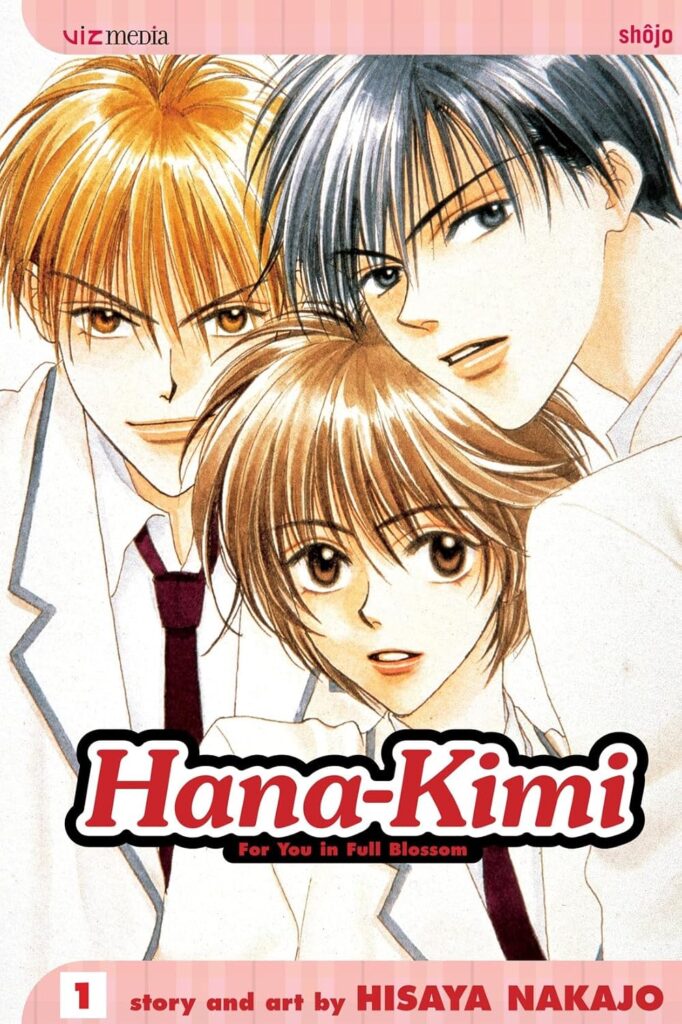
✅ Curious about this one? Check it out here! →Hana-Kimi, Vol. 1
I also share the small manga moments that stay with me long after reading—the pauses, glances, and choices that never fully leave.
You can follow those weekly reflections on Substack.
✅ My Substack Here!