

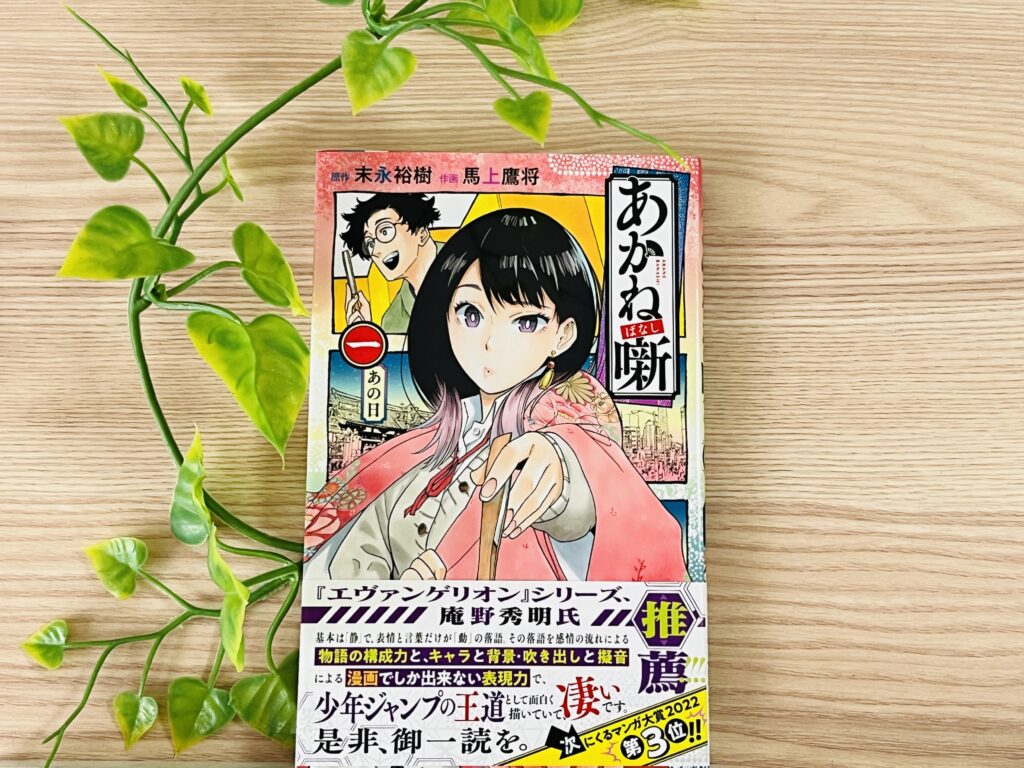
Spoiler note: This essay discusses events from the Akane-banashi anime, including Akane’s early training with the Shiguma school.
Akane has the kind of talent that makes people look twice. She is passionate, competitive, quick to act, and brave enough to think for herself. Yet her growth in Akane-banashi cannot be explained by talent alone.
Beside her master stands a group of very different senior disciples. In rakugo, disciples of the same master are connected almost like siblings; those who entered earlier become the “older brothers” and “older sisters” of the school. They correct Akane, challenge her assumptions, share what experience has taught them, and sometimes simply let her watch.
The more I watched, the more one thought stayed with me: Akane is not becoming strong on her own. Her growth is possible because her senior disciples are there.
A Master Is Not the Only Person Who Raises a Disciple
When we hear the word “apprenticeship,” we may imagine a master personally teaching every lesson. The Shiguma school works differently. Master Shiguma gives Akane direction, but the people closest to the practical details of her everyday training are often her senior disciples.
After Akane joins the school as a trainee, Kyoji is placed in charge of her instruction. She expects to polish her performance, only to be given chores and sent to train somewhere that appears to have nothing to do with rakugo. The anime’s official episode guide makes that gap between her expectations and his teaching method clear.
At first, Akane cannot see the connection. Through experience, however, she begins to learn something that cannot be acquired by practicing a story alone.
If a master shows a disciple the direction of the road, a senior disciple teaches her how to place her feet upon it.
Kyoji Teaches What Comes Before Technique
Kyoji does not begin by explaining every vocal technique or gesture. He asks Akane to observe the people around her and decide what the moment requires. The lesson is kibataraki: the awareness and initiative to notice what needs doing before someone has to tell you.
It may seem unrelated to performance. A rakugoka, however, cannot delight an audience by speaking only for herself. She must sense who is sitting in front of her—where they relax, where they hesitate, and what will allow them to enter the story.
Akane’s training outside the theater later changes how she approaches an audience at a retirement home, as described in the official summary of Episode 4. Kyoji does not hand her the answer. He creates an experience through which she can discover it.
His method is strict, but it also contains trust: he believes Akane can reach the meaning for herself.
Her Senior Disciples Show Her That There Is More Than One Right Way
The senior disciples of the Shiguma school do not look or perform like copies of one another. One is serious and methodical. Another studies stories through his own knowledge and perspective. Another brings warmth to the group and feels more like an approachable older brother; the official character profile describes Guriko in just that way.
Their differences matter. If Akane were shown only one correct model, she might devote herself to reproducing it. Instead, she sees that people who share the same master can still develop distinct rhythms, strengths, and ways of meeting an audience.
They do not give Akane a finished answer. They show her that a rakugoka can have many forms—and leave her to discover the one that is hers.
A Safe Place to Fail Is What Makes Courage Possible
Akane is bold. She believes in her potential and throws herself into difficult situations. Yet her confidence does not feel like simple recklessness, because there are people around her who will correct her, make her think, and send her toward the next stage.
Her senior disciples do not solve every problem for her. They also do not leave her to continue alone in the wrong direction.
Protecting someone is not the same as preventing every failure. Sometimes it means creating a place where failure can be examined and survived. Because Akane has that place, she can take risks without being abandoned by a single mistake.
A Rakugo School Is Both a Hierarchy and a Second Family
The Japanese word anideshi literally carries the idea of an older-brother disciple. These performers are not related by blood, yet sharing a master gives their relationships the language of family.
That does not make the school sentimental or free of competition. It has rank, obligation, and individual ambition. Every performer will eventually be judged on the strength of his or her own art.
Still, the senior disciples spend their time teaching someone who entered later. They correct her mistakes, show her how work is done, and offer help that may never appear in applause or a paycheck. Through those ordinary acts, the school becomes more than a professional affiliation.
Akane once saw rakugo wound her family when her father was expelled. By returning to that same world, she gradually finds another family-like bond through rakugo. That is one of the story’s quietest kindnesses.
They Do Not Replace Her Father
Akane’s father was the first person to show her the magic of rakugo. Her senior disciples do not take his place, nor do they change the fact that his performance is her emotional starting point.
But admiration for her father is not enough to build a professional life. Akane must learn what happens beyond the spotlight: how to notice an audience, how to work, how to respond to failure, and how to understand a style different from her own.
If her father gave her the reason to love rakugo, her senior disciples help her transform that love into an art she can live by.
Being Supported Does Not Make Akane Less Strong
When we say that someone was raised by others, it can sound as though we are diminishing her talent. With Akane, the opposite is true.
She does not merely obey. She takes a lesson inside herself, turns it over, and brings her own answer to the stage. The ability to absorb guidance without losing one’s center is a talent of its own.
Akane is not compelling because she never needs anyone. She is compelling because she can turn what others give her into genuine growth.
She Performs Alone, but She Was Never Raised Alone
When a rakugoka takes the stage, she is alone. No senior disciple can sit beside her and rescue a difficult performance. She must face the audience and create an entire world with her own voice and movement.
Yet behind that solitary figure stand the people who taught her: the senior who corrected her, the one who watched her fail, the one whose different style expanded her idea of rakugo, and the one whose casual words gave her the courage to try again.
The senior disciples do not walk Akane’s road for her. They stay close enough to show her how to walk until she can choose her own steps.
Akane’s growth is impossible to look away from because she herself is extraordinary. It is also compelling because the people around her refuse to let extraordinary talent grow alone.
✅ Curious about this one? Check it out here! →Akane-banashi, Vol. 1
New to the series? Begin with the Akane-banashi guide. Then explore the strength of Akane’s listening and why rakugo masters take apprentices.