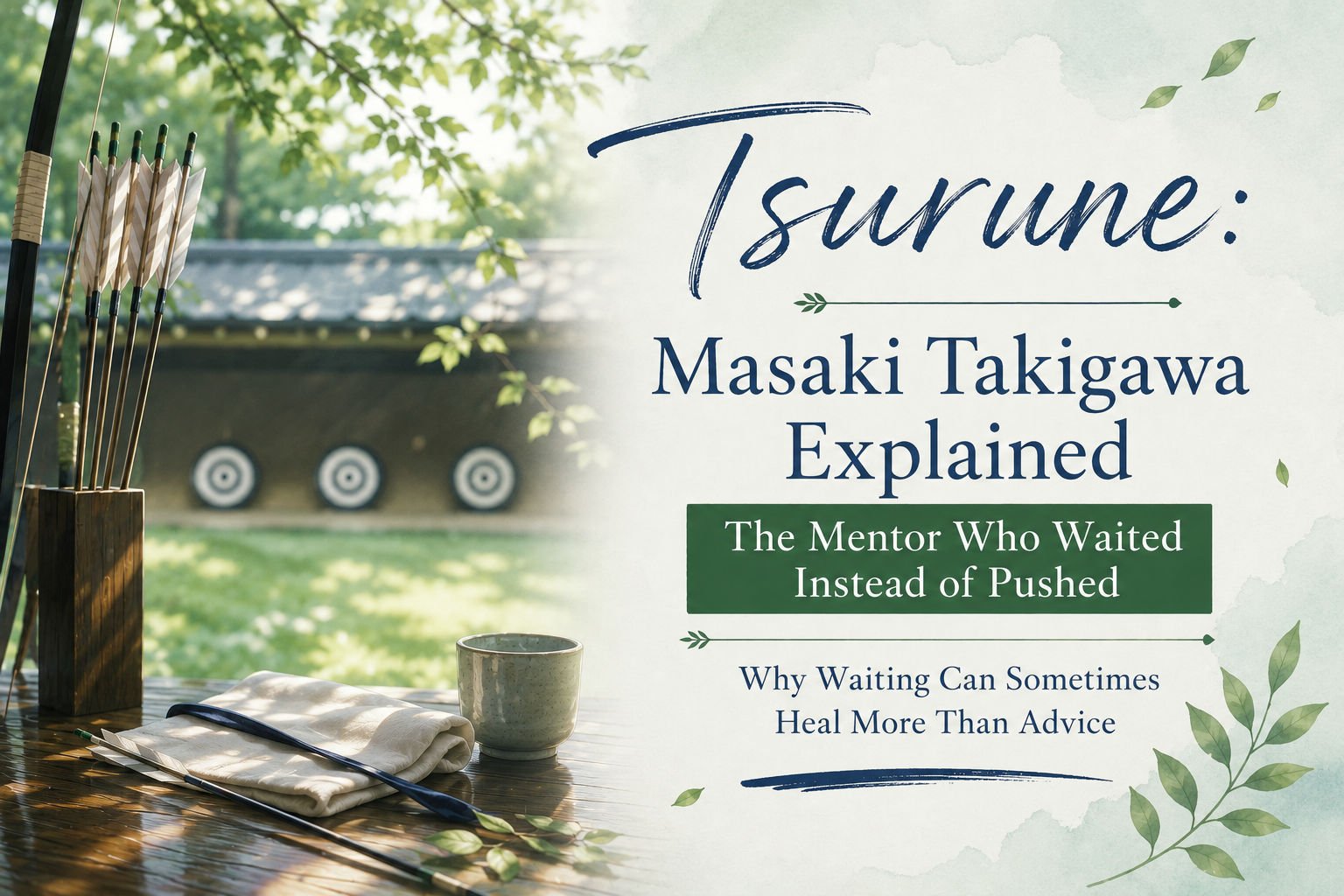
Why does staying quiet sometimes help someone more than words ever could?
That is the question Masaki Takigawa keeps raising throughout Tsurune.
He rarely pushes, and he rarely explains himself — he simply waits long enough for people to find their own way forward.
Why Waiting Can Sometimes Heal More Than Advice
Some characters support others by stepping forward.
Others support people by quietly stepping back.
Masaki Takigawa belongs to the latter.
In many sports stories, coaches are often portrayed as strict mentors. They push, discipline, and motivate. They challenge people to overcome weakness through effort.
But in Tsurune, Masaki Takigawa offers something different.
He guides without forcing.
He notices pain without rushing to fix it.
And perhaps most importantly, he knows when to wait.
That is what makes him one of the most quietly powerful characters in Tsurune.
The Kind of Adult Masaki Takigawa Chooses to Be
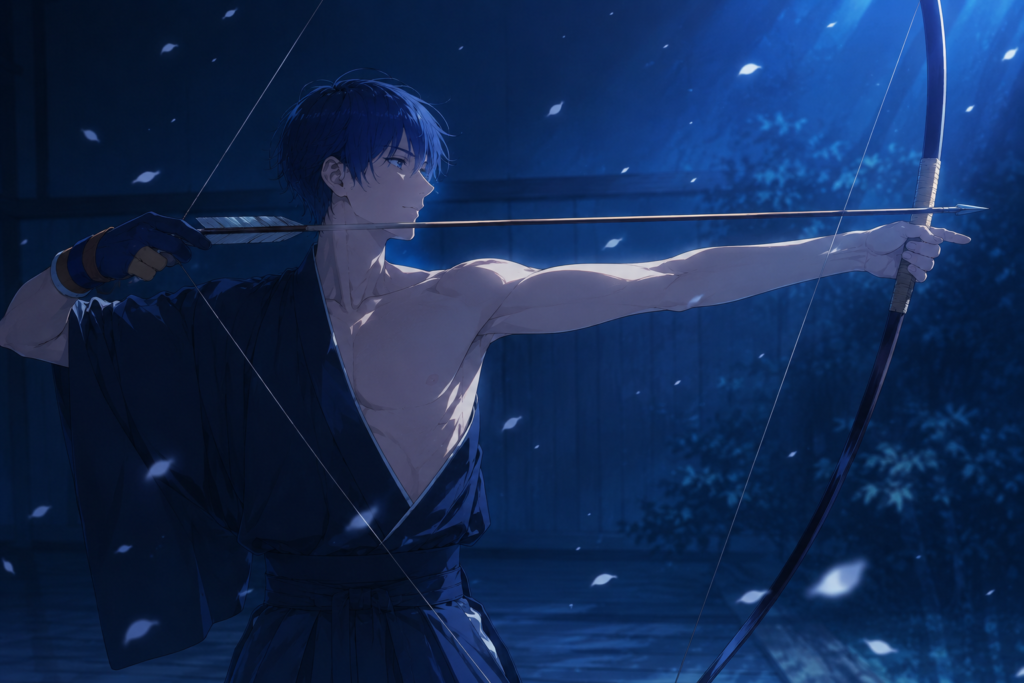
Masaki Takigawa is the mentor figure of Kazemai High School’s kyudo club.
But he is not written as a savior.
This distinction matters.
At first glance, it may seem like Masaki is the person who “brings Minato back” to archery. But that is not really what happens.
Minato is not simply someone who lost motivation.
He is someone who was hurt by something he deeply loved.
Kyudo, once a place of meaning and joy, became painful.
And when someone is wounded by something they once loved, forcing them back rarely works.
Masaki understands this.
He does not pressure Minato.
He does not tell him to “move on,” “try harder,” or “stop running away.”
Instead, he creates something much more important:
A space where Minato can eventually choose to return on his own.
That choice changes everything.
Because healing is often fragile.
And sometimes, people do not need advice.
Sometimes, they simply need a place where it feels safe to begin again.
Why Masaki Chooses to Wait
One of the most fascinating things about Masaki Takigawa is that he rarely tries to become the answer.
He supports people, but he does not take over their struggles.
This is surprisingly difficult.
When we care about someone, we often want to solve their problems.
We want to help quickly.
We want them to stop hurting.
Especially in a teacher or mentor role, the temptation to intervene is strong.
You want progress.
You want results.
You want people to grow.
But Masaki resists that impulse.
He understands that growth forced from the outside rarely lasts.
People have to arrive at their own understanding.
That is why he waits.
Not because he is passive.
But because he trusts that some things cannot be rushed.
When Minato struggles, Masaki stays close—but never too close.
When Seiya carries emotional burdens quietly, Masaki notices—but does not intrude.
His support exists in a careful balance:
Present, but not overwhelming.
Helpful, but never controlling.
This emotional distance is one of the quiet strengths of Tsurune itself.
What the Summer Camp Reveals About Masaki
One of the best examples of Masaki’s personality appears during the summer training camp.
He jokingly calls the boys his “servants,” creating an atmosphere that feels playful rather than hierarchical.
At first, it almost seems unserious.
But underneath the humor, something important is happening.
Masaki never forces connection.
He does not lecture the team about friendship.
He does not tell them to “be closer” or “work harder together.”
Instead, he creates situations where connection can happen naturally.
Shared time.
Shared experiences.
Shared effort.
And before they realize it, relationships begin to form.
This feels intentional.
Masaki seems to understand that trust cannot be commanded.
It has to grow.
People cannot be emotionally rushed into closeness.
They need space.
Time.
And sometimes, just the right environment.
Masaki never controls relationships.
He simply helps create the conditions where they can happen.
That may be one of the most underrated forms of care.
What Masaki Reveals About Quiet Support
What makes Masaki memorable is not dramatic speeches or heroic moments.
It is the way he chooses restraint.
He cares deeply.
But he does not overwhelm people with that care.
He guides.
But he does not decide for others.
He supports.
But he does not take ownership of someone else’s growth.
This becomes even more meaningful when we realize that Masaki himself is still carrying unresolved emotions—especially regarding his grandfather and his relationship with kyudo.
He understands emotional conflict because he has lived through it.
Perhaps that is why he avoids forcing answers onto others.
He knows that some struggles cannot be solved from the outside.
They can only be lived through.
And sometimes, the greatest kindness is not fixing someone.
It is staying nearby while they find their own way forward.
Why Characters Like Masaki Feel So Comforting
Watching Tsurune made me realize something.
Sometimes, we are not only moved by the people struggling.
We are moved by the people quietly staying beside them.
The adults who watch without judging.
The people who wait without giving up.
The ones who know exactly when to speak—and when silence is kinder.
Maybe part of why Masaki feels comforting is because he represents the kind of adult many people wish they had met.
Or perhaps the kind of person we hope to become.
Someone who supports without controlling.
Someone who trusts instead of pressures.
Someone who understands that healing has its own timing.
Masaki Takigawa reminds us that caring for someone does not always mean leading them.
Sometimes, it means walking beside them quietly until they are ready.
Related Reading on This Blog
If you enjoyed this character essay, you may also like:
→ Tsurune: More Than Archery — A Story About Facing Yourself Through Kyudo
→ Tomio Morioka — The Person Who Offered Understanding Instead of Answers
→ Why Adults Who Wait Feel More Powerful Than Adults Who Control
→ Relationship Distance in Shoujo Manga — Why Distance Sometimes Protects Love
I also share the small manga moments that stay with me long after reading—the pauses, glances, and choices that never fully leave.
You can follow those weekly reflections on Substack.
✅ My Substack Here!
This essay is part of a wider comparison: Why Manga Characters Choose to Wait Instead of Rush Love