A high school girl with nowhere to go. An older musician who gives her a place to stay.
Stray Cat & Wolf begins with a provocative cohabitation setup, but describing it only as a romance between a vulnerable girl and a dangerous older man would overlook an important part of the story.
Tamaki is not simply searching for love. She needs somewhere she will not be rejected. The room and kindness Rou offers give her that refuge, but their arrangement also creates an imbalance in age, experience, and material security.
This spoiler-light guide introduces the story, its main characters, the boundaries readers may want to consider, and where to find the official English manga.
What Is Stray Cat & Wolf?
Stray Cat & Wolf is an ongoing Japanese shoujo manga by Mitsubachi Miyuki. Its Japanese title is Noraneko to Ookami (野良猫と狼), and it is serialized in Hakusensha’s The Hana to Yume.
Miyuki is also the creator of Cheeky Brat and Spring Storm and Monster.
- English title: Stray Cat & Wolf
- Japanese title: Noraneko to Ookami (野良猫と狼)
- Creator: Mitsubachi Miyuki
- Japanese publisher: Hakusensha
- Magazine: The Hana to Yume
- Genres: shoujo manga, romance, cohabitation, music
- Japanese release: Seven volumes available
- English publisher: Yen Press
- English release: Volumes 1–4 available; Volume 5 scheduled for August 25, 2026
Japanese Volume 7 was released on July 17, 2026. The English edition follows a different publication schedule, so the number of volumes available in Japan should not be confused with the number currently translated into English.
Readers interested in another manga by the same creator can also explore the amigurumiche guide to Spring Storm and Monster. Both stories examine intense attachment and emotional distance, although their family and living arrangements create different kinds of responsibility.
A Spoiler-Free Story Introduction
Tamaki Mishina is a first-year high school student who leaves her small village after the death of her father. She hopes that attending school in Tokyo will allow her to begin again somewhere she is not resented for circumstances beyond her control.
Her plans quickly collapse.
After being turned away from the place where she expected to live, Tamaki finds herself alone in an unfamiliar city. Exhausted and with nowhere else to go, she loses consciousness—and wakes up in a stranger’s apartment.
The apartment belongs to Rou, an older guitarist whose experience with women makes him very different from Tamaki. He immediately realizes that she does not understand what sharing a room with an adult man could mean.
Yet Tamaki has nowhere to return to.
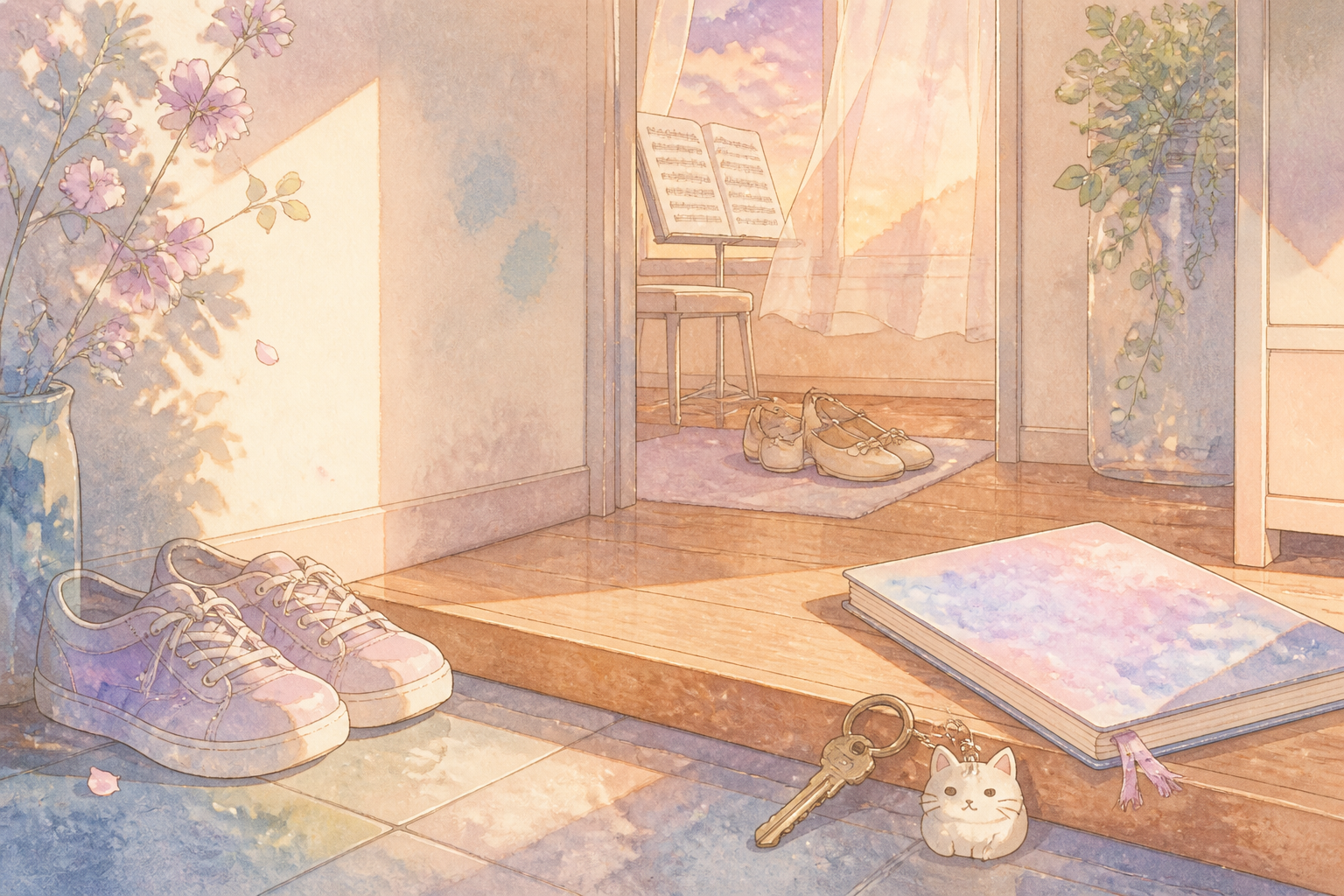
The two begin living together without being family or lovers. What starts as an accidental shelter gradually becomes part of their everyday lives. They share meals, keys, rooms, and the small routines that can make a temporary space feel like home.
The story is not about two people instantly becoming an ideal couple. It follows two lonely people as they slowly begin to understand what it means to need someone—and whether needing that person can become a relationship they are both able to choose.
The Main Characters
Tamaki Mishina
Tamaki is a high school student who moves to Tokyo after losing her father.
Her openness and lack of caution give the manga much of its charm, but they should not be treated as simple personality traits. Tamaki has not had enough dependable adults or secure places in her life. As a result, she has limited experience recognizing danger or judging what she should reasonably expect from other people.
She is not only a heroine waiting to be protected.
As the story develops, Tamaki begins thinking about social expectations, her own future, and where she genuinely wants to belong. Her growth is not limited to becoming someone Rou can love. She gradually moves from being a girl who was given shelter toward someone who wants to stand beside him through her own choice.
That distinction is central to her character.
Rou
Rou is the older guitarist who brings Tamaki into his apartment. Yen Press uses the spelling “Rou” in the official English edition.
His appearance, lifestyle, and experience with women initially make him seem like a familiar dangerous older man. However, his relationship with Tamaki increasingly reveals hesitation beneath that confidence.
One of the qualities that stood out to me while reading the Japanese manga was Rou’s ability to hold himself back. Even as his feelings become stronger, he tries not to use Tamaki’s inexperience or dependence to get what he wants.
That restraint matters.
It does not, however, erase every problem in their relationship. Rou is older and more experienced, and he provides the home Tamaki relies on. Losing him could mean losing not only a romantic connection but also the foundation of her daily life.
Rou’s self-control is meaningful, but the imbalance between them still exists. Both truths need to remain visible.
Why This Is More Than an Age-Gap Romance
Stray Cat & Wolf contains many elements designed to create strong romantic tension: an older musician, close cohabitation, jealousy, possessiveness, and a heroine who has never experienced this kind of attention.
At the same time, Tamaki is a high school student.
Rou is older, has more life experience, and controls the home in which they live. International readers may reasonably feel uneasy about the difference in age and practical power between them.
A thoughtful introduction to the series should not dismiss those concerns by saying that everything is acceptable because Rou protects her.
But the story also cannot be explained by the age gap alone.
Tamaki does not seek Rou simply because an older musician represents an exciting kind of romance. She wants someone who will not send her away and a place she is allowed to return to.
Rou, meanwhile, begins as someone who appears to treat intimacy casually. His relationship with Tamaki forces him to consider the consequences of his actions because she is the one person he does not want to hurt carelessly.
For me, the manga becomes most interesting when it is not read by removing all danger from their relationship—or by allowing that danger to explain everything about it.
The important question is whether their bond can become one that Tamaki is increasingly able to choose.
Belonging, Loneliness, Dependence, and Boundaries
The Japanese word ibasho can mean more than a physical place to live.
It can describe a place where someone feels permitted to exist: somewhere they will not be treated as an inconvenience, forced to perform a role, or told to leave.
Rou’s apartment gradually becomes that kind of place for Tamaki.
There is comfort in this transformation, but there is also a serious difficulty. When one person provides both emotional support and physical shelter, the fear of losing that person can become overwhelming.
Tamaki may then struggle to separate two different questions: Does she genuinely want to remain with Rou, or is she afraid of having nowhere else to go?
Supporting another person is different from controlling their life. Being needed is also different from creating a situation in which the other person cannot live independently.
Rou’s attempts to wait for Tamaki carry emotional weight. Even so, it is equally important that Tamaki can say no without fearing that she will lose her home, and that she can develop friendships, plans, and a future beyond him.
Her growth does not necessarily require leaving Rou.
It requires reaching a point where staying with him can be her choice rather than the only option available.
That is what makes the cohabitation premise more than a convenient way to keep the romantic leads close. Their shared home becomes both a place of refuge and a place where affection, dependence, and personal boundaries are difficult to separate.

Where Can You Read Stray Cat & Wolf in English?
Yen Press publishes the official English edition of Stray Cat & Wolf.
As of August 11, 2026, Volumes 1–4 are available. Volume 5 is scheduled for August 25, 2026, in both paperback and digital formats.
The official Yen Press pages direct readers to authorized retailers. Paperback options include Amazon, Barnes & Noble, Books-A-Million, Indigo, Kinokuniya, and the Crunchyroll Store. Digital options include Kindle, Apple Books, Barnes & Noble, BookWalker, comiXology, Google Play, Kobo, MangaPlaza, MANGA MIRAI, and emaqi.
Retailer and format availability may vary by country. The safest approach is to begin with the official Yen Press series page or the page for the individual volume and select a retailer available in your region.
Yen Press also provides an official preview on the Volume 1 page, allowing readers to check the artwork and English dialogue before purchasing.
The Japanese edition has reached Volume 7, while English Volume 5 has not yet been released. Readers following Japanese-language discussions or social media should therefore be careful of spoilers from later volumes.
For more authorized reading options, see the amigurumiche guide to where to read Japanese manga legally online.
Does Stray Cat & Wolf Have an Anime?
No. As of August 11, 2026, no TV anime adaptation of Stray Cat & Wolf has been officially announced.
The manga has received promotional videos with voice acting, but a voiced manga PV is not the same as an anime adaptation.
Its popularity, number of published volumes, and promotional videos are not enough to predict whether or when an anime will be produced. This information should only be updated after an announcement from Hakusensha, The Hana to Yume, or an official anime production source.
Who Might Enjoy This Manga?
Stray Cat & Wolf may appeal to readers who enjoy:
- Shoujo romances in which cohabitation gradually changes a relationship
- Manga with musicians or a band setting
- Male leads who appear forceful but also struggle with hesitation and restraint
- Stories about a lonely heroine finding both a home and her own voice
- Mitsubachi Miyuki’s Cheeky Brat or Spring Storm and Monster
- Romance manga willing to raise questions about dependence and boundaries
Readers may want to approach the series cautiously if they are uncomfortable with:
- Romance between a high school student and an older man
- A minor living with an adult man
- One partner depending on the other for housing and daily stability
- Jealousy and possessive behavior
- Relationships shaped by significant differences in age and experience
Feeling uneasy about these elements does not mean that a reader has misunderstood the manga. Different readers will draw different boundaries around what they can enjoy as romantic fiction.
Final Thoughts
Stray Cat & Wolf begins when Tamaki, a high school student with nowhere to go, starts living with Rou, the older musician who finds her.
The provocative setup and Rou’s possessiveness create much of the series’ immediate tension. Yet the story also follows Tamaki as she begins to find a place where she belongs and learns to consider a future shaped by her own decisions.
Rou’s willingness to wait for her is meaningful, but it does not automatically remove the differences in age, experience, and practical power between them.
The relationship becomes more compelling when Tamaki is allowed to discover a world beyond Rou—and then decide whether she still wants to stand beside him.
The official English manga is available in paperback and digitally from Yen Press. Volume 5 is scheduled for August 25, 2026. Readers curious about this mixture of tenderness, danger, loneliness, and belonging can begin with the official Volume 1 preview.