— A Manga About Lost Youth / Unfinished Feelings / Relationships That Never Fully End —
What happens when a friendship never fully recovers from the moment feelings change?
Many romance manga begin with confession. Someone falls in love. Someone says it out loud. And the story moves forward from there.
But Anyway, I’m Falling in Love with You does something very different.
This story is not really about who confesses first.
It is about what happens after a group of childhood friends can no longer stay emotionally equal.
Some move forward too quickly. Some wait too long. Some stay close enough to protect the relationship — but too close to ever be seen clearly.
And even ten years later, none of them have completely escaped what happened during that summer.
That is what makes this manga feel different.
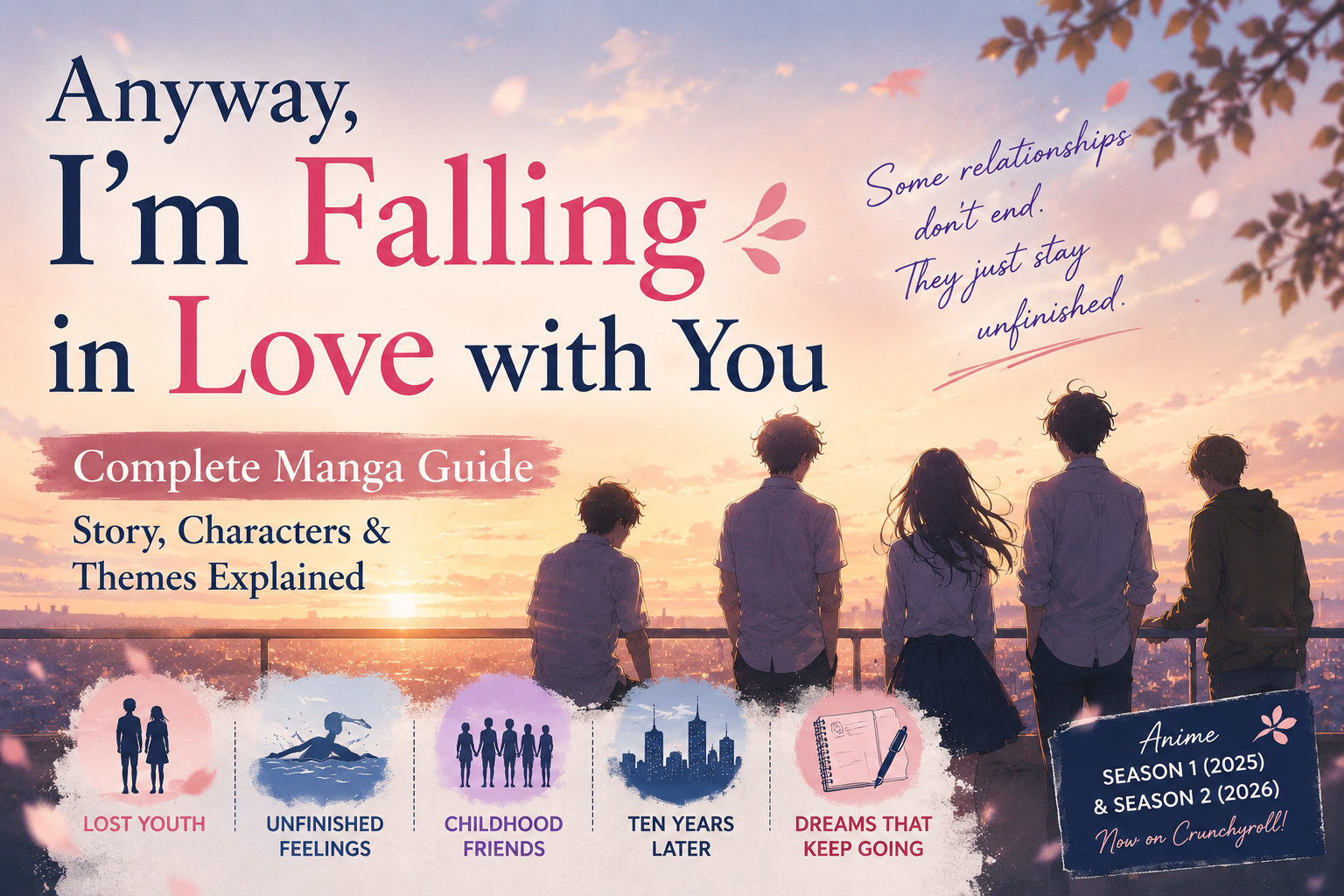
The anime adaptation of this manga is now complete — both Season 1 (2025) and Season 2 (2026) are available to watch on Crunchyroll.
✅ Anime Guide — Everything You Need to Know Before You Watch
Basic Information
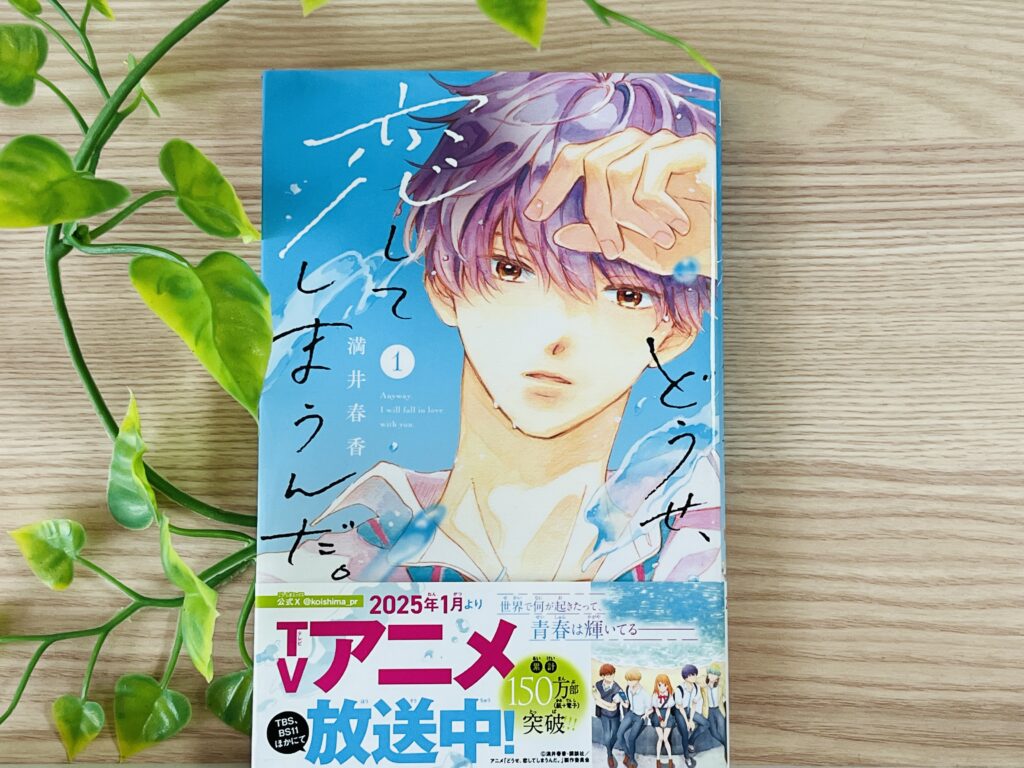
| Japanese Title | どうせ、恋してしまうんだ。 |
| English Title | Anyway, I’m Falling in Love with You |
| Author | Haruka Mitsui |
| Publisher | Kodansha (Nakayoshi) |
| Serialization | November 2020 – February 2026 (14 volumes, complete) |
| Genre | Shōjo / Romance / Coming-of-Age |
| Anime | Yes (Season 1: 2025 / Season 2: 2026) |
| English Release | Kodansha USA |
Story Overview
Mizuho Nishino is a high school girl who dreams of becoming a manga artist. She wants to experience the kind of sparkling youth she has always imagined.
But in 2020, everything around her begins to quietly fall apart.
School events disappear. Summer plans vanish. The atmosphere of youth itself feels interrupted.
Then one of her childhood friends suddenly confesses to her.
From that moment, the balance inside their friend group begins to break apart.
The story constantly moves between high school and ten years later — slowly revealing how those unfinished emotions continue to shape each character into adulthood.
This is not only a story about falling in love.
It is a story about trying to understand what those relationships meant after youth already ended.
The Core Emotional Structure
The emotional core of this manga is not romance itself.
It is emotional imbalance.
For years, the five characters were able to exist inside the same relationship. The same memories. The same group.
But the moment romantic feelings become impossible to ignore, equality disappears.
Some people begin wanting more. Some people hesitate. Some try to preserve the group instead of pursuing love.
What makes this story powerful is that nobody truly wants to destroy the relationship.
That is exactly why the characters struggle to move forward.
In many romance stories, confession creates clarity.
In this story, confession creates loss.
Because once feelings become visible, the friendship can never fully return to what it was before.
That quiet fear shapes almost every relationship in the series.
Characters
Mizuho Nishino A high school student with dreams of becoming a manga artist. Emotionally oblivious to those around her, but deeply feeling. The story follows both her at seventeen and at twenty-seven. ✅ Mizuho Nishino Explained — The Heroine Who Couldn’t See What Was Right Beside Her
Kizuki Hazawa A competitive swimmer. The first person to act. His directness changes the emotional balance of the entire group.✅ Kizuki Hazawa Explained — The Man Who Moved First, and What It Cost Him
Shin Kashiwagi The most emotionally restrained character in the story. He chose to wait — and the manga carefully examines what that choice cost him. ✅ Shin Kashiwagi — The Man Who Chose Responsibility Before Desire
Shugo Hoshikawa The person who was always there — and perhaps because of that, was never seen clearly. One of the most quietly painful characters in the series. ✅ Shugo Hoshikawa — The Love He Kept Hidden
Airu Izumi The one who understood the group’s emotional balance better than anyone. His role becomes surprisingly important in a story where preserving connection often matters more than winning love. ✅ Airu Izumi Explained — The One Who Protected the Group Instead of His Own Heart
Why This Story Feels Different
Many romance manga focus on confession.
Anyway, I’m Falling in Love with You focuses on what confession destroys.
The characters hesitate not because they are emotionally weak — but because the relationships already matter too much.
And because the story continues ten years later, those emotions never stay trapped inside youth nostalgia.
This manga asks a much harder question:
What happens when adulthood arrives before your feelings were ever resolved?
Who Should Read This Manga
This manga is especially powerful for readers who enjoy:
- Childhood friends romance
- Emotionally restrained characters
- Stories where friendship matters as much as romance
- Romance with long-term emotional consequences
- Manga about lost youth and unfinished feelings
If you are looking for fast-moving romance with immediate emotional payoff, this may feel slow.
But if you enjoy stories where hesitation itself becomes emotional tension, this manga becomes surprisingly deep.
If you love shōjo manga with emotional weight and quiet space — like A Sign of Affection or In the Clear Moonlit Dusk— this story will likely stay with you.
About the Anime
Both Season 1 (2025) and Season 2 (2026) are available to watch now. English subtitles and dubbed versions are both available on Crunchyroll.
✅ Anime Guide: Coming Soon
Final Reflection
Some relationships do not truly end.
They simply continue unfinished.
That is what makes Anyway, I’m Falling in Love with You feel more painful than a typical romance manga.
The characters are not only trying to figure out who they love.
They are trying to understand whether it is possible to move forward — without losing the version of youth they once shared together.
And sometimes, that question becomes much harder than love itself.
✅ Ending Explained — Who Does Mizuho End Up With?
✅ Curious about this one? Check it out here! →Anyway, I’m Falling In Love With You. 1
I also share the small manga moments that stay with me long after reading—the pauses, glances, and choices that never fully leave.
You can follow those weekly reflections on Substack.
✅ My Substack Here!