— When Trust Becomes the Real Romance Arc in Japanese Manga —
Why do some romance manga feel emotionally stronger after the confession than before it?
In many romance stories, confession is treated as the emotional climax.
The tension resolves.
The couple finally gets together.
The emotional reward arrives.
But many Japanese romance manga approach romance differently.
Instead of treating confession as the ending, they treat it as the beginning of a new relational phase.
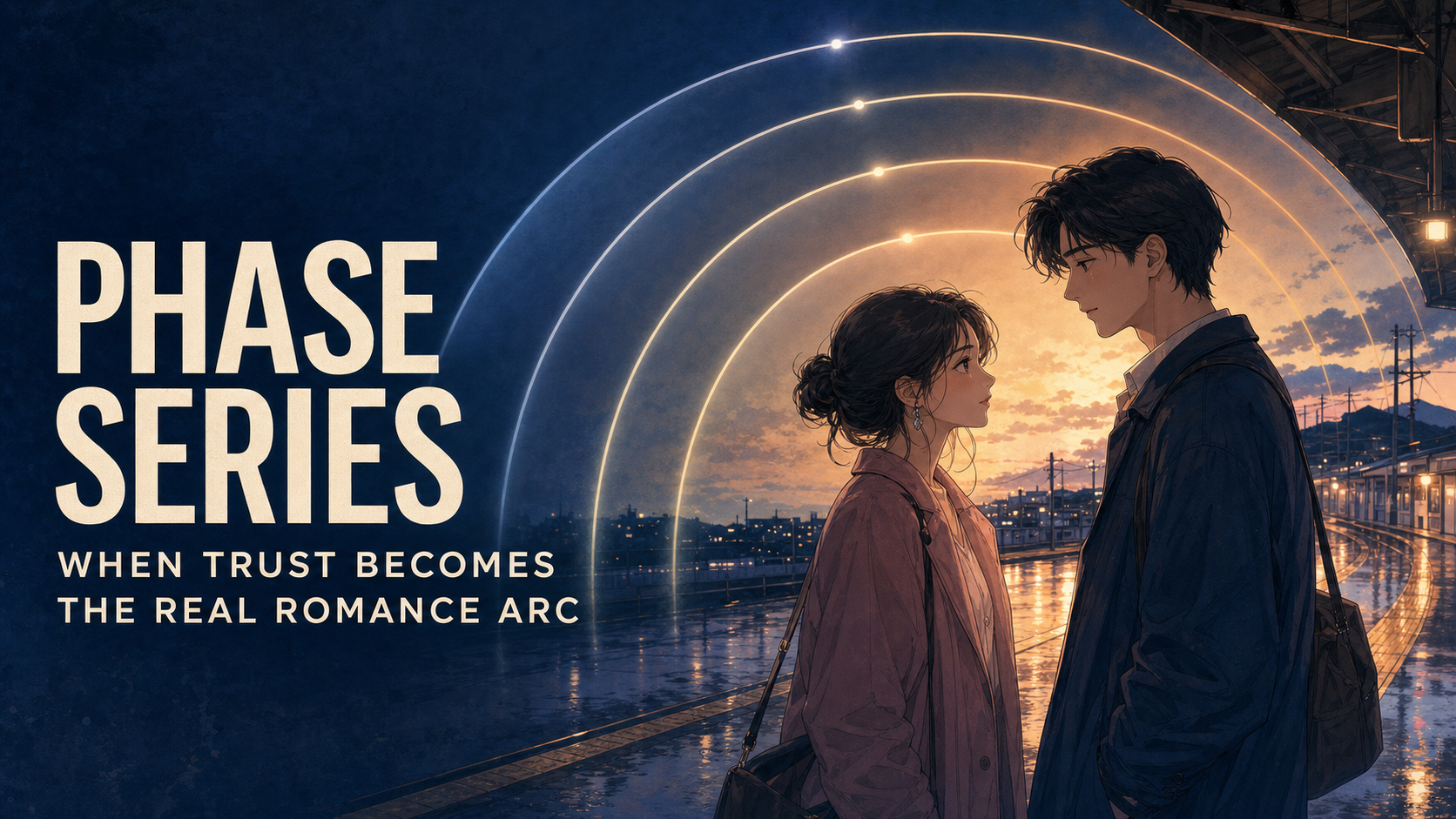
That shift is what inspired the idea of the Phase Series.
Rather than asking:
“Will these two people fall in love?”
these stories often ask a more emotionally difficult question:
“How does trust survive once the relationship begins changing?”
That difference completely changes the emotional structure of the romance.
What the Phase Series Means
The Phase Series is a way of reading romance manga through stages of relational development rather than isolated dramatic moments.
Instead of focusing only on attraction or confession, this framework focuses on how relationships evolve through emotional transitions:
- emotional safety
- distance and pacing
- conflict and loyalty
- responsibility
- long-term trust
In this structure, romance is not simply emotional excitement.
It becomes a process of building a relationship capable of surviving reality, change, and emotional pressure.
That is why many Japanese romance stories feel emotionally deeper over time instead of emotionally explosive at single moments.
Why Trust Becomes the Real Romance Arc
Attraction can happen quickly.
Trust cannot.
Trust develops through repetition.
It grows through:
- emotional consistency
- restraint during conflict
- reliability under pressure
- attention to emotional pacing
- the ability to protect emotional safety even when emotions become complicated
This is why some manga relationships feel emotionally “safe” even during difficult arcs.
The emotional payoff does not come only from who confesses first.
It comes from watching characters repeatedly choose care over emotional impulse.
That is the real romance arc.
Phase 1 — Emotional Safety
The first phase is not romance itself.
It is emotional readability.
Characters begin asking:
“Can I safely become vulnerable around this person?”
This phase appears strongly in Honey Lemon Soda and A Sign of Affection, where trust develops before emotional intensity fully emerges.
The relationship becomes emotionally meaningful because the characters create reassurance before pressure.
Phase 2 — Distance and Timing
Once emotional safety exists, relationships often become slower rather than faster.
Distance begins functioning as emotional adjustment instead of emotional avoidance.
Characters start recognizing that moving too quickly can damage trust before it fully stabilizes.
This phase appears clearly in A Sign of Affection, where closeness is carefully paced rather than emotionally forced.
The relationship deepens not because the characters constantly move closer, but because they learn how to approach intimacy without overwhelming each other.
Phase 3 — Conflict and Loyalty
This is where romance becomes emotionally complicated.
The relationship now affects other relationships:
friend groups, family bonds, emotional roles, and shared history.
At this stage, characters begin asking:
“What responsibility do I now have toward everyone involved?”
This conflict is central to Anyway, I’m Falling in Love with You, where romance destabilizes long-standing emotional balance inside a childhood friend group.
Love no longer exists privately.
It begins reshaping an entire emotional structure.
Phase 4 — Responsibility as Love
At this point, love becomes visible through behavior rather than attraction alone.
Care is expressed through:
- consistency
- patience
- emotional responsibility
- relationship maintenance
- the ability to continue choosing the relationship during difficult periods
This phase becomes especially important in adult romance and long-term relationship stories.
The relationship stops being driven by emotional tension alone and becomes sustained through intentional care.
Phase 5 — Chosen Future
The final phase is not simply “being together.”
It is building a future where both people can continue existing safely as themselves.
At this stage, romance shifts away from pursuit and toward sustainability.
Trust becomes long-term.
Care becomes structural.
The relationship begins functioning as shared emotional stability rather than temporary emotional intensity.
This is where many Japanese romance stories become philosophically rich.
Why This Structure Feels So Distinctive
One reason Japanese romance manga often feels emotionally different is that it prioritizes relational development over dramatic escalation.
The emotional movement is not centered only on:
- confession
- kiss
- breakup
- reunion
Instead, the emotional weight often comes from:
- pacing
- adjustment
- emotional safety
- sustained trust
- long-term relational care
That is why quieter relationships can sometimes feel more emotionally powerful than highly dramatic ones.
The tension comes from whether trust can continue surviving changing emotional realities.
Continue Reading
If this framework resonates with you, these essays naturally connect to different phases of relational development:
- Quiet Men in Manga
— Why Restraint Makes Romance Feel Safer Than Intensity — - After the Choice in Romance
— What Honey Lemon Soda Reveals About Sustaining Love After Confession — - Conflict and Loyalty in Romance
— What Anyway, I’m Falling in Love With You Reveals About Emotional Group Balance —
Final Reflection
Some romance stories end when feelings are confirmed.
Many Japanese romance manga begin there.
Because the deeper emotional question is rarely:
“Do they love each other?”
It is:
“Can they continue building a relationship where trust survives change, conflict, distance, and time?”
That is why these stories linger emotionally.
Not because of dramatic intensity alone—
but because they understand that meaningful romance is built through phases where two people repeatedly choose trust, responsibility, pacing, and emotional safety together.
If this idea stayed with you, I share weekly manga moments, emotional reflections, and the quiet scenes I can’t stop thinking about on Substack.