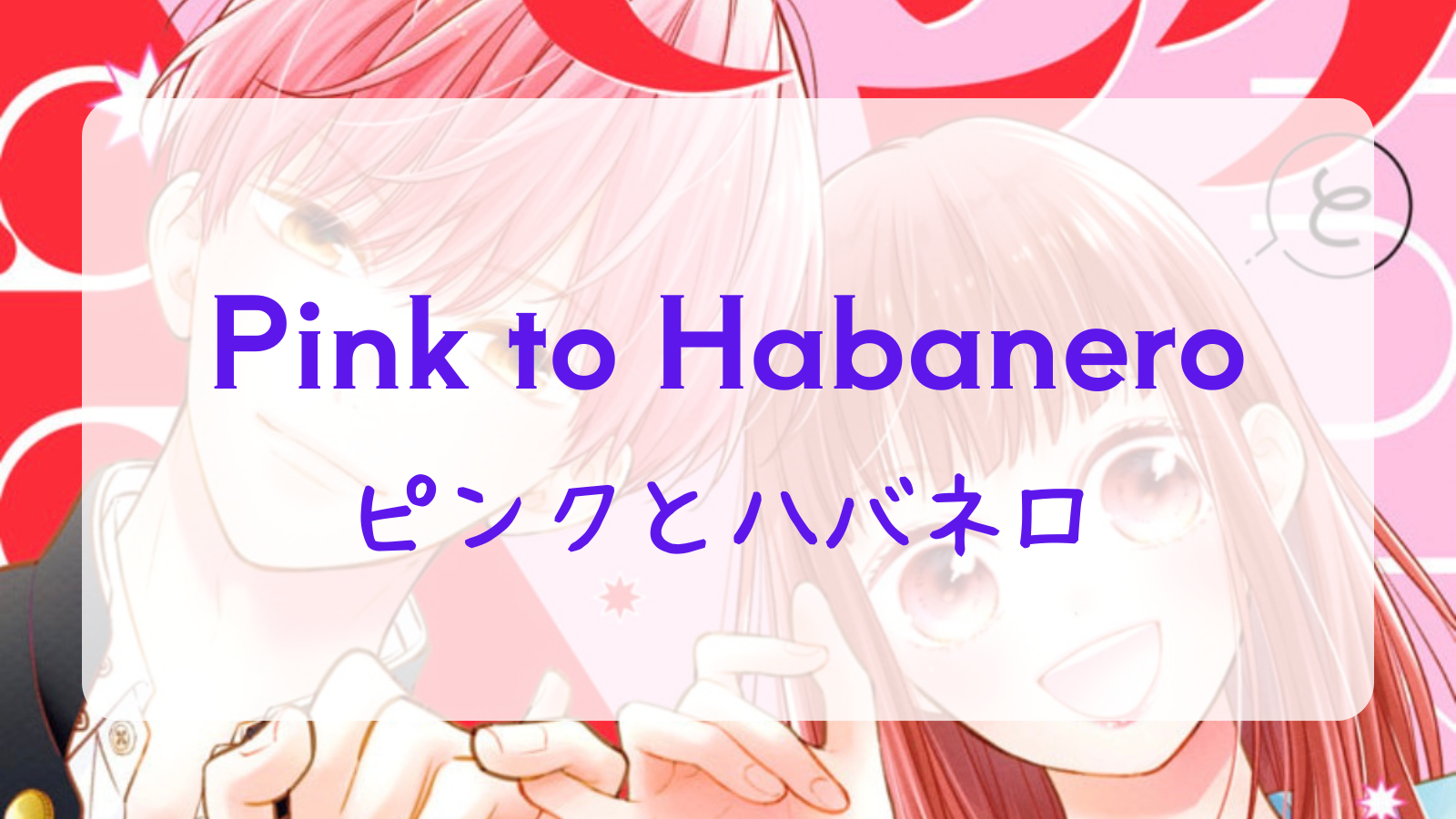

Pink to Habanero is often introduced as a romantic comedy.
But beneath its bright surface, this manga tells a much quieter story—
one about emotional boundaries, hesitation, and the decision not to hurt someone you care about.
This is not a story driven by bold confessions or dramatic gestures.
It is shaped by the moments when characters choose to step back,
even when moving forward would be easier.
What Kind of Story Is Pink to Habanero?
The story follows Mugi Miyao, an ordinary high school girl with little romantic experience, and Kei Kurose, a boy known for his sharp tongue and emotional distance.
At first glance, their relationship seems to fit familiar romantic patterns.
But the story quickly reveals something different.
Instead of accelerating toward intimacy, Pink to Habanero repeatedly slows down.
It lingers on uncertainty, misunderstanding, and the careful maintenance of distance.
This manga is not about how quickly feelings become love.
It is about how people learn not to disappear inside someone else’s expectations.
A Girl Who Learns Not to Go Along With Everything
Mugi is not portrayed as confident or assertive from the beginning.
She hesitates. She doubts herself. She is often unsure of what she wants.
What makes her growth meaningful is not bold action,
but her gradual refusal to simply go along with others.
She begins to ask herself:
- What do I actually feel?
- What am I agreeing to, and why?
This quiet shift—choosing awareness over compliance—
is one of the emotional foundations of the story.
Kindness That Does Not Force Intimacy
Kurose, often labeled as cold or sarcastic, represents another form of restraint.
Rather than pulling Mugi closer for reassurance,
he repeatedly chooses not to rely on her when his own future feels uncertain.
One moment in particular stands out.
Kurose decides to create distance from Mugi—
not because his feelings fade,
but because he is facing questions about his path, his responsibilities, and his life ahead.
Instead of clinging to love, he chooses responsibility.
That quiet decision stays with the reader.
In many romance stories, love justifies holding on.
Here, love is expressed through not turning someone else into a refuge for your own anxiety.
Why This Story Resonates With Japanese Readers
In Japan, Pink to Habanero is often read not simply as a rom-com,
but as a story about learning how to face emotions without losing kindness.
The manga reflects values frequently found in Japanese storytelling:
- hesitation rather than immediacy
- respect for emotional boundaries
- care that does not demand reciprocation
Characters are not praised for acting quickly.
They are allowed time to think, to step back, and to choose what will cause the least harm.
This perspective treats emotional restraint not as weakness,
but as a form of maturity.
A Romance That Teaches How Not to Hurt Others
Pink to Habanero suggests that kindness is not always expressed through closeness.
Sometimes, it appears as:
- choosing distance
- accepting loneliness
- refusing to bind another person to unresolved fear
The story does not frame these choices as heroic.
It simply presents them as necessary.
What remains after reading is not excitement,
but a sense of how relationships can be shaped by responsibility rather than impulse.
Why This Story Belongs on This Blog
This blog explores Japanese manga as a place where
quiet strength, hesitation, and responsibility are given meaning.
Pink to Habanero belongs here because it portrays:
- love without possession
- growth without domination
- care without emotional pressure
It is a romance that teaches not how to win someone’s heart,
but how to respect another person’s life.
🔗 Related Reading on This Blog
One character in particular embodies this approach with remarkable clarity.
Kei Kurose does not simply hold back—he understands the weight of emotions, and chooses not to treat them lightly.
If you want to explore his choices in more detail, you can read the full character analysis here:
✅ Kei Kurose – The Boy Who Chooses Restraint Over Desire
A Story About Maturity, Not Urgency
Pink to Habanero is not defined by dramatic romance.
It is defined by the courage to hesitate.
By choosing responsibility over reassurance,
and distance over emotional dependency,
this manga quietly asks a difficult question:
What does it mean to care for someone without making them carry your uncertainty?