There are moments when acting would be easier.
Moments when speaking would feel honest.
Moments when pursuing someone might finally bring clarity.
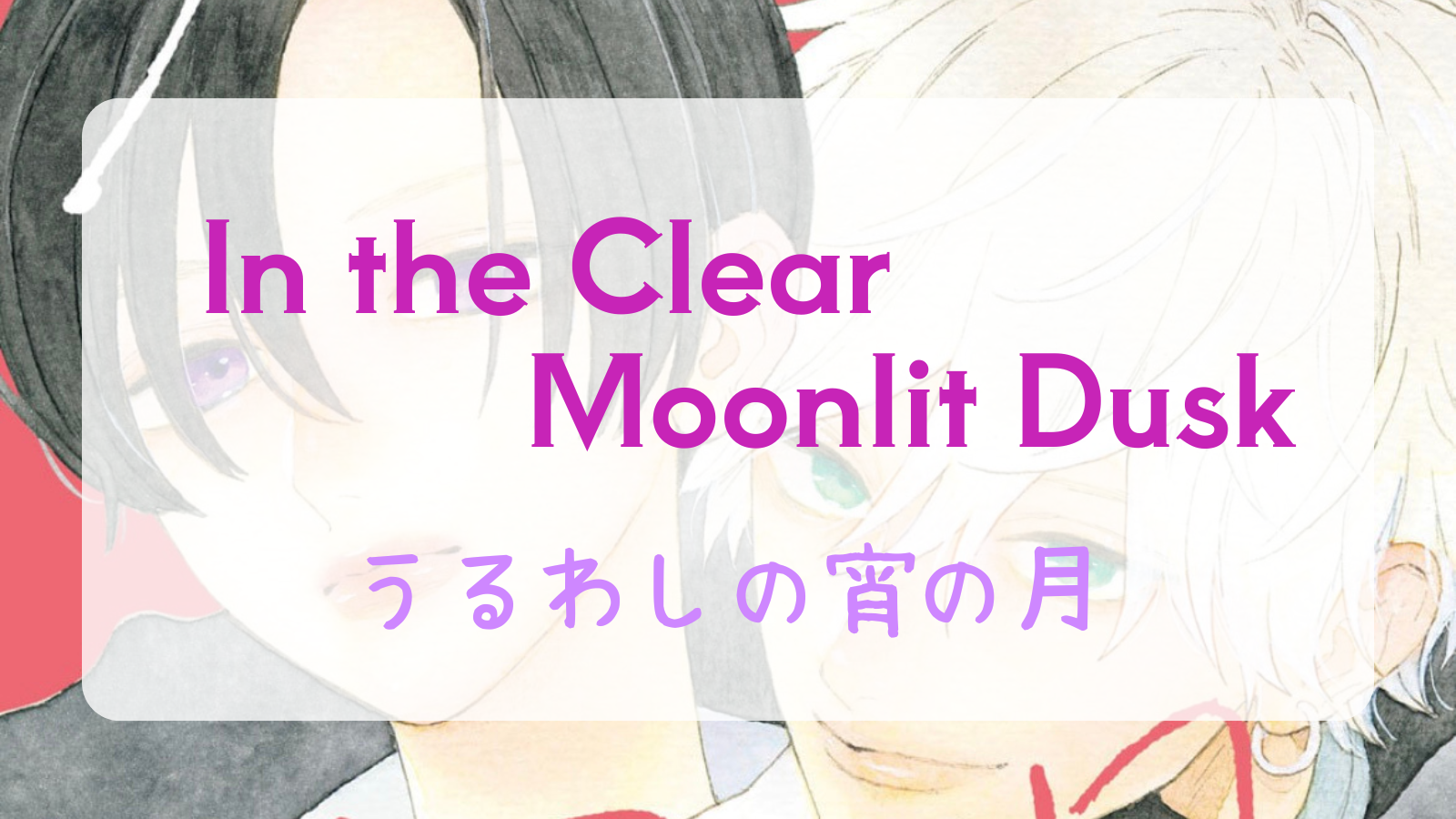
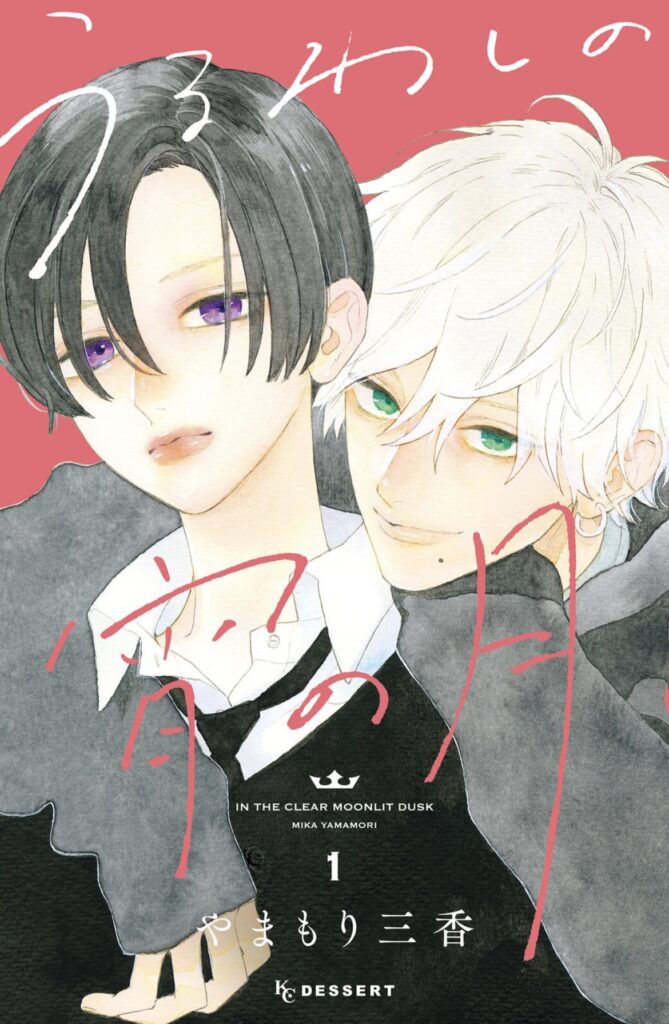
In the Clear Moonlit Dusk is a manga that pauses exactly there.
Instead of rewarding action, it asks a quieter question:
What happens when you choose not to move, even though you care?
This story does not deny emotion.
It examines what it costs to carry emotion without using it.
Basic Information
- Japanese Title: うるわしの宵の月
- English Title: In the Clear Moonlit Dusk
- Author: Mika Yamamori
- Publisher: Kodansha
- Genre: Romance / Coming-of-Age / Human Drama
- Status: Ongoing
Story Overview (Without Spoilers)
Yoi Takiguchi is often called a “prince” because of her composed presence and androgynous beauty.
She meets Kohaku Ichimura, an upperclassman who carries the same label.
Their connection forms quietly.
Not through dramatic encounters,
but through careful attention to distance—
how close is too close, and when closeness becomes pressure.
This manga does not hurry toward romance.
It stays with the uncertainty that appears before decisions are made.
Relationships That Refuse Competition
Although multiple emotional connections exist,
the story avoids framing them as rivalry.
No one is asked to fight for affection.
No one is rewarded for insisting.
Instead, each relationship reveals a different approach to choice:
- advancing,
- waiting,
- or deliberately stepping back.
The question is not who should be chosen,
but what kind of choice leaves room for another person’s life.
When Not Acting Changes Everything
Some of the most decisive moments in this story look almost invisible.
- Not chasing after someone who walks away
- Not voicing jealousy the moment it appears
- Not binding another person to reassurance they did not ask for
These moments may seem small,
but they prevent damage that cannot be undone.
The manga suggests something rare:
that restraint can be a way of protecting both people, not denying oneself.
Emotional Responsibility as Strength
In many stories, love is proven by pursuit.
Here, love is tested by what someone refuses to do.
Characters hold their uncertainty instead of transferring it.
They endure ambiguity rather than demanding clarity.
This is not emotional suppression.
It is emotional responsibility.
For readers familiar with Japanese storytelling, this may feel intuitive.
For others, it offers a striking alternative to urgency-driven romance.
Why This Story Stays With You
You may recognize moments from your own life here:
- times you cared but did not move
- times you stayed silent to avoid causing harm
- times you chose distance because closeness would have been unfair
In the Clear Moonlit Dusk does not judge those choices.
It gives them form.
That recognition is what makes this story difficult to forget.
Related Essays on This Blog
For readers interested in the ideas this manga raises, see also:
- Why Japanese Manga Portrays Quiet Integrity as Strength
- Why Silence Can Be a Form of Responsibility
- Why Responsibility Is Often Misread as Distance
Each explores restraint as a form of judgment, not avoidance.
Closing Thoughts
This is not a story about winning love.
It is a story about leaving space—
about trusting that what is not forced may still grow.
If you have ever wondered whether hesitation can be honest,
or whether restraint can be kind,
this manga is already speaking to you.