
What does it mean to care for someone without forcing your feelings onto them?
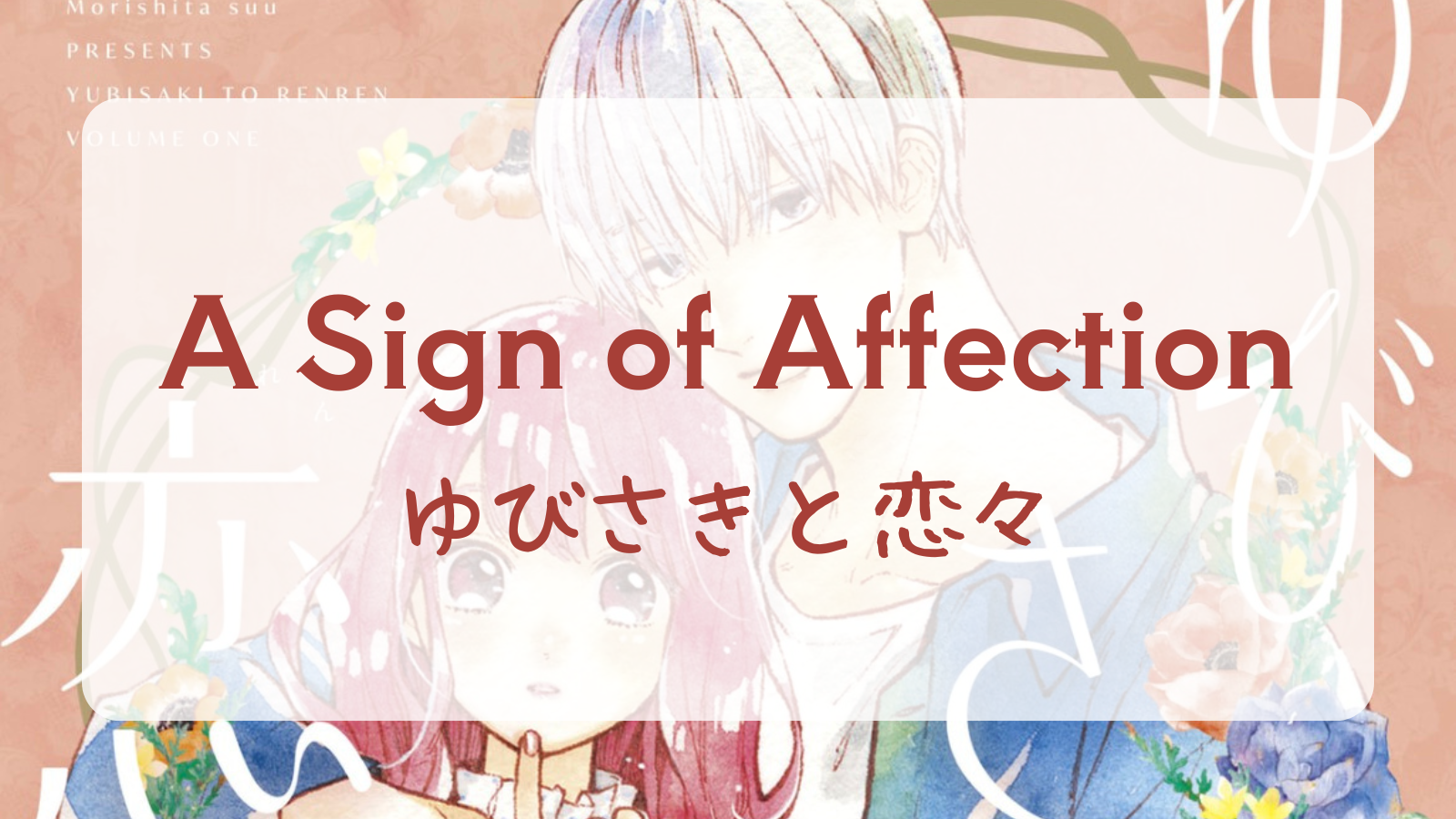
A Sign of Affection is a Japanese manga that approaches love not through dramatic declarations, but through distance, patience, and quiet responsibility.
This is not a story driven by urgency.
It is a story shaped by how people choose not to act—and why that choice matters.
What Kind of Story Is A Sign of Affection?
The story follows Yuki Itose, a deaf university student, and her encounter with Itsuomi Nagi, a young man who moves easily across cultures and languages.
Rather than focusing on obstacles or dramatic misunderstandings, the manga pays attention to something quieter:
how people adjust their behavior when they become aware of another person’s world.
Communication in this story is not only about words or sign language.
It is about timing, space, and the decision to slow down rather than rush forward.
A World Where Feelings Are Not Forced
One of the defining qualities of A Sign of Affection is its refusal to treat emotions as something that must be immediately expressed.
Feelings exist—but they are handled carefully.
Characters in this story often:
- hold back instead of confessing
- observe rather than intervene
- prioritize another person’s emotional safety over their own desires
This does not create emotional distance.
It creates trust.
In many Western love stories, action is proof of sincerity.
In this manga, restraint itself becomes a form of care.
Another manga that explores hesitation and emotional distance in shojo romance is Pink to Habanero, where characters struggle to understand their feelings before acting on them.
Why This Story Matters in Japanese Manga
Japanese storytelling frequently values:
- hesitation
- silence
- unspoken understanding
A Sign of Affection embodies these traits with particular clarity.
The narrative allows characters time to think, to doubt, and to choose responsibility over impulse.
Even those who are not chosen romantically are not dismissed or ridiculed.
Their emotional positions are treated as meaningful, not disposable.
This approach reflects a distinctly Japanese way of portraying relationships—
one where not acting can be as significant as acting.
Characters Who Choose Not to Act
Throughout the story, there are characters who deliberately remain still.
They do not step forward when it would be emotionally convenient.
They do not disrupt existing bonds for personal relief.
They choose to protect others, even at the cost of their own happiness.
These choices are not framed as weakness.
They are presented as ethical decisions, shaped by awareness of roles and responsibility.
One character in particular embodies this stance with striking clarity—a figure whose strength lies not in confession, but in timing and accountability.
Stories about quiet emotional support also appear in Gazing at the Star Next Door, where characters often choose to care for someone without forcing their feelings forward.
✅ Gazing at the Star Next Door
Related Reading on This Blog
Not all forms of responsibility in this story look the same.
Some characters step back because they understand the weight of their actions.
Others move closer—but only after learning how to do so without disrupting another person’s world.
Itsuomi Nagi represents this second approach.
→ Itsuomi Nagi – The Man Who Approaches Another Person’s World With Respect
In contrast, Shin Iryu embodies a different form of responsibility—one shaped by timing, restraint, and the decision not to act.
→ Shin Iryu: Choosing Responsibility Before Desire
A Story That Teaches How to Stand Back
A Sign of Affection is not simply a romance manga.
It is a story about how to exist near someone without claiming them.
By focusing on distance rather than possession, and responsibility rather than urgency, the manga offers a quiet lesson:
Sometimes, the most meaningful choice is not to move forward—
but to understand when moving would mean abandoning care.
Themes of unspoken emotions and emotional restraint are also central to Studio Cabana, a manga that portrays how difficult it can be to express feelings honestly.