We are often taught that strength means action.
To confess.
To decide.
To move forward without hesitation.
If someone does not act, we usually assume something is wrong.
They must be afraid.
Indecisive.
Emotionally weak.
But romance manga often tells a very different story.
Again and again, some of the most emotionally compelling characters are not the ones who act first.
They are the ones who stop themselves.
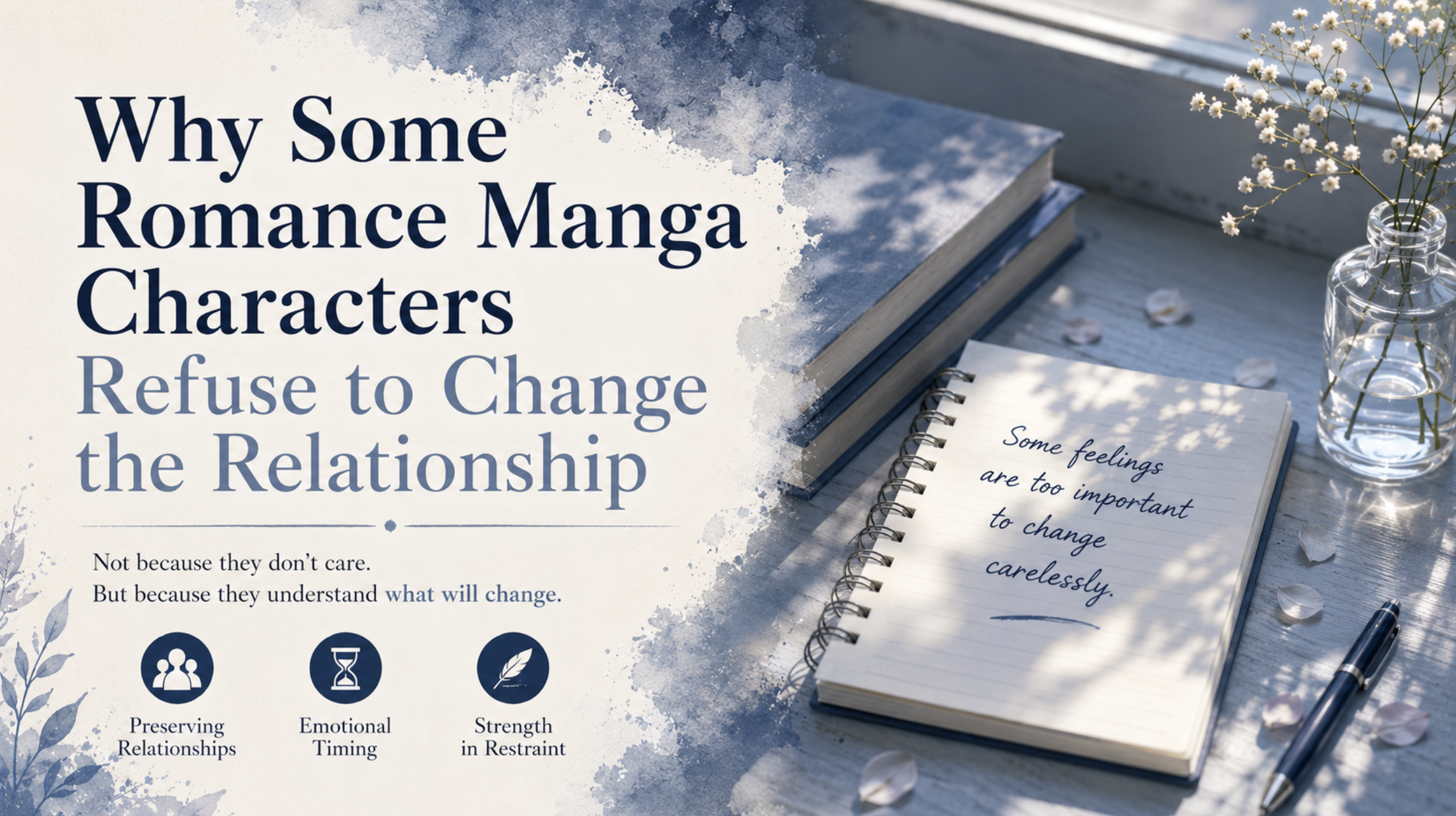
Not because they do not care.
But because they understand exactly what their actions would change.
Romance Manga Understands That Relationships Cannot Easily Return to Their Original Shape
One confession can destroy a friendship.
One kiss can permanently alter a group dynamic.
One honest answer can make everyday interactions impossible to return to.
Romance manga pays close attention to this reality.
That is why many characters hesitate even when they already know how they feel.
The hesitation is not emotional confusion.
It is relational awareness.
They understand that once they act, the relationship itself changes structure.
And sometimes, they are not ready to force that change.
Not Acting Is Sometimes a Way of Preserving the Relationship
In many romance stories, action is treated as courage.
The character confesses.
The relationship progresses.
The emotional tension resolves.
Romance manga is often less interested in resolution.
Instead, these stories ask something more uncomfortable:
What happens when preserving the relationship matters more than resolving the emotion?
That question creates many of the slow, unresolved emotional dynamics that define Japanese romance stories.
Characters remain silent.
Delay confessions.
Pretend nothing has changed.
Not because their feelings are weak—
but because the relationship itself matters too much to risk destroying.
Shin in Anyway, I’m Falling in Love with You.
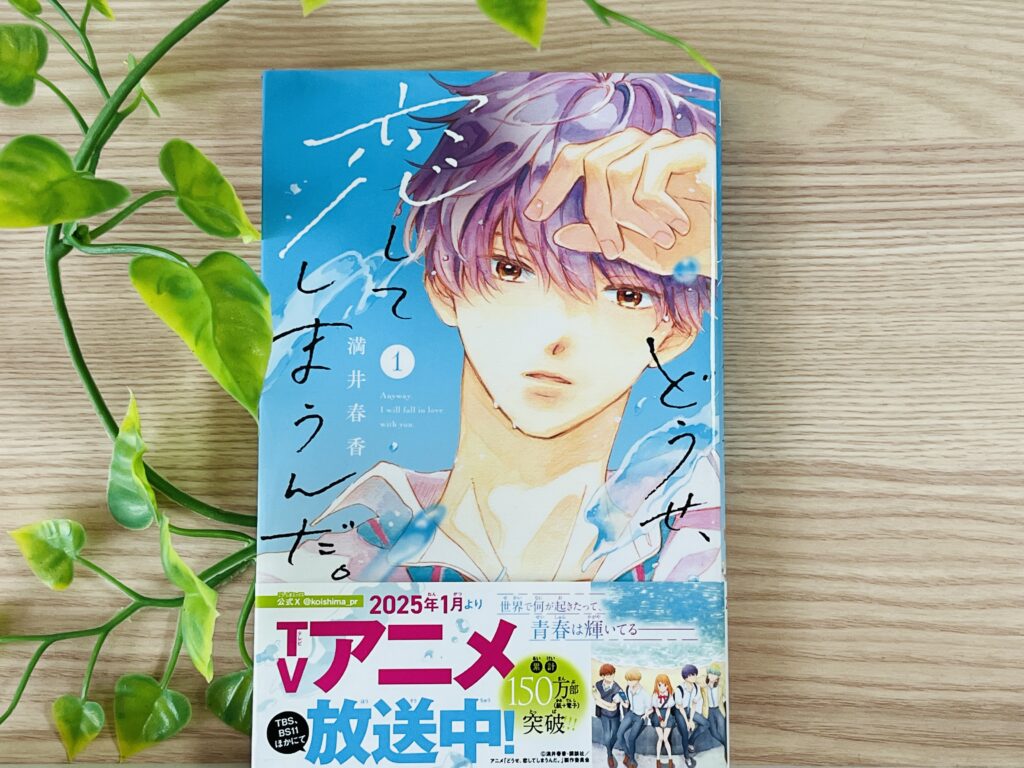
Shin represents this dynamic extremely well.
He clearly loves Mizuki.
The story never hides that.
And yet, Shin repeatedly stops himself from fully changing the relationship between them.
Part of that hesitation comes from the emotional balance of the entire childhood friend group surrounding her.
Once one person acts,
everyone else is affected.
That awareness shapes Shin’s behavior constantly.
He is not emotionally passive.
In fact, many scenes show how close he is to crossing the line completely.
But romance manga often treats restraint as proof that a character understands the emotional consequences of action.
Shin knows that once certain feelings become irreversible,
the group itself may never return to what it was.
And that understanding becomes part of his emotional burden.
Kou Mabuchi in Ao Haru Ride
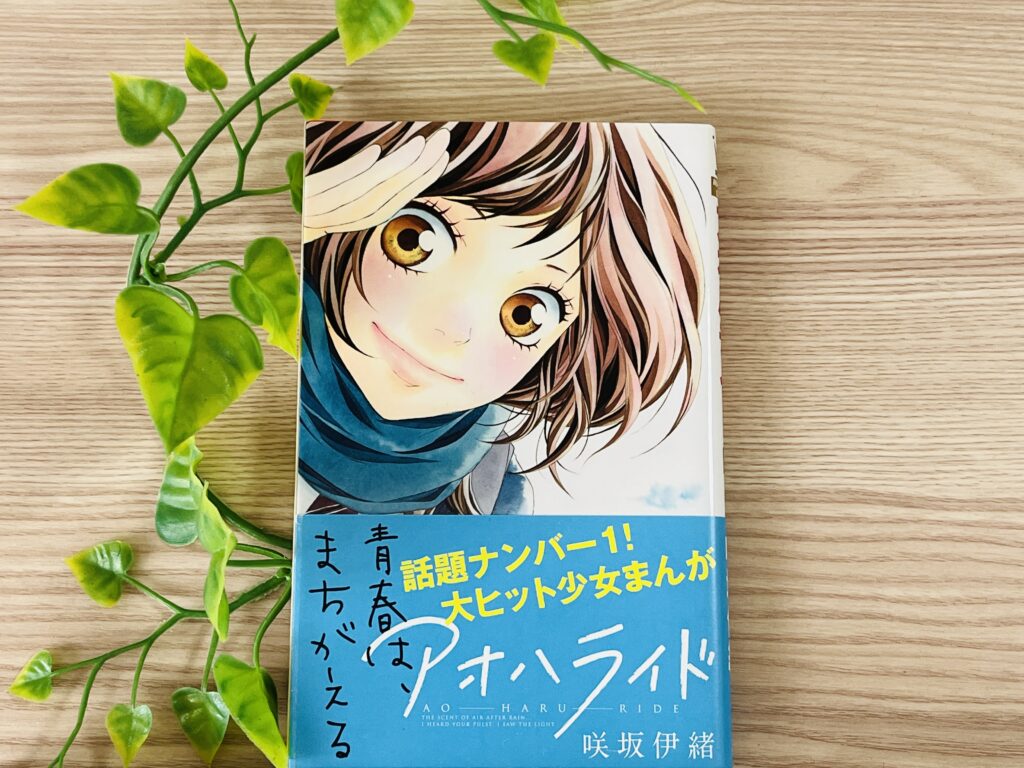
Kou Mabuchi also embodies this kind of unresolved emotional state.
Many romance protagonists move toward clarity.
Kou repeatedly moves away from it.
Not because he lacks affection for Futaba,
but because he believes getting closer would pull her into emotional instability he cannot control.
He delays.
Withdraws.
Avoids fully resolving the relationship.
That behavior frustrates both Futaba and the audience.
But the story treats his hesitation seriously.
Kou is not simply avoiding romance.
He is trying to prevent emotional damage before he believes he can carry the consequences properly.
That distinction is important.
Romance manga often portrays hesitation not as weakness,
but as consequence management.
Japanese Romance Stories Often Value Stability Over Immediate Resolution
One reason Japanese romance manga can feel emotionally “slow” is because many stories prioritize stability over immediate emotional release.
The characters are constantly aware of emotional timing.
Not:
“What do I feel?”
But:
“What will happen if I act on it now?”
That awareness changes everything.
Confession is no longer just emotional honesty.
It becomes structural disruption.
And many characters hesitate because they understand how difficult it is to rebuild emotional stability once it collapses.
Remaining Unresolved Is Sometimes an Active Choice
One of the most fascinating things about romance manga is that unresolved emotions are not always portrayed as failure.
Sometimes the characters consciously choose to remain unfinished.
They continue living inside emotional ambiguity.
They carry feelings without demanding resolution.
They allow tension to exist without forcing an outcome.
This is very different from stories that treat emotional resolution as the only satisfying ending.
Romance manga often respects the emotional complexity of not knowing what the “correct” action actually is.
And because of that, these stories linger.
The emotions are not neatly closed.
The relationships are not fully settled.
The characters continue carrying them.
Why These Characters Feel So Human
Many readers recognize themselves in these characters because real relationships rarely move cleanly.
Sometimes people hesitate because they care too much.
Sometimes they preserve existing relationships even when it hurts them personally.
Sometimes they choose emotional uncertainty over irreversible change.
Romance manga understands this contradiction deeply.
That is why these stories often feel emotionally heavier than stories built entirely around dramatic confessions or fast-moving romance arcs.
The tension comes from restraint.
From people standing at the edge of emotional change—
and understanding exactly how much could disappear if they take one more step.
Related Essays
- Real Strength Is Knowing When Not to Act
- Conflict and Loyalty in Romance
- When Kindness Becomes Avoidance
- Why Responsibility Is Often Misread as Distance
This essay is part of a wider comparison: Why Do Manga Characters Choose Silence Over Confession? (Given, Chihayafuru, and A Sign of Affection Compared)