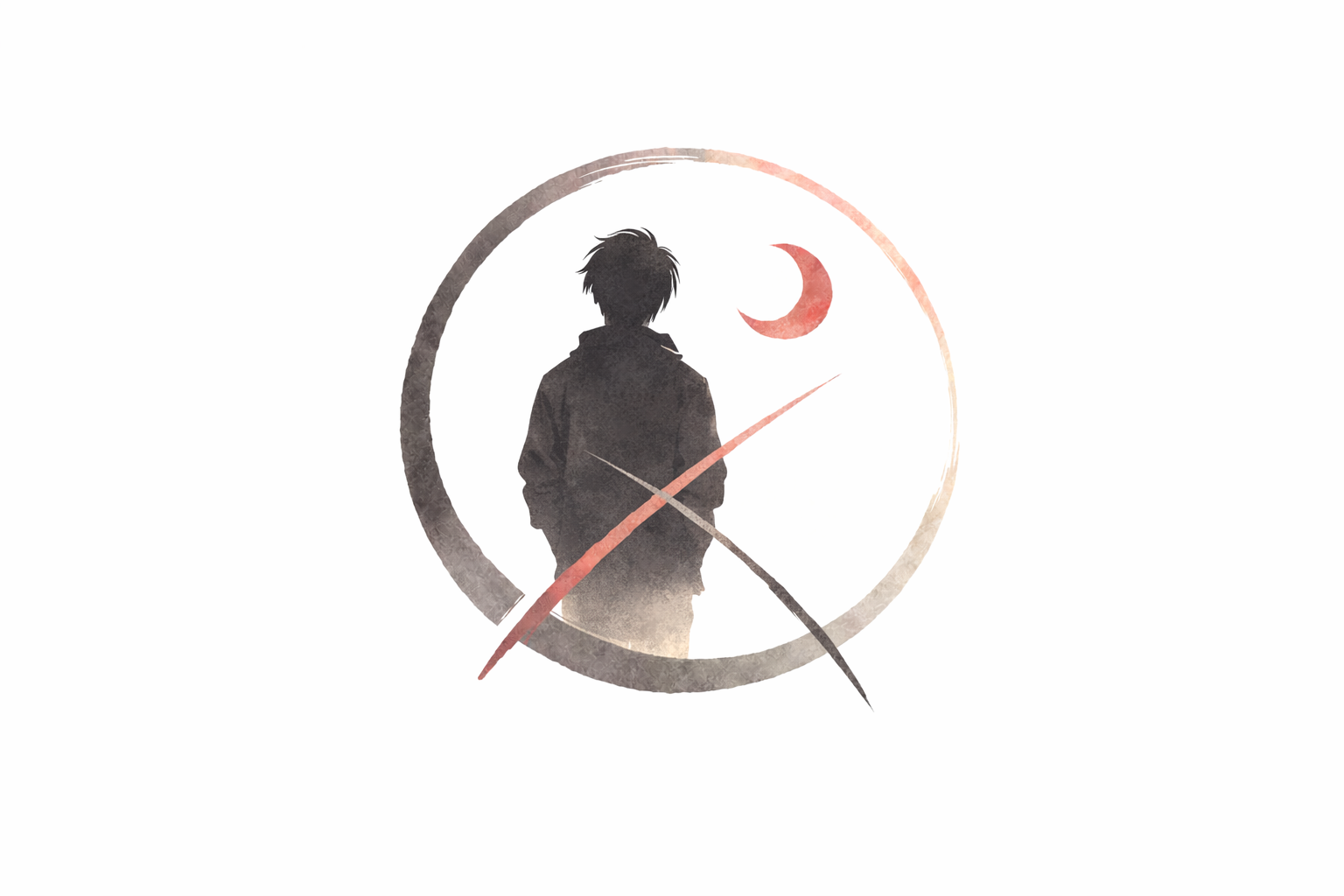
Why do we so often equate strength with moving forward?
With speaking louder.
With winning faster.
With taking what we want before someone else does.
Many stories celebrate this kind of strength.
And there is nothing wrong with that.
But when I think about the Japanese stories I grew up with—especially manga—I notice something different.
Again and again, the strongest characters do not rush forward.
They pause.
They hold back.
Sometimes, they choose not to act at all.
In Japanese stories, there are characters who could step in, but don’t.
Who could raise their voice, but stay silent.
Who have every right to fight, yet choose to step aside.
At first glance, this can look like hesitation.
Or even weakness.
But it isn’t.
These characters are not passive.
They are making a decision—one that carries weight.
Not choosing is also a choice.
To stay silent when speaking would be easier.
To hold back when acting would feel more satisfying.
To accept discomfort now, rather than cause harm that cannot be undone.
This kind of strength is quiet.
It does not announce itself.
And it rarely looks heroic in obvious ways.
Yet it demands something difficult:
the willingness to take responsibility for the outcome of restraint.
Japanese stories often treat emotional control not as suppression, but as maturity.
Feelings are not denied.
Anger, desire, jealousy—they are all present.
But the question is not what do you feel?
It is what do you do with those feelings?
Sometimes, strength is choosing not to turn emotion into action.
Not because you are afraid,
but because you understand what action would cost.
This is very different from the idea that strength must always be visible.
In many Western narratives, growth is shown through conquest or assertion.
In contrast, Japanese stories often suggest that growth can also mean learning where to stop.
This is not about which view is better.
They simply answer different human questions.
One asks, How far can you go?
The other asks, What are you willing to carry?
The strength Japanese stories portray is not about winning.
It is about enduring ambiguity.
Living with unanswered feelings.
Choosing restraint without being praised for it.
And perhaps that is why these characters stay with us.
They reflect moments we all face—
when doing less is harder than doing more,
and when not choosing becomes the most honest choice we have.
So I leave you with a question these stories quietly ask:
If you had the power to act—
would you still choose to pause?
(This essay connects to another reflection on strength and restraint.)