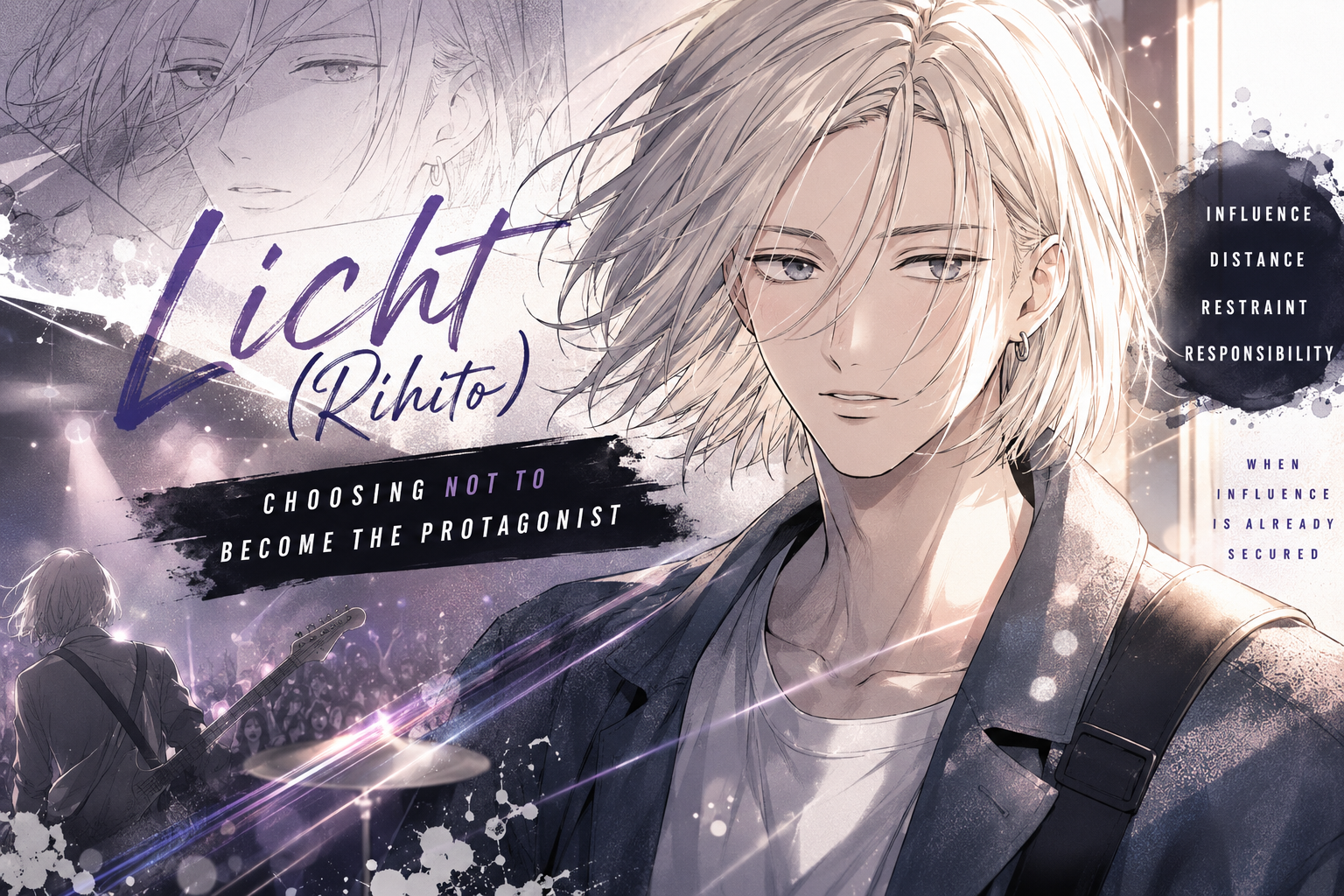
Restraint and responsibility when influence is already secured
A Character Analysis of Influence, Distance, and Refusing Emotional Centrality in Choking on Love
In many stories, the protagonist is defined by action.
Who steps forward.
Who claims the future.
Who becomes emotionally central.
Who says the decisive words before anyone else can.
But sometimes, the most meaningful choice is not to take that role—
even when one easily could.
Rihito is one of those characters.
His restraint does not come from uncertainty.
Nor from emotional passivity.
It comes from understanding the weight of influence.
Because Rihito already possesses enough proximity,
experience,
and authority to shape another person’s future directly.
And that is exactly why he refuses to step too far into it.
When Becoming the Center Is Already Possible
From the beginning, Rihito occupies an unusual position within the story.
He already has what others are still trying to reach:
- professional credibility
- artistic recognition
- emotional composure
- a stable sense of direction
- social influence within his environment
More importantly,
he stands close enough to influence another person’s future in ways that are difficult to reverse.
If he chose to lead emotionally,
few people could stop him.
If he chose to become the center of someone’s world,
that gravity would immediately change the balance of the relationship.
And Rihito understands this.
That awareness defines nearly every decision he makes afterward.
Restraint Is Not Absence
At first glance, Rihito’s behavior can appear passive.
He does not aggressively pursue.
He does not emotionally dominate conversations.
He does not present himself as the answer to someone else’s uncertainty.
But this is not disengagement.
It is selective presence.
When situations become emotionally dangerous,
Rihito intervenes immediately.
Not dramatically.
Not possessively.
Simply precisely.
When attention turns cruel,
when pressure escalates,
when someone risks becoming emotionally overwhelmed,
he steps in without hesitation.
But the important thing is this:
he intervenes only enough to stabilize the situation.
He does not redirect another person’s choices afterward.
He does not transform protection into ownership.
Once the immediate danger passes,
he steps back again.
This distinction matters enormously.
Because Rihito does not intervene to become emotionally central.
He intervenes to prevent damage.
The Man Who Refused Emotional Centrality
One of the rarest things about Rihito is that he consistently refuses protagonism.
He could easily become the emotional axis of the story.
He has the experience.
The confidence.
The influence.
The emotional composure.
And because of that,
his restraint becomes meaningful.
Rihito understands something many stories avoid confronting:
when one person’s influence becomes too strong,
the other person’s freedom can quietly begin collapsing around it.
This is why he avoids over-directing people emotionally.
He does not define another person’s future for them.
He does not position himself as the person who must be chosen.
And he does not use emotional dependence to secure closeness.
This is not emotional distance caused by fear.
It is power-aware restraint.
Knowing When Not to Lead
The most revealing aspect of Rihito’s character is not how little he acts.
It is how precisely he chooses when action is ethically justified.
In front of someone he could easily influence,
he refuses to become the center of decision-making.
But when a situation threatens to break emotionally,
he acts immediately.
And when he does,
his actions are sharp,
clear,
and controlled.
Not to dominate.
Not to “win.”
But to stop escalation before something irreversible happens.
This creates a very specific form of responsibility:
protection without control
involvement without interference
support without emotional possession
Rihito constantly maintains this boundary.
And that boundary defines his character more than romance itself.
Responsibility Without Ownership
Later in the story,
when a shared creative space begins approaching collapse,
Rihito finally steps forward fully.
But even then,
his actions remain carefully positioned.
He does not act as a savior.
He does not claim emotional authority over others.
And he does not frame responsibility as personal heroism.
Instead,
he responds because he understands what failure would cost everyone involved.
This distinction matters.
Rihito does not seek ownership over people.
He responds only when abandonment would create unnecessary damage.
Responsibility, for him,
is not about control.
It is about refusing to leave a situation unstable when he has the ability to help stabilize it.
Why Restraint Like This Is Often Misunderstood
From the outside,
this kind of restraint can look emotionally unclear.
People often associate care with persistence.
Leadership with visibility.
Sincerity with decisive emotional action.
So when someone refuses to lead despite clearly being capable of it,
they are often misread as emotionally distant or unwilling to commit.
But this interpretation ignores something crucial:
the asymmetry of influence.
Rihito understands that if he steps too heavily into another person’s emotional world,
their choices may stop feeling fully their own.
And because he understands this,
he intentionally limits his own emotional centrality.
That is not avoidance.
It is respect.
The Quiet Line Between Involvement and Interference
Rihito’s consistency comes from understanding the difference between involvement and interference.
He protects without directing.
He intervenes without possessing.
He leaves without disappearing.
And when he finally steps back,
he does not leave answers,
instructions,
or emotional dependency behind.
Only reality.
Only the acknowledgment that the next choice belongs to someone else.
This is what makes his restraint feel unusually mature.
He never mistakes influence for entitlement.
What Remains
The story does not frame Rihito’s restraint as heroic.
Nor does it guarantee reward for his choices.
What remains is simply this:
the same person chooses different positions in different situations,
and those positions are determined not by emotional impulse,
but by consequence.
Rihito’s restraint matters precisely because influence was already available to him.
If he lacked authority,
experience,
or emotional proximity,
stepping back would mean very little.
But because he could easily shape another person’s future,
his refusal to do so becomes ethically significant.
Choosing not to become the protagonist was never a lack of desire.
It was the recognition that desire,
when backed by influence and certainty,
creates responsibilities that cannot easily be undone.
And that awareness defines him.
Related Reading
If you want to explore a romance built on emotional restraint, artistic tension, and responsibility:
→ Choking on Love — A Manga About Passion, Distance, and Emotional Responsibility
If you want to explore a character who chose restraint because influence itself carries weight:
→ Seta — The Man Who Chose Restraint
If you want to explore why stepping back can become a form of respect:
→ Quiet Men in Manga — Why Restraint Makes Japanese Romance So Powerful
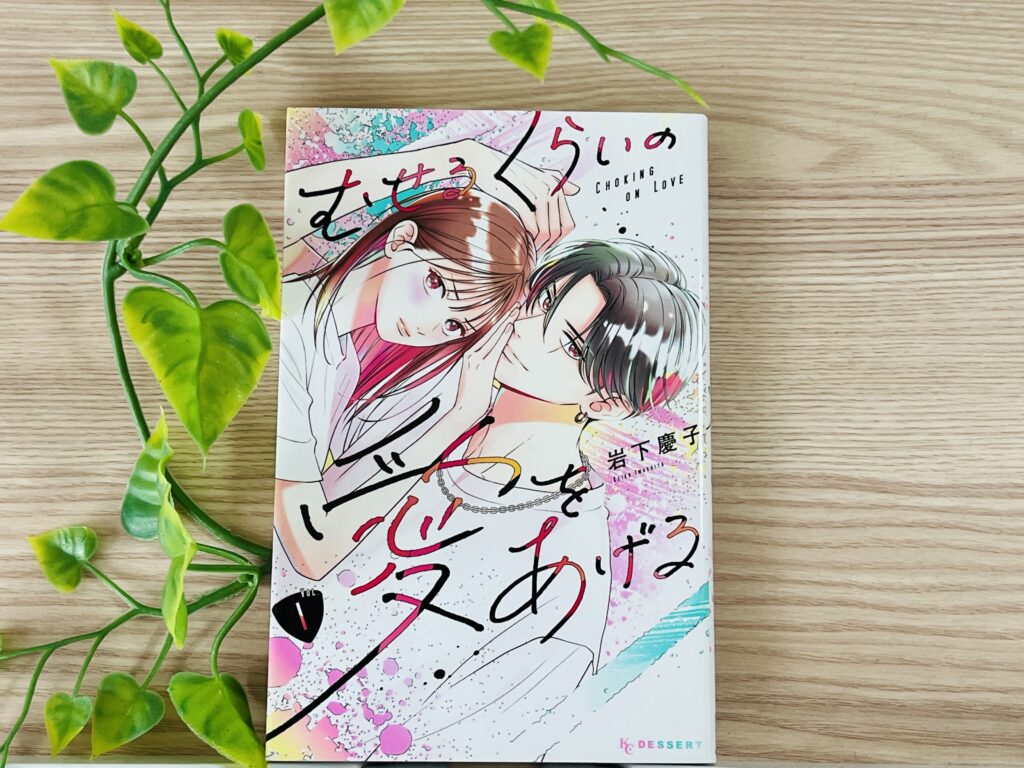
✅ Curious about this one? Check it out here! →Choking on Love Vol. 1
I also share the small manga moments that stay with me long after reading—the pauses, glances, and choices that never fully leave.
You can follow those weekly reflections on Substack.
✅ My Substack Here!